
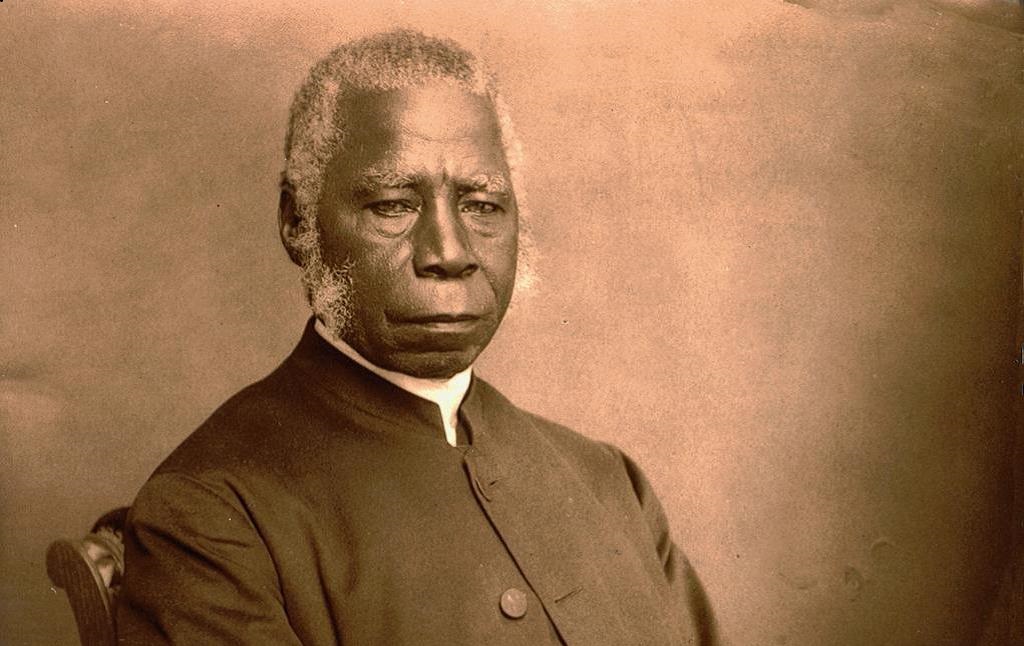
Few lives capture the reach of the gospel in West Africa like that of Samuel Ajayi Crowther, the boy who was sold into slavery and became the first African bishop of the Anglican Church.
Captured and freed
Ajayi was born around 1809 in Osogun, in what is now Oyo State, Nigeria. In 1821, when he was about 12, slave raiders attacked his town and he was sold several times before being put on a Portuguese slave ship. In 1822 a British Royal Navy patrol intercepted the ship and freed its captives, who were taken to Freetown, Sierra Leone.
There he came under the care of the Church Missionary Society (CMS). He learned to read, put his faith in Christ and was baptised in 1825, taking the name Samuel Crowther. In 1827 he became the first student enrolled at the newly founded Fourah Bay College in Freetown.
Pastor, translator and bishop
Crowther was ordained in England in 1843 and returned to work among the Yoruba. His mission at Abeokuta brought a remarkable reunion: he found his mother and sisters, from whom he had been separated more than 20 years earlier. His mother later became a Christian.
He devoted much of his life to language. He compiled a Yoruba grammar and vocabulary and led the work of translating the Bible into Yoruba, helping to establish the written form of the language. He also worked on materials in Igbo and Nupe.
On 29 June 1864 he was consecrated in Canterbury Cathedral as bishop for the territories of West Africa beyond British rule, the first African to hold the office of bishop in the Anglican Church. From his base on the Niger, he led a mission staffed largely by Africans.
Later years and legacy
His final years were marked by conflict, as a new generation of European missionaries criticised his leadership and forced changes to the Niger Mission. Crowther died in Lagos on 31 December 1891. Historians now widely regard the treatment he received as unjust.
Today Crowther is remembered across Nigeria and the wider Anglican Communion, including in the Church of England’s calendar. His story is a reminder that the church in Africa was built in large part by Africans themselves.
Sources: Wikipedia.
Spotted an error? submit a story.

Faithful Scribe is a passionate writer dedicated to exploring Christian teachings and inspiring believers to live out their faith with purpose and conviction. For more insightful articles, stay connected with Charismata News.