
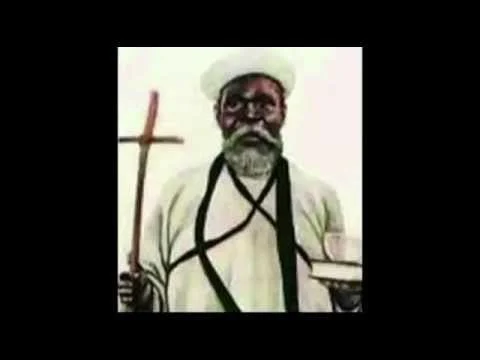
Dressed in a white robe and carrying a cross, a Bible and a calabash of water, William Wadé Harris walked along the West African coast in 1913 and 1914 and led one of the largest mass movements to Christianity the region had ever seen.
A call in prison
Harris was born around 1860 in the Cape Palmas area of Liberia, a member of the Grebo people. He was raised partly in a Methodist household, later worked as a teacher and catechist with the Episcopal Church, and became involved in political protest against Liberia’s government. In 1910, while in prison for that activism, he said he received a vision in which the angel Gabriel called him to preach.
Walking the coast
In 1913 he set out east into the French colony of Côte d’Ivoire and later reached the western Gold Coast, now Ghana, around Axim. His message was simple: turn from fetishes and traditional shrines, worship the one true God, keep the Sabbath and follow the Ten Commandments. Villages burned their charms and he baptised converts by the thousand.
Estimates of the number baptised in under two years range from about 100,000 to 120,000 people. Harris did not found his own denomination at first. He told converts to build churches, choose leaders and wait for teachers with the Bible.
Expulsion and legacy
French colonial authorities, worried by his influence during the First World War, expelled him in 1914. He returned to Liberia and continued to preach until his death in 1929.
His work bore fruit long after he left. When Methodist missionaries arrived in Côte d’Ivoire in the 1920s, they found many communities still waiting with Bibles they could not read. The Methodist Church there grew rapidly as a result, and the independent Harrist Church also traces its origin to him. He is widely regarded as one of the most influential African evangelists of the 20th century.
Sources: Wikipedia.
Spotted an error? submit a story.

Faithful Scribe is a passionate writer dedicated to exploring Christian teachings and inspiring believers to live out their faith with purpose and conviction. For more insightful articles, stay connected with Charismata News.