Home Blog Page 49

First black woman elected as President of the Methodist Conference calls on Christians to ‘show God’s love for all people’

0

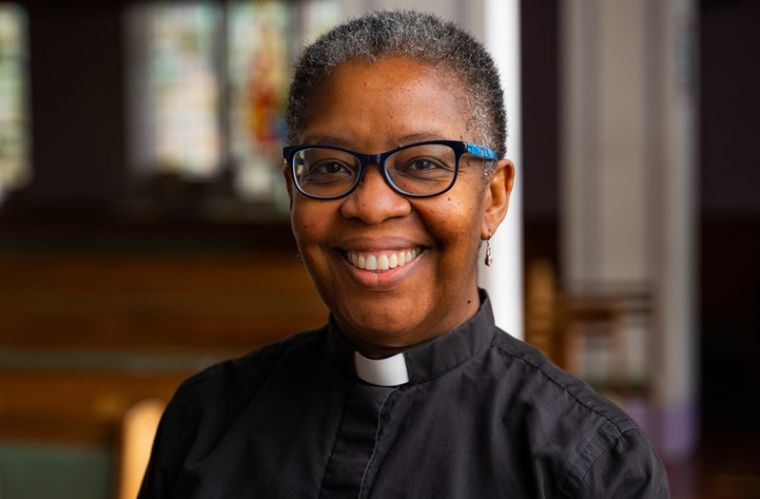
The Rev Sonia Hicks has given her maiden speech as the newly elected President of the Methodist Conference.

Her speech and induction took place on Saturday 26 June at the National Conference Centre, Birmingham, during the Methodist Conference which is taking place in hybrid form this year. 

Sonia, who is currently Superintendent Minister in Wembley, comes from a long line of Methodists as far back as her great-grandfather who was a local preacher in Jamaica, has served as a Circuit Superintendent in three connexions: Britain, the Methodist Church in the Caribbean and Americas and the Methodist Church in Ireland (MCI). 

In her Conference address Mrs Hicks focused on her theme for the year, “God’s Table: An Invitation for All”, reflecting on the racism and marginalisation she and her family have experienced and how the Church can respond to injustice and division in society today. 

She recalled the experience of her Great Aunt Lize, who had arrived from Jamaica with her Methodist membership card only to be rejected from her local Methodist Church because she was black. 

Sonia and her family eventually found a Methodist home at Walworth Methodist Church in South London.

“In a world where people are excluded because of their ethnic background, their sexual orientation, their gender or simply because, like me, they were brought up on a council estate, I believe that we are called to show God’s love for all people. It is a calling that Christian people have always struggled with, but we can and should be better at making God’s love a reality in the British Methodist Church, overcoming the systemic discrimination that exists.”

Sonia has long been involved in the fight against injustices which began when she was a member of the Youth Exchange to Zimbabwe. 

She has been Convenor of the World Relief and Development Committee for MCI, and has served as a Trustee for both All We Can and Christian Aid Ireland.

Looking to the future, the President said: “As Christians we are to mirror the grace and the mercy of God. We are to find ways of issuing God’s invitation of acceptance to those we meet on a daily basis. No ifs, no buts.

“I believe that there is a place for all in the presence of God, at God’s Table. But, as we acknowledge that everyone has a place, we also must acknowledge that we will therefore live with the tension of not all thinking the same. We will also have to recognise that living with such tension is never the easy option.”

SOURCE: PREMIER CHRISTIAN NEWS

Myanmar military wages war against Christian ethnic minorities

0

The world has paid little attention to the military’s decades-long targeting of Christians in the beleaguered Southeast Asian country.

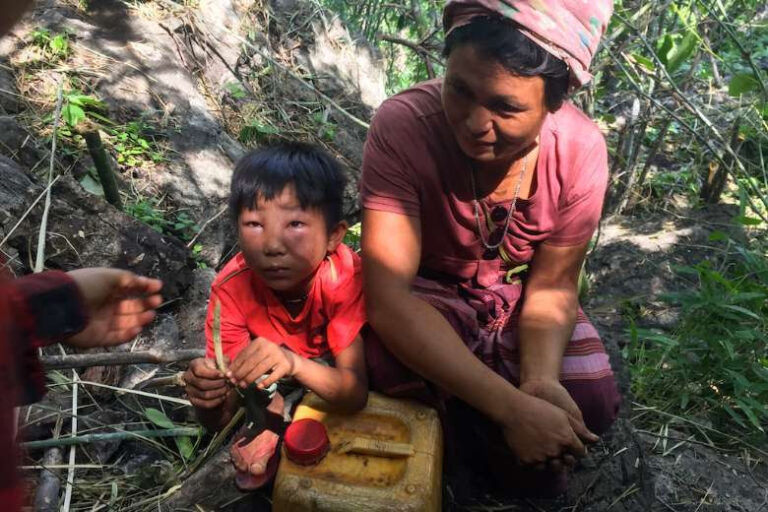
Thousands of people have fled their homes and taken refuge at churches and in the jungle as Myanmar’s military conducts air strikes and indiscriminate attacks in Kachin, Kayah, Karen and Chin states — largely Christian areas.

Amid the recent conflict, churches have been raided and shelled and troops stationed in church compounds, while Catholic priests have been arrested and unarmed civilians including Christians have been killed.

At least 175,000 people have been displaced in Kachin, Kayah, Karen, Chin and Shan states following the escalation in fighting between the military and ethnic armed groups and the People’s Defence Force (PDF) since March.

PDF units in various regions have taken up homemade rifles and hunting weapons against the military, which has used air strikes and heavy artillery to crush the opposition.

The Southeast Asian nation is descending into political upheaval and widespread civil war following the military coup on Feb. 1 that overthrew the elected civilian government.

The ensuing reign of terror against civilians and pro-democracy protesters has led to at least 872 deaths.

Myanmar has had one of the longest running civil wars in the world since gaining independence from Britain in 1948.

The latest military assault on Christians in ethnic regions is not the first time minority Christians have been attacked and targeted. Christians have borne the brunt of the decades-old civil war and faced oppression and persecution at the hands of the military which ruled for more than five decades.

Myanmar has had one of the longest running civil wars in the world since gaining independence from Britain in 1948.

While the world has paid much attention to the plight of Rohingya Muslims in Rakhine state where they face state-sponsored violence and persecution, ethnic regions with largely Christian populations have become the victims during the world’s forgotten war.

More than 700,000 Rohingya fled Rakhine into Bangladesh following the military’s crackdown in August 2017.

In Karen state in southeastern Myanmar, where the majority are Karens who were the first group in the country to accept Christianity in the 19th century, people have faced persecution and rights abuses during nearly 60 years of civil war.

The Karen National Liberation Army (KNLA), the armed wing of the Karen National Union (KNU), has waged a war against the military, which has committed atrocities including arbitrary arrests, burning homes, gang rape and extrajudicial killings.

The conflict has led to thousands killed, while more than 100,000 people, mostly Karens, have fled to neighboring Thailand where they remain in camps.

The KNLA, mostly Christians, has long called for self-determination in a federal state. It is estimated to have around 15,000 soldiers.

The world has paid little attention to military atrocities against ethnic Karen, also known as Kayin. Observers say the atrocities amount to war crimes.

The military has also engaged in a widespread campaign of violence against Kachins in predominantly Christian Kachin state, where several churches have been attacked and pastors have been arrested, while they committed rights abuses including arbitrary arrests, killing, torture and rape.

More than 100,000 people in Kachin and Shan state, mostly Christians, have been displaced due to the renewed fighting between the military and the Kachin Independence Army (KIA) after the breakdown of a 17-year truce. Internally displaced persons remain in crowded camps as peace remains elusive.

The Kachin Independence Organization (KIO) is the political wing of the KIA which remains at war with the military. The KIA has around 4,000 active soldiers, mostly near the Chinese border.

The KIA was formed in response to the broken promises of the 1947 Panglong Agreement as well as anger at president U Nu’s decision to promulgate Buddhism as the state religion in 1961.

Mountainous Chin state in western Myanmar is one of the poorest states in the country due to neglect by the military regime for decades. Over 90 percent of Chins are Christian, with most identifying as Baptists.

Despite the military and CNF signing a ceasefire agreement in 2012, the military has continued to commit rights violations with impunity

Since the 1990s, the military-led government has persecuted Christians in Chin state by cracking down on proselytization, destroying places of worship and attempting to forcefully convert believers to Buddhism.

This campaign of violent “Burmanization,” or forced assimilation, continues unabated and has caused the displacement of over 160,000 Chin from their traditional homeland into India, Malaysia and Thailand, according to an International Christians Concern report on June 16.

The Chin National Army (CNA), the armed wing of the Chin National Front (CNF), was formed in 1988 to fight for self-autonomy but it does not have a strong army like the KIA. It is estimated to have between 150 and 200 soldiers.

Despite the military and CNF signing a ceasefire agreement in 2012, the military has continued to commit rights violations with impunity, including sexual violence, forced recruitment and arbitrary arrest, detention and torture of civilians.

In Paletwa in Chin state, thousands of IDPs including Christians have taken refuge at churches and other makeshift camps following fighting between the military and the Arakan Army since 2015.

Thousands have fled Kayah state seeking refuge in Thailand after fighting broke out between the military and the Karenni Army, the armed wing of the Karenni National Progressive Party (KNPP), which was formed in 1957 to fight for independence. The KNPP has between 1,500 and 4,000 soldiers.

The grievances of the country’s minorities reach back seven decades as the rights of ethnic groups have been neglected during the decades-long rule of the Bamar majority’s iron-fisted military.

Aung San Suu Kyi’s father, General Aung San, reached an agreement giving autonomy to the Kachin, Shan and Chin in 1947 but the deal was never fulfilled. After the 1947 conference, Aung San was assassinated and ethnic groups took up arms against the central government.

Since then ethnic minorities from Myanmar’s seven states have long called for what Aung San agreed on — a system based on federalism and autonomy.

Christians represent a minority in the predominantly Buddhist country, accounting for 6.2 percent of its population of 54 million.

SOURCE: UCANEWS

The challenges of Christian nurses in Pakistan

0

Archbishop Shaw warns medical staff not to try to spread the Gospel in hospitals.

Catholic woman Fazilat Lal was accused of initiating an anti-Islamic campaign when she was promoted to nursing superintendent at Services Hospital in Lahore two years ago.

“During my professional career, I never covered my face like the rest of the female nurses. Some staff members started lobbying against me and accused me of inspiring ‘Naqab utaro muham’ [Remove naqab],” Lal told UCA News.

“The campaign continued for a month. But I survived with the support of other colleagues. Despite taking the Hippocratic Oath, the religious element is enforced in the nursing profession in our country. Christian nurses often face religious bias. They are overworked and teased by their co-workers.”

Kiran Manzoor, another Catholic staff nurse, described similar challenges at Mayo Hospital, one of the oldest and biggest hospitals in Lahore.

“Muslim staff are particularly prioritized over non-Muslims in government hospitals. There is no forum to address the injustices we face and share our problems. We continue serving in fear and are disappointed in our leaders,” she said.

Her husband has prohibited her from engaging in religious discourse in her workplace since her younger sister was tortured at a private hospital a few years ago.

Christian missionaries pioneered women’s health and education in Pakistan

“She was accused of promoting incest for celebrating Valentine’s Day. She tried to explain the Christian concept of God as love but was slapped by the head nurse of the outpatient department. Her husband and mine visited the hospital officials to explain her position,” said Manzoor.

Her family didn’t report the incident to the media in order to protect the woman’s job and safety. However, three blasphemy allegations against Christian nurses have already been reported this year.

On April 27, Muslim nurses at a Lahore mental hospital occupied a chapel at the facility that was used for Sunday services after they accused a Christian nurse of committing blasphemy by sending an “objectionable” video to a nurses’ unofficial WhatsApp group.

On April 9, two Christian nurses were detained by police after a first information report under Section 295-B of the blasphemy law was made by a doctor at Civil Hospital, Faisalabad, who accused them of scratching a sticker inscribed with “Durood Shareef,” a salutation for the Prophet Muhammad.

In January, Christian nurse Tabitha Nazir Gill was slapped and stripped for alleged blasphemy at a hospital in Karachi in Sindh province where she had worked for nine years. The nurse, known for singing Gospel hymns in Urdu, the national language of Pakistan, remains in hiding abroad.

Human rights groups say blasphemy cases lately have increased in Pakistan, where blasphemy is a highly sensitive issue. Those who are accused are sometimes lynched by mobs even before they reach court. Forced conversions and marriages of Christian girls in Punjab and Hindu females in Sindh province are another concern.

In 2019, a 30-year-old Christian nurse, Saima Sardar, was shot dead by a Muslim at Faisalabad District Hospital after she refused to convert to Islam and marry him.

Christian missionaries pioneered women’s health and education in Pakistan. An estimated 60-70 percent of nurses in Pakistan belong to the Christian community. Pakistan has more than 160 registered nursing institutions where most students belong to the Christian community.

In 2003, Fazilat Lal helped Lahore Archdiocese establish a Christian nurses’ fellowship with the support of a Maltese nun and Archbishop Emeritus Lawrence Saldanha of Lahore.

“More than 60 nurses used to attend monthly meetings at the bishop’s house. However, the union fizzled out in 2011 with the retirement of Archbishop Saldanha,” she said.

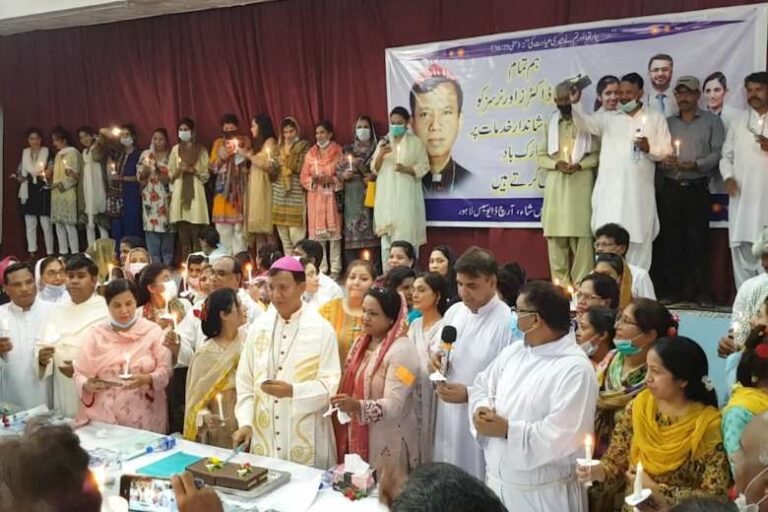
Both Lal and Kiran Manzoor were among more than 250 Christian paramedical staff, nurses and doctors who attended a June 19 seminar at St. Anthony’s Higher Secondary School in Lahore.

Archbishop Sebastian Shaw of Lahore paid tribute to them for their service during the coronavirus pandemic. Caritas Pakistan staff joined 10 priests in distributing roses among the participants. “You are our heroes. May God keep you safe,” stated a banner.

Several participants referred to the recent blasphemy allegations against Christian nurses as well as their conversion to Islam.

Among their proposals were Christian gatherings, Easter events, faith formation programs, bachelor of science degrees in nursing in Catholic-run hospitals and career counseling for youth. 

Archbishop Shaw urged them against spreading the Gospel in hospitals.

“There is no need to evangelize during duty hours. It is dangerous; avoid it. Demonstrate your faith through your service. There is a difference between healthy dialogue and critical analysis,” he said.

Archbishop Shaw, who is also the apostolic administrator of Multan Diocese in Punjab province, is planning a similar session in Multan. Daughter of St. Paul Sister Shamim Inayat, a member of the Catholic Women’s Organization, is coordinating with local nurses.

“Based on our discourse, we shall try to find solutions for their challenges. Christian girls working in factories around Multan face similar challenges. We are urging them against sharing their freedom with Muslim co-workers. We are also urging parents to develop deeper relations with their working daughters in our overtly religious society,” Sister Inayat said.

SOURCE: UCANEWS

US Evangelicals Promise Prayers and Support for Israel’s New Prime Minister

0

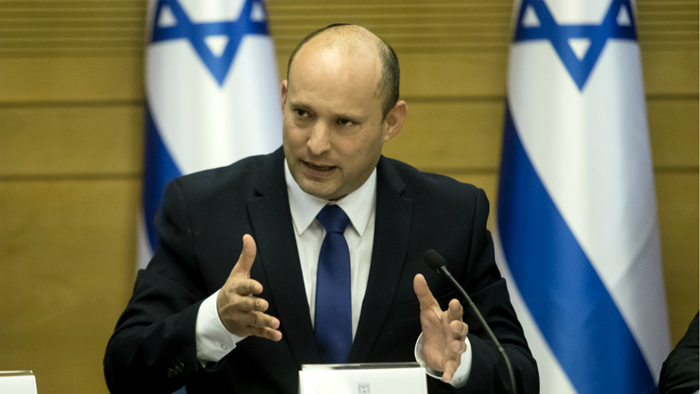
A diverse group of American evangelicals congratulated Naftali Bennett on becoming the new prime minister of Israel and successfully forming a coalition government, offering reassurance on to Israelis concerned about Christian support after Benjamin Netanyahu’s departure.

“We pray that God grants you wisdom and strength as you make hard decisions that will affect the lives of millions, and we trust that He will answer those prayers,” wrote more than 80 religious leaders, organized by the Philos Project, a group promoting “positive Christian engagement” with Israel and pluralism in the Middle East.

The letter expressed appreciation for Netanyahu and everything he did “to strengthen Israel and its alliances” over the past 12 years he served as prime minister. It also welcomed the change brought by Bennett, a religious Jew and former Netanyahu disciple who formed an alliance with multiple parties across the political spectrum to oust Netanyahu.

“We want to thank you in advance for protecting our shared values as they apply to Israel’s citizens, whether Jews, Christians, Muslims, or Druze; for guarding the holy sites and welcoming religious pilgrims from around the world to discover the birthplace of their faith; for defending Israel from outside aggression; and for continuing to work toward peace with Israel’s neighbors,” the letter said. “In return, we pledge to deepen our friendship with your country and its wonderful people.”

Some Israeli political commentators have worried about evangelical support for the new government. In the run-up to the election, former Israeli ambassador to the US Ron Dermer argued Israel should be very concerned about losing the support of American evangelicals.

Those fears seemed to be confirmed when Mike Evans, founder of the Jerusalem-based Friends of Zion Heritage Center and the Jerusalem Prayer Team, lambasted Bennett in an open letter.

The Jerusalem Prayer Team’s Facebook page had 77 million followers before it was taken down in May, and Evans is regularly described in Israeli media as a prominent American evangelical leader and even the “world’s largest evangelical leader.”

“Shame, shame, shame on you. Don’t ever call yourself a defender of Zion. You’re not,” Evans wrote to Bennett in early June, while Bennett was negotiating to form a coalition government.

“I will fight you every step of the way. You have lost the support of evangelicals 100 percent,” Evans said. “We gave you four years of miracles under Donald Trump. We evangelicals delivered it. You delivered nothing. What appreciation do you show us? You s— right on our face.”

Evans later apologized for using rude language, but repeated his opposition to Bennett and any other political figures who might attempt to replace Netanyahu.

“You’re gonna wave a white flag of surrender—not a blue and white flag—a white flag, because you’re so blinded by your hatred, by your petty politics and your obsessions with power that you can’t see the trees for the forest,” he said.

Evans also reiterated his claim to represent American evangelicals, and referred to “my 77 million evangelicals” in his press conference.

Other American evangelicals with a record of strong support for Israel stepped in to say that not everyone felt the same as Evans.

“While Evangelicals do highly respect and appreciate Netanyahu, their love for Israel is not tied to one man,” wrote Joel Rosenberg, a Christian fiction author and founder of All Israel News. “Christians of course know that at some point Netanyahu will move on, but they sincerely want to bless and strengthen Israel for the long haul regardless of who is in power.”

Rosenberg is one of the dozens of leaders who signed the Philos Project letter.

It was also signed by Methodist, Pentecostal, Southern Baptist, and Missionary Baptist pastors; bishops in the Anglican Church in North America and the International Pentecostal Holiness Church; and representatives from the National Day of Prayer Task Force, the National Hispanic Christian Leadership Conference, National Religious Broadcasters, Pastors Wives of America, and Promise Keepers.

Professors from The King’s College, Grove City College, Midwestern Baptist Theological Seminary, Dickerson-Green Theological Seminary, and Beeson Divinity School signed on, as did Tony Suarez and Johnnie Moore, who served as evangelical advisors to President Donald Trump.

Robert Nicholson, president of The Philos Project, said in a statement that the letter was designed to show broad support.

“This list represents tens of millions of Christians from all over the denominational spectrum,” he said, “who differ on many things but agree on the importance of Christian friendship with Israel based on shared values that come from the Bible.”

SOURCE: CHRISTIAN TODAY

The Holy Spirit Sets Us Free For Responsibility, Not From It

0

Pentecostal spirituality calls Christians to the public sphere—to pour our lives out for others.

The Holy Spirit is not a life hack. We are not empowered by God to avoid responsibility. But too often, the Lord’s name is used in vain in this way.

Last month, a United States federal court had to decide whether a juror in a criminal trial was allowed to wave aside evidence and base his verdict on what he said the Holy Spirit told him. One judge in the 11th Circuit said this is not allowed. A court of appeals decided that actually, it is allowed. According to a dissent from that ruling, this juror “is not capable of basing his guilty verdict on the evidence but instead will base his verdict on what he perceives to be a divine revelation.”

Whatever one makes of the legal matters, the court case raises pressing questions about the charismatic, Spirit-led life; public reasoning; and shared responsibility for the common good. It is an urgent problem when so many Pentecostals, charismatics, and other Christians seem to believe that one evidence of the work of the Spirit is rejection of the need for evidence.

At its best, however, Pentecostal spirituality affirms that the Spirit, the Lord and giver of life, is truly “the public person,” urging believers to take responsibility in the public sphere. The Spirit compels believers into solidarity with the poor, the downcast, the outsider.

The all-embracing Spirit of creation is the same Spirit who rested upon Jesus of Nazareth, accomplishing his identification with humanity, and making possible the pattern of life that reveals the heart of the Father. Those who are led by this Spirit are always drawn—as Jesus was—to the dispirited and downtrodden. Filled with this Spirit, we cannot help but pour out our lives in care for others.

Yet today, too many American Pentecostals have been caught up in conspiratorial thinking. Some have questioned the legitimacy of the 2020 presidential election. Some have defied pandemic guidelines, warning against wearing masks and taking the vaccine. A few have suggested the Spirit makes believers immune to the virus. We should ask how this has happened. Are Pentecostals especially susceptible to political pressures and the meaningless ups and downs of the culture war? If so, why?

Until recently, a majority of Pentecostals in the US opposed direct political involvement, even while they encouraged charitable ministries, calling for societal transformation through revival rather than activism. As a result, Pentecostals have earned a reputation for being “otherworldly.” Allan Anderson, emeritus professor of mission and Pentecostal studies at the University of Birmingham, explains, “They have sometimes been justifiably charged with proclaiming a gospel that either spiritualizes or individualizes social problems. The result has been a tendency either to accept present oppressive social conditions or to promote a ‘prosperity gospel’ that makes material gain a spiritual virtue.”

Although it is surely not what anyone intended, many Pentecostals have come to think of the Spirit as a kind of ultimate life hack, a means of avoiding pain, eliminating difficulties, overcoming obstacles, and assuring success.

Otherworldly Pentecostals tend to think the Spirit’s work is limited to the domain of personal spiritual experience. This way of imagining the Spirit-led life gives rise to a kind of dissociative state. Believers become more and more absorbed in their own experiences, and less and less concerned with the needs of their neighbors.

Dominionist Pentecostals, including those who feel driven to fulfill the “Seven Mountain Mandate,” tend to go another step and think the Spirit’s work is to exalt believers into positions of authority and influence. This way of imagining the Spirit-led life leads to collusion with political and economic powers and a weaponizing or instrumentalizing charismatic gifts for partisan and commercial gains.

SOURCE: CHRISTIAN TODAY

Indonesian village becomes new place of pilgrimage

0

Bishop blesses prayer park dedicated to murdered Dutch priest, Father Hendricus Beeker.

Larantuka Diocese in Indonesia’s East Nusa Tenggara province has designated a village where a Dutch missionary was killed 65 years ago as a place of pilgrimage.

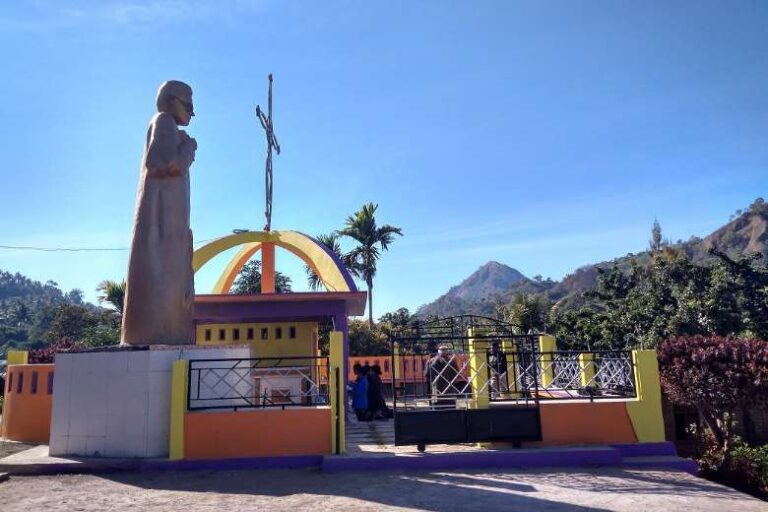
Watuwawer, on the small island of Lembata, was where Divine Word Father Hendricus Coenradus Beeker was murdered in 1956. His grave site has now become a prayer park.

Bishop Fransiskus Kopong Kung of Larantuka led the blessing ceremony for the park on June 14. It was live streamed and attended by the faithful and local government officials.

The prelate also declared Watuwawer a pilgrimage village.

“Build up this village so that anyone who comes to add strength of faith here feels that Watuwawer is cool, not only because of the weather but also because of its people,” he said.

Bishop Kung said Father Beeker had become part of his diocese’s history. “From his blood, the result is that we are the people of today and the next generation,” he said.

We consider his death as his martyrdom regardless of the Church’s acknowledgment

Lembata deputy district chief Thomas Ola Langoday said the park will be an icon of the district’s religious tourism.

The 44-year-old Father Beeker was murdered on April 19, 1956, by a young man named Bernadus Baha Luga, whom he had previously helped to take up a skills course.

The priest was killed after he reprimanded Luga for stealing items belonging to a missionary brother.

His death shocked the community and thousands turned out to pay their respects when his body was taken to Larantuka on Flores island for burial.

Because of people’s love for Father Beeker, the priest’s remains were returned to the village in 2005.

Father Beeker helped develop local people’s skills and education and sent many young people to Larantuka to study carpentry at church-run workshops. He also established elementary schools.

To manage these schools, he sent some youngsters to teacher-training institutions. Later, they led efforts in carrying out the Church’s mission in education and spreading Catholic values to locals, who at the time believed in animism and superstitions.

Sacred Heart Parish priest Father Pius Laba Buri said that although the Catholic Church had not yet declared Father Beeker a martyr, he and the local community had.

“We consider his death as his martyrdom regardless of the Church’s acknowledgment,” he said, adding that the anniversary of his death is always commemorated in the village and has become a special holiday.

Piter Ata Tukan, the parishioner who led the construction of the prayer park, said all the parishioners had lent a hand during its construction that began in 2018, assisted by donations from the local government and donors.

“This should not only be a place of pride but should be used for the sake of faith. That’s what we want,” he said.

SOURCE: UCA NEWS

New Vietnam priests urged to follow Christ’s example

0

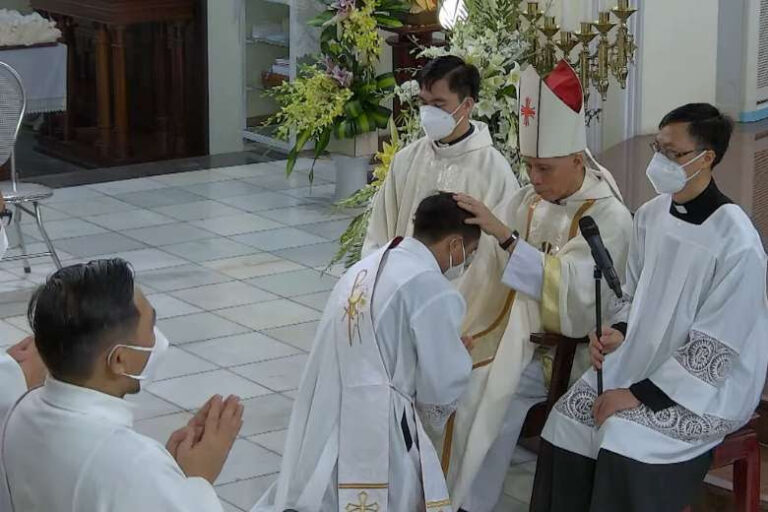
Bishop Dat ordains eight priests at Bac Ninh Cathedral on the feast of the Sacred Heart of Jesus.

Newly ordained priests in northern Vietnam have been asked to become gentle and humble servants and bring the love of Jesus’ Sacred Heart to people.

Bishop Cosme Hoang Van Dat of Bac Ninh Diocese ordained eight priests aged 32-51 at Bac Ninh Cathedral in Bac Ninh City on June 11, the feast of the Sacred Heart of Jesus.

Due to the Covid-19 lockdown, only a few priests and nuns attended the ordination, which was aired on the diocese’s website.

The new priests concelebrated their first thanksgiving Mass at the cathedral on June 12.

In his homily, Vicar General Father Peter Nguyen Cong Van said the feast invited the new priests to reflect on God’s love for priests and the laity, urging them to carry out that love by being pastors and following Jesus’ words: “I have come that they may have life, and that they may have it more abundantly.”

He said Jesus taught his disciples to “learn from me, for I am gentle and humble in heart,” not for being good at foreign languages, building and other things. “That is the crucial nature of priests and Christians.”

Catholics should pray to God for the sanctification of their priests who have weaknesses and limitations

Father Van called on local Catholics to pray for priests to fulfil their pastoral duties, especially proclaiming good news about the sheer abundance of God, to get united in Christ, to bravely do evangelization and to live a gentle and humble life like Jesus.

He said priests’ duties are to follow Jesus’ examples and die on the cross so as to bring salvation to the world.

Noting priests are invited to humbly work with and obey their bishops and superiors, the priest said that “we are priests after God’s heart, do not do priesthood against his will.”

Priests must seek prayers from the laity. Catholics should pray to God for the sanctification of their priests who have weaknesses and limitations. People must change themselves to be like Jesus who is humble and gentle in heart, Father Van said.

He also urged people to pray and support priests with their respect and sympathy to please the Sacred Heart of Jesus, who always loves and protects them all their life.

Father Van said the solemnity of the most Sacred Heart of Jesus is the World Day of Prayers for the Sanctification of Priests, so local people prayed for their priests on June 11-13.

Bishop Dat said the late Cardinal Paul Joseph Pham Dinh Tung, who served the diocese from 1963-94, offered the local church to the Sacred Heart of Jesus when it had a few old priests and suffered much damage from wars. The cardinal prayed to God for a sure sign indicating that the cathedral would not be destroyed by wars and his prayer was answered.

The Jesuit prelate called on people to thank God for sending more shepherds, especially eight new priests, to the local fields.  

The 138-year-old Bac Ninh Diocese has 129 priests serving 81 parishes in the provinces of Bac Giang, Bac Ninh, Thai Nguyen, Tuyen Quang and Vinh Phuc, plus part of capital Hanoi.

SOURCE: UCA NEWS

Thanking God for Miracles, Asylum Seekers Enter US

0

With the end of Donald Trump’s “Remain in Mexico” policy, new needs challenge Christian ministries helping migrants.

When the Honduran woman got to Alma Ruth’s studio apartment in McAllen, Texas, she took a shower.

She was nine months pregnant, and it was the first real shower she’d taken in more than a year and a half, since a day in 2019 when she and her husband and their toddler fled the violence that has wreaked havoc on Central America.

She thanked God for the clean, hot water, and for the people who had helped her along the way.

“God is always surprising us with his miracles,” she told CT in Spanish. “The rest of my life will not be enough time to thank him for all the miracles he has done for my family and for me.”

The woman, allowed into the US in March, is one of an estimated 68,000 asylum seekers who now have permission to wait for their court hearings in the United States, as President Joe Biden reversed Donald Trump’s “Migration Protection Protocols.”

The former president’s policy, known as MPP or the “Remain in Mexico” policy, was suspended in January. The Biden administration officially ended it last week in a victory for asylum seekers—including the woman taking the shower, who asked that her name not be used because her asylum case is still pending—and their advocates, like the shower’s owner, Alma Ruth.

But Ruth, founder and president of Practice Mercy, is worried about the new challenges asylum seekers will now face.

“They finish one Via Dolorosa,” she said, using the Spanish phrase for the “path of sorrow” that Jesus took on the way to the cross, “and they start another one.”

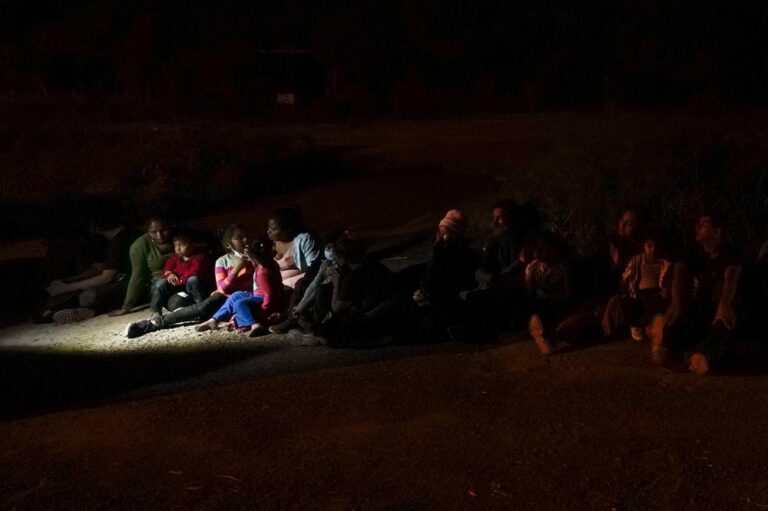
The migrants in the makeshift refugee camp in Matamoros found themselves in a kind of no man’s land, neither “here” nor “there,” with few lawyers, few social workers, and few Christian mission and aid groups to help them as they waited to apply for asylum. Now, as they finally leave the camp and enter the US, will they fall further into the cracks between Christian ministries?

The need in the camps

Ruth originally felt called to do ministry around the world, working in Cuba and Jerusalem. A Mexican citizen, she moved to the border city of McAllen in 2012 and began her work with the international community.

When the Remain in Mexico program began in 2019, Ruth soon realized that the need in her backyard was too big to ignore. She began visiting the camps as they swelled in size, helping families procure basic necessities and praying with the many Christians who were desperate for spiritual encouragement.

According to Ruth, the majority of Spanish-speaking asylum seekers are people of faith. Those living in the camps had begun to form their own churches, meeting in tents. But while Ruth scurried back and forth across the border, she began to wonder: Where was the American church?

Sometimes churches and ministries would donate larger items, and even visit. But as far as a sustained, Christian presence in the Matamoros camp, Ruth said, it was limited. This messy, transient community didn’t seem to fit into most ministry plans.

“You can count with your fingers the faith-based organizations that were involved in helping the refugee camp in Matamoros,” Ruth said. “A lot of photo ops, but people of faith serving on a weekly basis … you can count them with your fingers.”

Once inside the US, more Christian ministries have systems in place to help immigrants and their families, meeting them at bus stations, connecting them to community services, and in some cases hosting ministries in their native languages. But for those out of range, help has been scarce.

During the COVID-19 pandemic, even the few visiting churches and short-term missions stopped coming. But those committed to the camps continued crossing back and forth daily, praying, delivering food, monitoring health.

Ruth sought out women and children, paying special attention to pregnant women, who were particularly vulnerable during the pandemic, intense summer heat, flooding brought by Hurricane Hanna, and dangerous conditions of Winter Storm Uri. One woman gave birth outside the camp. Another crossed the Rio Grande on an air mattress during labor and had the baby in a Customs and Border Patrol cell.

A few faithful women

The woman from Honduras crossed into the US with her husband and toddler in late 2019. The young family hoped to find safety and security in America and live near the husband’s relatives in Minnesota.

According to US law, they had to be physically present in the country to apply for asylum. So they came. Then the woman and her family were sent back to Mexico with thousands of other asylum seekers, where they were absorbed into an ever-growing huddled mass, and told to wait.

“We endured hunger, cold, heat, and racism for a long time,” the woman said. “We suffered many injustices.”

The little help there did not come from well-funded humanitarian organizations, international ministries, or large American churches. It came from those who habitually allow their lives to be interrupted so they can slip into the church’s cracks and blind spots in search of those at risk of being forgotten.

Ruth started Practice Mercy, a Christian nonprofit that allowed her to receive financial support from American churches. She said Christians must change the way they think about ministry to those caught up in the country’s chaotic immigration system, in which planning and predictability are a luxury.

When Winter Storm Uri blanketed the temperate border towns in ice and snow, Ruth brought blankets to the migrants. When the woman from Honduras got pregnant, “Sister Alma” was there to help.

“I thank God for putting her in our path,” she said. “She was and continues to be an angel for us.”

When the US government began bringing the asylum seekers into Texas at the start of the year, Ruth started working to get them to their destination. Donations allowed her ministry to arrange Airbnb rentals while the immigrants waited for travel arrangements. Occasionally, she let them shower in her studio apartment.

“For many of them it was the first time they took a real shower in two years,” Ruth said.

Soon it was clear that, with Remain in Mexico over, there would be additional needs. Asylum seekers usually have family or camaradas waiting for them in a destination city, but many of those are recent immigrants themselves. When the pandemic devastated the service and hospitality industry, many of the recent arrivals found themselves in precarious financial situations.

Few could afford to pay for a plane or even bus ticket for an entire family to travel from Texas to Minnesota or anywhere else in the US, Ruth said. “We realized those support networks are extremely fragile.”

On social media, Practice Mercy began to broadcast calls for help in the US cities where asylum-seeking women and children needed to go. Ruth asked for help with the migrants’ travel and supporting them once they arrived.

When the pregnant woman from Honduras was allowed to re-enter the US in March, Ruth knew that she was about to have her baby. She would need real support, not a one-time meal or a referral to a shelter. Ruth took the family into her studio apartment and began working on getting them to their destination in Minnesota as quickly as possible.

This time, Ruth did not rely on Instagram. She called a supporter, Melissa Carey, who happened to live in the Twin Cities area.

“As a believer, you are called”

Carey emigrated from Peru with her family at age 10. She remembers the feeling of nervousness that comes with temporary legal status. She and her siblings didn’t enroll in free lunch programs at school—even when they were hungry—because they were afraid it would somehow violate the terms of their visa.

“When you’ve experienced it yourself, you know that dread of trying to do everything right so you don’t get kicked out,” Carey said. “It controls your life.”

Keeping her head down is now second nature, but when Carey became a citizen 11 years ago, she felt compelled to begin advocating for those living in fear.

“As a believer,” she said, “you are called to be the voice for those who have no voice.”

She began volunteering and became involved with a campaign to make driver’s licenses available to undocumented immigrants. She found that, as a Christian with many conservative values, she could talk with some legislators and lawmakers in a way others could not. Soon she began working with the Minnesota immigrant movement.

As a volunteer who is also a full-time mom, Carey’s other niche has become crisis response. She regularly responds to last-minute emergency calls, helping families connect to food or shelter for the night while reaching out to a network of faith communities to see if longer-term support is possible. The more people she helps, the more likely it is she’ll get the next call.

Immigration emergencies don’t happen according to a schedule, she explained. There isn’t a regular database of needs and opportunities someone can check at their convenience. Instead, those committed to helping need to be within arms’ reach at a moment’s notice. They have to be consistent amid inconsistency.

“You have to choose to get involved in a community and continually show up,” Carey said. “So much of serving and helping is actually having community with your neighbors.”

In March, one of those emergency calls was from Ruth, whom Carey had been following and supporting from afar. Ruth told Carey about the pregnant woman and her family, and Carey sprang into action, calling Faith City Church in St. Paul to see if they could purchase plane tickets. They did, and committed to supporting the family further while they settled in.

It took longer to find midwives who spoke Spanish and could give the woman the kind of care she needed after spending her entire pregnancy in a makeshift refugee camp with no prenatal care. It wasn’t enough for Carey to find someone to do an examination, she said. “She needed to be nurtured.”

Carey made a connection just in time for the midwives to lead the Honduran woman through a difficult birth that would have been dangerous for both mother and child without the midwives’ expertise and tools.

“We, the privileged, don’t realize the resources we have,” Carey said.

Concerned for the future

Mother and child are safe and healthy and living in Minnesota while they wait for the government to hear their arguments why it would not be safe for them to return to Honduras.

The long-term camps along the border have largely been emptied, but smaller encampments remain and shelters are full of people hoping to enter as the Biden administration tries to regulate entry procedures—which so far have been uneven. Asylum-seeking is also a regular part of the southern US border, and people in great need will continue to get on planes and busses out of McAllen, El Paso, San Diego, and other cities to start new lives around the country.

Ruth and Carey say the church must take a more active role in both the acute crises and the long-term chaos of the asylum process, where court backlogs and detention practices keep families in disconnected limbo for years.

They say ministry to the “least of these” has to be flexible and faithful, proximate and consistent, aware of the needs and resources in the community, willing to call in a request.

For the pregnant woman, it just took a few faithful Christians to make a difference.

“I thank God for beautiful people who have helped us a lot and continue to do so,” she said. “God is always surprising us.”

SOURCE: CHRISTIAN TODAY

Why I advocate for women church planters as biblical and necessary

0

The apostle Paul ranks as the greatest church-planting apostle and missionary the world has ever known. He determined to build the church wherever Christ was not named. At great risk to himself, he entered city after city to proclaim the gospel and organize converts into churches.

Yet, the great apostle did not achieve these things alone. Paul always worked in teams. To the delight of some and the consternation of others, Paul’s church-planting teams included women. When he wrote the Christians in Philippi, he instructed them to help Euodia and Syntyche. Paul describes Euodia and Syntyche as women who “contended at my side in the cause of the gospel, along with Clement and the rest of my co-workers, whose names are in the book of life” (Phil. 4:3).

While Paul does not specify their exact role, these women labored side by side as equals with Paul, and their work was not ancillary or support work but gospel work. Paul regarded them with the same title he often uses of male partners in ministry—“co-workers” (Rom. 16:3; 1 Cor. 3:9; Phm. 1:24).

As Michelle Lee-Barnewall observes in Neither Complementarian nor Egalitarian, “The focus on authority, leadership, equality, and rights tends to lead to yes or no answers that do not prompt deeper questioning.”

As Christians continue to debate the role of women in ministry, we need to ask why today’s church doesn’t have more teams comprised of men and women as Paul’s were. We need to ask why typical debates about women and their roles end up with women being restricted from areas of service that the Bible nowhere prohibits. We need to ask deeper questions about how we regard women who do serve on ministry teams.

I fear contemporary debates obscure a vital truth: Women are essential to fulfilling the Great Commission. Their lives and ministries are not nice to have, but necessary, as Bible teacher Jen Wilkin has often observed. Or as Aimee Byrd argues in No Little Women, our sisters are “necessary allies” in the work God has given the church. Indeed, the Lord’s last words in Matthew 28:19–20 are embraced as a charge for the entire church—women as well as men.

Perhaps many of our churches are ineffective in advancing the Great Commission precisely because we have sidelined one-half of the body of Christ. In 2011, I began arguing for substantial women’s involvement in ministry work. At the time, I think I saw the problems more clearly than I saw any solutions. But following years of child- and sex-abuse scandals and increasingly misogynistic, patriarchal, and mean-spirited evangelical responses to women, that earlier diagnosis now seems quaint. The need to increase women’s leadership opportunities appears more urgent to me than ever.

So when we planted Anacostia River Church in 2015, our first ministry as elders was to meet monthly with the older women in our congregation, not only to disciple them in the spirit of Titus 2:1–3 but also to give them direct input into our lives and ministries.

The presence, faith, courage, and perseverance of our sisters in difficult contexts provides the surest foothold we have for reaching overlooked people.

Their biblical wisdom and intuition have proven invaluable. It was the older women who suggested the elders attend women’s fellowship meetings so women could have greater access to the pastors. We attend not as the teachers but as learners and brothers, benefitting from the fellowship and gifts of our sisters. Women comprise the majority of our deacons and give invaluable guidance to the church. We have committed, Lord willing, to making our next couple of staff hires women earning equitable salaries, the first of which should happen this summer.

We have not figured everything out, but the pastors and the congregation have been attempting to make the flourishing of our sisters a theological and practical priority. That has required jettisoning fear-based hesitations that have more to do with restricting women than promoting them. It has also required taking seriously how culturally bound so much of complementarian teaching is and gleaning from women’s perspectives in Black and brown church communities.

Truth be told, our sisters are most often on the frontlines of gospel advance wherever the work is most difficult. That’s true on the mission field, as groups from Africa Inland Mission to YWAM report that women make up 80 percent of single people willing to enter missionary service. It’s also true in neglected Black and brown neighborhoods, where membership in local churches is predominantly female, and many church starts are headed by women.

At The Crete Collective, a church-planting network that launched last year to reach neglected Black and brown neighborhoods, we’ve also made the decision to prioritize the leadership of godly women. We believe this priority to be a necessary correction to years of extrabiblical restriction in conservative Christian spaces, restrictions that sometimes go beyond home and church to most every area of Christian endeavor.

Our first executive-level hire is Dennae Pierre, who not only brings experience in church planting and network leadership but also her perspective as a Latina Christian and immigrant. Prioritizing women’s leadership also means including more women on the board as we grow. And it means focusing our training on teams that invite and welcome women rather than solely targeting male pastors and lead planters.

Many church planting efforts assume a middle-class, white cultural norm, but the deeper we take the gospel into poor, neglected, Black and brown communities, the less that model transfers or serves the needs of those communities. In fact, if class and cultural assumptions go unexamined, even well-intentioned planters and churches can hurt communities and be stymied in their efforts to evangelize and serve their communities.

In an era of sharply divisive social and political issues, we desperately need more leadership from the diverse parts of Christ’s body—especially Black and brown women, immigrant communities, and the poor among us.

Female leaders such as Christina Edmondson and Michelle Reyes have helped to make church planting more aware of and sensitive to mental health, cultural competence, anti-racism, justice, and mercy—both within their local churches and in the church at large. And a countless number of women without national followings have done the work of evangelism, led in public worship, provided biblical counseling, offered various forms of training, used their administrative gifts, and simply made themselves available wherever needs exist.

The presence, faith, courage, and perseverance of our sisters in difficult contexts provides the surest foothold we have for reaching overlooked people. Our sisters may better reach homes headed by single women, which exist in high numbers in America. They may provide more empathetic leadership and care in communities filled with complex and acute trauma. And in a church world riddled with high-profile scandal among pastors, our sisters may be a much-needed source of insight, accountability, and health in our leadership culture.

Current disparities in funding for African American and Hispanic church plants might also point to the need for more women in leadership. It may be that the sometimes unrecognized and unpaid leadership and skills of Black and brown women provide a hidden subsidy to church plants in ethnic and sometimes neglected contexts.

We can benefit from women’s leadership in all these ways and more, whether or not we believe women can or should hold the office of pastor. The flourishing of women is good for the flourishing of the church and the community.

Our sisters have much to teach us if we would listen and give them genuine leadership opportunities. Apollos learned from Priscilla and Aquila, Paul’s ministry companions and co-workers. The Roman church learned from Phoebe, who is commended by Paul as a deacon and benefactor (Rom. 16:1–2). Which women are we learning from today?

SOURCE: CHRISTIAN POST

Employer Allegedly Sends Hit Men to Kill Christian

0

A Christian employee’s Muslim supervisor sent people to kill him last month in eastern Uganda after he refused to convert to Islam, sources said.

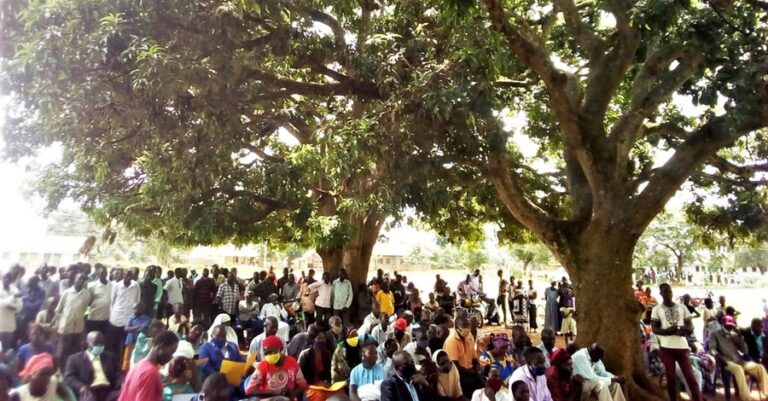
Christians at the funeral of evangelist Fred Isiko, who drove a van for Ashirafu Kasenyi’s cargo transport company, said Kasenyi was behind the killing of Isiko on May 22 in Kagumu village, Kibuku District.

On May 23 police arrested a suspect who said Kasenyi had sent him to kill Isiko, sources said. That day Kasenyi was killed when a mob of more than 50 angry residents, most of them members of churches, attacked him.

When Kasenyi on the evening of May 22 called Isiko to meet with him, the Christian known for proclaiming Christ within and outside church walls got friend Francis Maka to accompany him, Maka said.

“When we met Kasenyi, he gave Fred some money to go and buy some meat at Kadama trading center and to bring it back for supper so as to have a business discussion the following day,” Maka told Morning Star News. “As we were about to reach the trading center, three people stopped us. They said that they have some information for Fred. So I moved at a distance, and immediately one of them removed a long knife and cut his neck as I fled for my life and reported the incident at Kagumu police post.”

Police and hundreds of people converged around Isiko’s body early the next morning, he said.

Earlier in the month Isiko secretly recorded a conversation on his phone in which Kasenyi, a Muslim teacher known as a sheikh, threatened to fire him if he refused to convert to Islam, a relative said.

“You need to convert to Islam if you are to remain as my employee,” Kasenyi says in the May 7 recording, the relative said. Isiko replies, “I am not going to leave Jesus Christ; better to resign than leave Christianity.”

After Isiko was killed, police arrested a suspect who said Kasenyi contracted him and four others to kill Isiko and seven pastors, Maka and others said.

Kibuku police rang Kagumu police ordering them to arrest Kasenyi, but before they could do so community members went to his home and killed him, sources said. They also destroyed his house, gardens and livestock, they said.

Police have arrested just one unidentified suspect in the killing of Kasenyi, sources said. Kasenyi, also known as Kasenyi Jackson, had been a Christian until converting to Islam in 1992.

HOUSE DESTROYED

Also in Kibuku District, Muslim relatives of a newly believing Christian on May 23 burned down his family’s house in Nansyono village.

The attack came after Louis Levi Baula, 46, took his 3-year-old son to a church service on May 2 for healing from seizures and other symptoms.

“Our sheikh had been praying for the child, and we had spent 350,000 Uganda shillings [US$100] given to the sheikh as well as spending a large amount for the treatment of the child in various hospitals, but all in vain,” Baula told Morning Star News.

The pastor of the church, unidentified for security reasons, was initially alarmed by the family as they arrived in their Islamic attire, and he directed ushers to question them, Baula said.

“After we explained our troubles and suffering, the pastor prayed for our child, and immediately his restlessness and abnormal behavior stopped,” Baula said. “The pastor told us to believe in Jesus. We were then convinced that Jesus had healed our son, and we accepted to be prayed to have Jesus as our Lord and Savior.”

Their son was then able to eat food served after the service without the problems he had shown previously, said Baula’s wife, Sifah Ainekisha, and the family was convinced that he had been delivered from his torments.

“We went back home but did not tell anyone, except I shared with my mother-in-law about the prayers in church that made my child well, and that we were planning to go back to the church the following Sunday,” Ainekisha said. “She kept quiet.”

The next Sunday the family attended the worship service and thanked the church for the prayers that healed their son, she said. When they returned home, more than 20 Muslim relatives had gathered outside their home, Baula said.

The relatives began questioning them, and Ainekisha told them that they had taken their son to church for healing prayer, Baula said.

“One called Musitafa slapped her badly and said, ‘Allah Akbar [God is greater], be quiet,’” Baula said. “We thought that they were going to kill us, but they only warned us not to attend the church, and the meeting ended.”

They did not attend the service the following Sunday, May 16, but that evening the pastor visited and prayed for them, he said. They rose early in the morning of May 23 to attend the church service, returning at 5 p.m. to find three of their goats missing, Baula said.

“A relative named Hamisi told me that Allah had taken the goats,” he said. “I was scared by that statement and came back and told my wife.”

She told him they must relocate, he said. Their children are ages 10, 6 and 3.

“As we were thinking of where to go, at around 9 p.m. we heard hens making a lot of noise in the kitchen, and when I came out, I saw smoke and flames going up the roof, and I went back and told my wife that we are dying,” Baula said. “We picked up our children and went out very fast, and within a short period my brothers, sisters and Muslim neighbors together with an imam arrived. The imam recited the Koran, and then later told my brothers to start destroying the house.”

They watched the destruction of their house and all their livestock, he said.

“The imam told us that from today we were no longer one of the family members, that we were kafir [infidels] and that we should leave the homestead immediately to go and look for other infidels,” Baula said. “He added that had it not been the law of our state, we would face death, but ‘go out of here since you have disobeyed Allah and his messenger.’”

Prohibited from taking anything, they left with only the clothes they were wearing, he said.

The family reported the incident to the chairperson of LC1, Moses Magona, who said that he had received a phone call from one of their relatives that Baula’s family had been disowned.

“I received a telephone call from Samuku Kalimu that the whole family has disowned you for leaving Islam but would not kill you – but that if you resist, then they were ready to kill you,” Magona told him, according to Baula.

The family has taken refuge in another Christian’s home.

“We as a church are afraid because the Muslims might attack our church,” the church pastor said. “We have reported the incident to the police post at central ward, Kasasira Town Council.”

The assaults were the latest of many instances of persecution of Christians in Uganda that Morning Star News has documented.

Uganda’s constitution and other laws provide for religious freedom, including the right to propagate one’s faith and convert from one faith to another. Muslims make up no more than 12 percent of Uganda’s population, with high concentrations in eastern areas of the country.

SOURCE: CHRISTIAN HEADLINES