
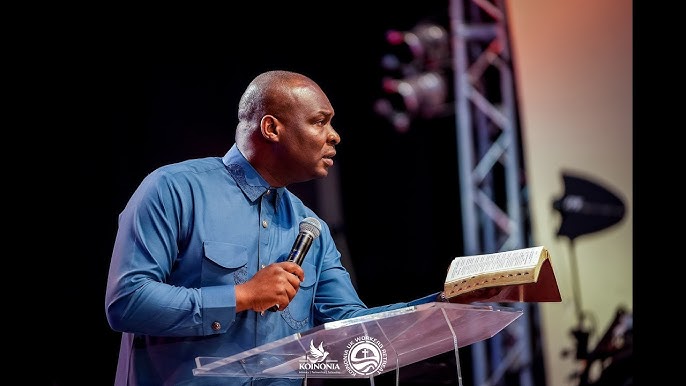
Apostle Joshua Selman’s theology is built on three interlocking pillars: the grace of God, the person of the Holy Spirit, and the authority of Scripture. Unlike some charismatic ministers who emphasise experience over knowledge, Selman consistently calls his listeners back to the Word as the foundation of all supernatural encounter.
Central to Selman’s teaching is the doctrine of grace — not as a license for careless living, but as the empowering presence of God that enables believers to live beyond their natural capacity. He often states, “Grace is not an excuse to sin; grace is the power not to sin.” This nuanced position has helped him navigate theological tensions in a church landscape where grace and holiness are often falsely pitted against each other.
- The Most Reluctant Convert: The Untold Story of C. S. Lewis
- ACCESSING ANSWERS TO PRAYERS
- Christians are making an impact at COP26 says campaigner
- Nine Years, 782,000 Words Later, South Carolina Woman Completes Handwritten Bible
Selman places extraordinary emphasis on the Holy Spirit as a person — not a force or a concept — who must be known, honoured, and communed with. His teachings on the Holy Spirit draw from a deep study of Scripture and a personal devotion to prayer that he says spans several hours daily. He teaches that the baptism of the Holy Spirit is not merely an emotional experience but an empowerment for Kingdom service and spiritual warfare.
Another major theme in Selman’s ministry is the Kingdom of God — its nature, its laws, and the believer’s responsibility to demonstrate it on earth. He teaches that Christians are ambassadors of a real Kingdom, and that understanding Kingdom principles unlocks supernatural results in every area of life.
- The Snare of Indifference: Archbishop Duncan-Williams Sounds the Alarm on Lukewarm Christianity
- The Experience 13 – 2018
- Franklin Graham: The Voice Of God Can Never Be Canceled – Part 2
- 10 Powerful Stories of Miracles and Revival in the Global Church
- How to Build an Unstaggering Faith
Selman also addresses prayer with remarkable specificity. He teaches different dimensions of prayer — intercession, warfare, communion — and emphasises that prayer is not a religious duty but a relational conversation with a living God. His teaching series “The Science of Prayer” remains one of his most widely distributed resources and has transformed the prayer lives of thousands of believers worldwide.

