
Home Blog Page 64

Thanksgiving: The Perfect Time To Share Your Testimony

0

Walking Miracles Eating Turkey

For years, Bryan Williams had told a story of incredible survival, but each time he told it grew in mythical status.

The first time he told the story it was probably the truth.

He went to Iraq to cover the war as a reporter for MSNBC and took a helicopter ride.  When he landed, he found out that a helicopter an hour ahead of his was shot at from the ground.

Over the next few years as he retold the story, the helicopters distance grew closer, until finally it was his helicopter that was the one that was shot at. At one point he even described seeing the shooter on the ground and described his emotional state as he saw his life flash before his eyes.

Eventually, some of the guys who had been there during the time couldn’t handle hearing him be introduced as a guy who was shot at in Iraq, and they told the truth about the story. Soon after that, Bryan Williams lost his job and became the butt of every joke dealing with exaggerating stories.

As I have thought about Bryan Williams, I’ve thought about the temptation in every heart to live incredible experiences. We all want to be able to tell stories of survival that would make us look good in the eyes of others around us. We’re all tempted to exaggerate stories and to make ourselves look better that we actually do.

And yet, as believers, we have a story that we can tell as often as we want that cannot be exaggerated. We have experienced something far greater, more unbelievable, and more supernatural than anything anyone can experience on earth. We have been given a new heart.

And yet over time, unlike Bryan Williams’ story that grew more and more untrue, our story dwindles. We can become less excited to talk about it. When we think about our salvation, it becomes a great day among many, and our understanding about what happened that day gets fogged up with the worries of life.

The fact of the matter is that if we are saved, then we are walking miracles and it is impossible to over-exaggerate just how desperate our situation was.

Ephesians 2:1-3 paints the picture perfectly. It describes our situation as the worst it could possibly be; we were dead. It wasn’t a bad situation, we weren’t drowning, we weren’t “in trouble,” we were completely dead. “Mostly dead” only works in the movies. And that’s when God, in His great love, intervened and saved us by making us alive together with Christ (Eph. 2:5).

As we prepare for Thanksgiving, we are reminded of the woman in Luke 7:36-50. As Jesus was eating with Simon the Pharisee, a woman came and began to cry over Jesus’ feet, wiping them with her hair and anointing them with expensive perfume. Simon was scandalized by the fact that Jesus would let a prostitute touch Him. So Jesus said, “A moneylender had two debtors: one owed five hundred denarii, and the other fifty. When they were unable to repay, He graciously forgave them both. So which of them will love him more?” Simon answered and said, “I suppose the one whom he forgave more.” And He said to him, “You have judged correctly.”

The question we should ask ourselves this thanksgiving is, “how much have I been forgiven?”

The Bible tells us that we deserve God’s wrath (John 3:36), that our hearts are desperately evil (Jer. 17:9), and that we were dead spiritually and unable to please Him (Rom. 8:8). And the more we tried to dig our way out of our situation with good works, the more we brought God’s wrath on us. Perhaps we struggle with thankfulness because we have forgotten how much we have truly been forgiven.

If you are someone who tends to under-dramatize your salvation, let this thanksgiving be an opportunity for you to once again refresh the wonder of your salvation. Let’s talk about and once again be amazed by how great our salvation is.

The Bible states that man falls short of the glory of God (Rom. 3:23), and the more we recognize the gap between us and Him, the more thankful we will be. The reality is that the gap between us and Him is eternal, and the more we comprehend the vastness of the gap the more thankful we will be. In other words, we should be eternally thankful because we have been forgiven an eternal debt.

Let me encourage you this thanksgiving to share your testimony. Most Christians have unbelieving friends and family who will be present. Many stories are told at the thanksgiving table–some true, some embellished, and some flat out lies. Let’s not forget about the one story that we have experienced that is the most incredible of all. At some point, this Thanksgiving, take some time to share the story of your salvation. And remember that you can embellish it as much as you want because you will never be able to exaggerate just how amazing and dramatic it is.

This article originally appeared on TheCripplegate.com. Used with permission.

Why You Should Stop Living By Your Love Language

0

“The 5 Love Languages” (geared toward couples) has, by far, had the most success, however. Since its release it’s been utilized by marriage counselors, praised by pastors, and helped countless married couples find depth and intimacy in their relationships.

Sound too good to be true?

Maybe partly.

The book operates on the theory that there are five primary love languages: words of affirmation, acts of service, receiving gifts, quality time, and physical touch. We each have one or two dominant ones, and it’s important to understand them, how they rank, and how they need to play into our relationships. But unlike most personality profiles, it equips you to “read” not just yourself, but the person right in front of you—allowing you both to love (and be loved) in the way you really need.

As with anything that comes from the human mind, there are some subtle flaws lurking beneath what looks like a foolproof approach. And according to pastor and author Tim Challies, understanding these flaws won’t discredit The 5 Love Languages…it will allow you to use them better. Here’s what Challies shares in his vlog, “The Problem with Love Languages”:

1. Love languages can mask selfishness.

“It’s possible that I am actually using a love language that you appreciate, in order to manipulate you, so you give me love,” Challies shares. “In other words, I will speak your language so that you speak mine, or I will speak your language to the degree or the extent that you speak mine.”

According to Challies, this can enable a “back and forth” pattern where we (perhaps even subconsciously) tap into another’s love language in order to “primarily…feed our own desire to be loved.” Instead of studying the languages to learn to give to one another, we focus on receiving love from one another.

2.  Our love “languages” are actually love desires.

And as Challies points out, our desires can’t always be trusted.

“These languages simply show how I desire to be loved. As we look at the Bible, we know I can’t trust my desires. I’m a sinful person. My desires are deeply flawed, because I myself am deeply flawed. My desires may simply point to my idols; those things I’m convinced that unless I have this, I cannot be happy, I cannot be joyful.”

Challies does provide some insight into ways we can redeem these flaws, using the love languages in a way that’s God-honoring and constructive:

  • Use them to help you understand the variety of ways there are to love and be loved.
  • Pay attention to how our loved ones actually want to be loved. And realize (and appreciate) that this is usually the way their love toward you will manifest.

“The 5 Love Languages” was never meant to replace the gospel. But does this mean we should dismiss it as a resource? Not at all. I would actually encourage you to pick it up, read it, and take it in. Don’t let skepticism keep you from embracing the life-changing impact of a book like this. Just be aware that it’s not foolproof, and we need Jesus in every step of the process.

I think we can all appreciate Challies’ closing thoughts:

“Now, how do I know that love languages are flawed but can be redeemed? Because Jesus Christ did not speak the language I wanted, He spoke the language I needed. That is the heart of the gospel. He spoke in the language I needed most, that proves to me I cannot trust what I want. Instead, I always, always need to look to Him and to His word.”

Amen.

Ensuring The Continuation Of The Holy Ghost Fire

0

Many questions are always asked about the baptism of the Holy Spirit and some skeptics have always kept one eye open when having discussions on the topic.

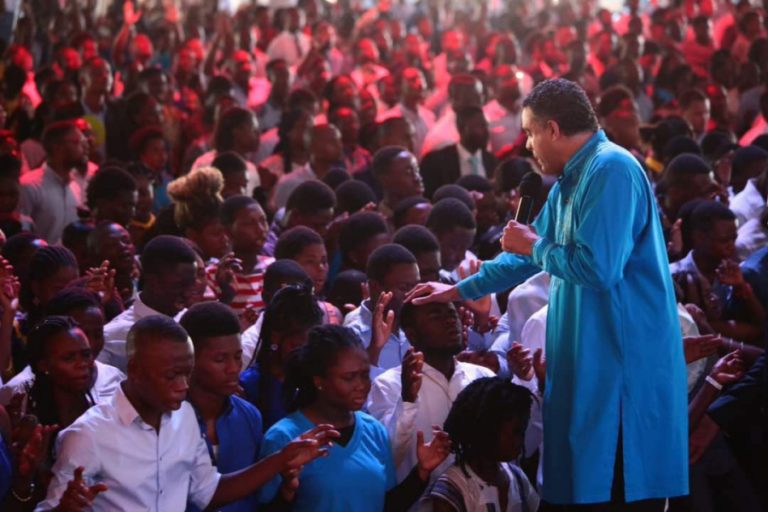
Bishop Dag Heward-Mills(founder of the Lighthouse Chapel International) however is an ardent advocate of the Holy Ghost Baptism and it’s benefits.

Baptism in the Holy Spirit – What Is It?
We should be careful to not confuse baptism in the Holy Spirit with the various other ministries of the Holy Spirit. The filling of the Holy Spirit is how He empowers and controls us (Acts 4:31Ephesians 5:18). The indwelling of the Holy Spirit is God the Holy Spirit taking up permanent residence in our lives (John 14:17Romans 8:9-111 Corinthians 3:166:191 John 4:4). The sealing of the Holy Spirit is God marking us as His permanent possession (Ephesians 1:13-14). Baptism in the Holy Spirit is related to these other ministries of the Holy Spirit, but at the same time, it is separate from them.

Baptism in the Holy Spirit – What Are the Results?
In the book of Acts, baptism in the Holy Spirit sometimes resulted in speaking in tongues (Acts 2:410:44-46Acts 19:6). However, in other instances, people believed and therefore received baptism in the Holy Spirit, but nothing is said of tongues (Acts 2:414:45:148:1713:124814:117:123418:8). Again, the Bible makes it abundantly clear that every believer has received the baptism in the Holy Spirit (1 Corinthians 12:13), but not every believer speaks in tongues (1 Corinthians 12:27-31). As a result, there is no specific sign that a believer should expect when they are saved and receive baptism in the Holy Spirit.

Baptism in the Holy Spirit can be defined as: at the moment of salvation, the Holy Spirit places a believer into permanent union with Christ and with other believers in the Body of Christ. 1 Corinthians 12:13 and Romans 6:1-4 are the central passages in the Bible where we find this doctrine. 1 Corinthians 12:13 states, “For we were all baptized by one Spirit into one body-whether Jews or Greeks, slave or free-and we were all given the one Spirit to drink.” Romans 6:1-4 says, “What shall we say, then? Shall we go on sinning so that grace may increase? By no means! We died to sin; how can we live in it any longer? Or don’t you know that all of us who were baptized into Christ Jesus were baptized into his death? We were therefore buried with him through baptism into death in order that, just as Christ was raised from the dead through the glory of the Father, we too may live a new life.”

Baptism in the Holy Spirit – Who Has It?
Every believer in the Lord Jesus Christ has experienced baptism in the Holy Spirit. That is why Paul could state, “For we were all baptized by one Spirit into one body… we were all given the one Spirit to drink” (1 Corinthians 12:13). As we read in Acts chapter 2, baptism in the Holy Spirit began on the day of Pentecost. This was in fulfillment of Jesus’ words in Acts 1:5, “…but in a few days you will be baptized with the Holy Spirit.” The Apostles experienced the baptism in the Holy Spirit on the day of Pentecost. It resulted in them being empowered to proclaim the Gospel and lead thousands of people to faith in Christ (Acts 2:41). In two instances later in Acts, the baptism in the Holy Spirit was temporarily delayed in order to demonstrate to the Apostles that Samaritans (Acts 8:14-17) and Gentiles (Acts 10:27-48) were equally a part of God’s plan of salvation. The Apostle Peter proclaimed, “Can anyone keep these people from being baptized with water? They have received the Holy Spirit just as we have.” From that point on, every believer received the baptism in the Holy Spirit the moment they believed.

Baptism in the Holy Spirit – What Does It Mean To You?
To summarize, baptism in the Holy Spirit does two things. First, it identifies us spiritually with the death and resurrection of Christ, uniting us with Him. Second, baptism in the Holy Spirit joins us to the body of Christ, and identifies us as united with other believers. Practically, baptism in the Holy Spirit means we are risen with Him to newness of life (Romans 6:4), and that we should exercise our spiritual gifts to keep the body of Christ functioning properly as stated in 1 Corinthians 12:13. Experiencing baptism in the Holy Spirit serves as an exhortation to keep unity of the church (Ephesians 4:5). Being identified with Christ in His death, burial, and resurrection-through baptism in the Holy Spirit-establishes the basis for realizing our separation from the power of indwelling sin and our walk in newness of life (Romans 6:1-10Colossians 2:12).

“You, however, are controlled not by the sinful nature but by the Spirit, if the Spirit of God lives in you. And if anyone does not have the Spirit of Christ, he does not belong to Christ” (Romans 8:9).

How To Worship When You’re Not In Church

0

Around the time my husband and I were married (25 years ago), we both felt the pull to attend church.

Until then, it had never been part of my regular routine—I’d always preferred sleeping in on Sundays—but I discovered, to my surprise, that I loved going to church. My only complaint? I wished there were some way to carry that feeling with me when I went home. I remember sitting on the end of my bed one morning after we came home, the songs repeating endlessly in my mind, feeling a longing for something more.

I browsed the gospel and hymn cassette tapes in the music section of various department stores and tried to pick out titles that sounded familiar, but I couldn’t find anything similar to the songs we sang. So I randomly picked out some tapes, eagerly plugged them into my car stereo, and felt disappointed when I recognized nothing. The tapes made their way into the garage sale pile, and I was left, once again, wanting something I couldn’t define.

At that time, I did not know that there was a kind of faith that went beyond the walls of a church. I didn’t realize that there was so much more to faith than showing up for an hour on Sundays. Nor did I know that I could have any kind of relationship with God, let alone one that sustained me minute by minute, giving me strength and clarity and guiding my steps. I had no idea that I could live my life in a state of worship. Once I learned that it was possible, it changed my faith for good.

Yet I think there are a lot of people with similar experiences to the ones I described, who haven’t witnessed examples of people living a life of worship but feel a vague hunger for something they can’t explain. No matter how strong your faith is, no matter whether it plays a dominant role in your life or a tiny one, the reality is that we were made to worship God. Sounds simple, right? But the truth is that our concept of worship may be incomplete and limited. When we expand our ideas about worship, we will begin to see God more clearly. We’ll realize He is present all the time, and we’ll discover a sense of fulfillment that is deeper than we imagined it could be.

Romans 12:1 serves as a great guide to how to worship, even when you’re not in church. In this verse, Paul urges us, “in view of God’s mercy, offer your bodies as a living sacrifice, holy and pleasing to God—this is your true and proper worship.” 

In many churches, we’ve gotten in the habit of referring to the song portion of a service as “worship,” but in reality, true worship isn’t confined to what happens at church, nor is it about the music. In fact, worship is even better when you bring it into your daily life, letting God flow through you and around you as you do your ordinary, everyday tasks. By taking this verse apart, we can discover how to let your whole life reflect a state of worship.

In view of God’s mercy. In order to accept God’s promise that when we believe we belong to Him forevermore (even after death), we must first recognize our need for what He offers. When we see the enormity of our sin, we understand the extent of the sacrifice Jesus made—willingly—on our behalf. When we grasp that there are no limits to God’s mercy, it changes the way we interact with others. We see that what we’ve been given is special, but it’s not exclusively ours.

The same love and forgiveness and acceptance is available to anyone who wants it. Because of this, we are able to act with mercy towards others, and when we do so, we’re glorifying God. We’re acting in a state of worship.

Offer your bodies as a living sacrifice. Worship isn’t just an abstract state of mind. Serving God and bringing glory to God are done through our actions, by living a life that represents the truth of God. It’s about revealing the character of God and showing His love to others.

Ask God to help you behave in ways that exemplify His character and portray His message of acceptance and forgiveness and kindness. When you act as His hand extended towards others in need—by giving, by helping, by listening, by encouraging—you are offering your body as a living sacrifice. It’s not a sacrifice unless you give up something valuable, but this kind of sacrifice brings with it great rewards.As you build relationships with others, you will find opportunities to share what God is doing in your life. And as you see more of Him, your faith will deepen, and you’ll find yourself worshiping God more and more often.

Holy and pleasing to God. Fill your mind with what is good and pleasing and holy (Philippians 4:8). It doesn’t have to be labeled “Christian” in order to be uplifting and edifying—but you do need to guard your mind and heart against temptations because there is no one else who will do this for you.

For me, what this looks like is listening to contemporary Christian rock more often than any other music—not because the other is inherently bad, but because if I’m going to have song lyrics stuck in my head, I want them to be good. I want to dwell on something inspiring, to meditate on something hopeful, and to wrestle with complex truths. I read all kinds of books, but I’ve learned to shy away from gratuitous violence and demeaning relationships in the fiction I read, because I don’t like the way that makes me feel.

The truth is we can find God in non-religious movies, books, and activities if we set our mind on Him and remember to watch for Him. Each of us has to decide what to feed ourselves to bring out the best in ourselves, and then to turn it around to offer it to God.

This is your true and proper worship. It’s not enough to simply like God; the truest worship is when we go all in. This extravagant love and extreme submission includes wanting whatever God thinks is best for you, in all areas of life.

We have a human tendency to compartmentalize—this box is for church, and that one is for the other parts of life. Make a conscious effort to keep the boxes wide open and allow them to overflow into other areas. Be open about how you see God in your life, but don’t bash someone over the head with your belief. Simply live it, authentically.

Let your life be your worship. Offer it as a gift to the God who has given you so much. That’s the most powerful kind of testimony, and the most beautiful kind of worship—whether you’re in church or not.

5 Questions To Determine If He’s “The One”

0

My boyfriend and I had been pursuing an intentional relationship for quite some time. He was ready to move forward into engagement. I wasn’t so sure. Despite my uncertainty, I needed to make a decision.

I’d been in the relationship long enough to have all of the facts. I knew the ins and outs of his personality. I knew his strengths. I knew his weaknesses. I knew his likes and dislikes. I knew his convictions. There was only one thing left to figure out: I needed to decide if I wanted to commit to spending the rest of my life with him.

These questions started to bounce around in my mind:
Should we get married?
Are we really better together?
Do we make a great team?
Do we push each other forward?
Does my family think we’re better together?
Do we draw each other closer to Christ?

After much prayer and counsel over the relationship, I decided that he was not the one I wanted to marry. I didn’t want to spend the rest of my life with him. I truly believed that we were better off separate than together.

Breaking off that relationship was hard—really hard. It was hard saying goodbye to the man I’d just spend months investing in. It was hard to move on knowing I could be single forever. It was hard thinking about starting over. It was hard losing his companionship. Despite the pain and sorrow of the breakup, I am convinced it was the right decision.

Since I’ve received emails directly from some of you asking, “How can I know if he’s the one?” I want to share the questions and thoughts that ultimately helped me make that decision. My prayer is that these questions and thoughts I considered before my breakup will help you answer that question for yourself.

1. Do we encourage each other spiritually?

When I took the time to seriously evaluate this question in my relationship, I realized that we really didn’t encourage each other spiritually. Unfortunately, his spiritual leadership seemed to lag as the relationship continued on. He would talk about wanting to make Christ the focus, but couldn’t seem to follow through on making Him a regular part of our lives. This became a red flag for me. While my relationship with Christ is ultimately my responsibility, I wanted to marry a man who inspired me to grow closer to Christ.

2. Is Christ the focus of our relationship?

When the relationship first started, Christ was our shared central focus. As the relationship continued on, we became the central focus. Everything was about us—ourfeelings, our interests, our love for each other. Us, us, us. I soon realized that our relationship was actually built upon a foundation of infatuation and self, not on Christ. This wasn’t all my boyfriend’s fault. I got caught up in focusing on us, too. Watch out for relationships that focus on you rather than on Christ.

3. Does my family support our relationship?

The relationship seemed to start off well, and my family was very supportive. As things continued, my family began to notice inconsistencies. They began to wonder if he was truly a great match for me, and they told me so. Toward the end of the relationship, my entire family (every sibling and parent) was on the same page that this relationship was not best for me. After praying and observing, they all (at individual and different times) shared their concerns and advised me to end it.

Wow! Talk about a clear red flag. While it wasn’t easy, I took their wisdom and input seriously and came to see that their concerns were very much true. If the people who know and love you most express concerns over your relationship, listen.

4. Does he respect my purity?

When we first started a relationship, he was very honorable and respectful. As the relationship progressed, his guard came down and I began to see deeper into his character and heart. His respect for my purity began to fade, and I soon realized that his words were just that—words. They weren’t so much a core conviction but more of the right words to say to get me to like him. If your boyfriend pushes you to compromise physically or seems to stick to certain standards just to please you rather than to please Christ, pay attention.

5. Do we share a similar vision and passion for life?

Toward the end of our relationship, I started to realize that we didn’t share a similar vision and passion for life. Yes, we were both Christians. Yes, we both went to church, but that was about it. He didn’t share my drive and passion for ministry and discipleship. I wanted to marry a man who was passionate about building God’s kingdom.

Let’s Be Honest

While the process wasn’t easy, answering those questions helped me to figure out that this was not the right relationship for me to commit to for a lifetime. I look back and am so grateful that I was willing to be honest with myself and call it off.

If you are currently in a relationship, I hope you will take the time to answer those questions for yourself. Maybe you’ve heard the saying “fools rush in.” It is unwise to leap before you really look at the situation through the eyes of wisdom. Ask for the Lord’s help. Consult older, wiser voices, and take the time to figure out if this is the man you truly want to commit your life to.

We can start that dialogue right now:
What qualities are you looking for in a future husband?
What questions have you asked yourself in trying to discern if he’s “the one”?

Article originally appeared on Lies Young Women Believe. Used with permission.

Bethany Baird: After a brief experience in the modeling industry, Bethany’s eyes were opened to how self-absorbed and lost her generation of young women really are. She and her older sister were inspired to start a blog (www.GirlDefined.com) and wrote a book Girl Defined: God’s Radical Design for Beauty, Femininity and Identity. Their passion is to help young women find God’s truth about beauty and womanhood and the freedom that comes from living a radically different life for Christ.

10 Ways Christians Can Show Love This Thanksgiving

0

The holidays are upon us and soon we will be gearing up for the busiest time of the year.

In a few weeks Thanksgiving will be here. In the meantime, we will all be planning the big meal, helping guests make lodging arrangements and possibly making travel arrangements. It can be a really stressful time and sometimes it’s easy to forget to remember what we are thankful for. It is also easy to forget about helping others. A lot of people think of giving and charity at Christmastime, but we can also show love and give thanks at Thanksgiving too. There are many ways that Christians can show love in this season of thanks giving.

Let us think of ways to motivate one another to acts of love and good works. Hebrews 10:24

1. Serve At A Homeless Shelter – Have your Thanksgiving dinner early this year and then go serve at a homeless shelter on the actual holiday for a few hours. Helping those less fortunate is good for the heart and helps put your blessings (and struggles) in perspective.

2. Take Dinner To An Elderly Neighbor – Just before you sit down for your own family dinner, take some food to an elderly neighbor who may not have family nearby or is unable to get out.

3. Help A Friend With Make Ahead Food Preparations – Get together with a good friend and do some make ahead food prep. Roast and bone both your turkeys or make your pies together. Not only will this cut down on stress on the holiday, you can also spend some quality time together.

Your love for one another will prove to the world that you are my disciples. John 13:35

4. Invite Someone With No Family To Dinner – If you know someone who has no family or has family that is far away and isn’t able to make it home, invite them to dinner. If you have a friend who is going through a hard time such as a divorce or financial difficulties, invite them too.

 5. Buy Your Pet Some Special Food – Show your pet that you are thankful for them by getting a can of special food or some treats that they are not used to getting. Animals are our faithful companions, protectors and lap warmers. They deserve a special dinner too.

6. Hand Write Notes To Your Loved Ones – Write each of your family members a note telling them what you are thankful for about them. Place the notes by each of their places at the dinner table.

7. Share Your Leftovers With An Elderly Neighbor – If you are up to your eyeballs in leftovers, share some with an elderly neighbor. They will be extremely grateful.

8. Buy Someone’s Thanksgiving Dinner – If you are in a financial position to do so, buy the fixings for Thanksgiving dinner for a low income family that you know or a single Mom. If you go out for dinner on Thanksgiving, consider paying for someone else’s dinner like an elderly couple or a veteran and their family.

9. Donate To A Charity Or Food Bank – Make a donation to a local branch of a charity like the Salvation Army or to your local food bank. This can be done in a few different ways. It can be monetary, directly to the charity in person, or at your local grocery store. One of our local charities has a food drive every year by stuffing a public transportation bus with food donations.

10. Blessing Bag – Take a gallon size zip lock bag and put things in it like a toothbrush, travel size toothpaste and Antiperspirant, feminine hygiene products, bar soap, hair shampoo/conditioner and food coupons (like dollar coupons from fast food restaurants). Take them down to the poor section of your town the week before Thanksgiving and give them out to the homeless.

There are many ways to show God’s love and be a blessing to others this Thanksgiving. Let your light shine and be blessed.

Do you still worry about getting overwhelmed with all the ‘stuff’ that needs to be done and that you will totally forget what the holiday is really about? Let us pray.

Dear Lord,
We’re coming up on a very busy time of year. I know that I can get totally lost in all the things that need to be prepared, baked, bought and wrapped. It can be so easy to forget all the things You have done for me. I pray that You will help me to keep my mind and heart open. That You will remind me to look beyond myself to see what someone else needs. Bless me with the time and/or finances to do something special. I want to light up someone’s world with Your light shining from me. Help me stay focused on the things I’m thankful for everyday, no matter how big or small. Help me stay focused and thankful on all the things You do for me as well. In Your Name I pray. Amen.

AN ENCOUNTER WITH THE PERMIT OFFICIAL

3

On the 26th of August 2005 at exactly 10:30am I stepped unto the soils of the beautiful Southern African country bordered by the Indian Ocean to the east – Mozambique!


I believed that God had given me the Land to possess. I went through immigration and customs procedures. I had only 30kg of luggage full of books, preaching tapes and videos of my spiritual father.
One custom official upon seeing all the materials in my luggage asked me if I had come into the country to sell books and tapes.
Those were the seeds my spiritual father had given me to sow into the country of Mozambique.

A few days after, I had to go and see the authorities to find out the process for getting my permit and the registration of the church. When I finally met the Director for religious affairs, he asked how old I was. He was shocked to know how young I was. He told me that he had been in charge of that office for over 25 years and had never met a young missionary like me. I was 26 years old.


He felt I was too young to come to Mozambique for missionary work and he advised me to go back to my country because I wouldn’t make it in Mozambique.


Besides, they expected missionaries from rich countries like America and not Ghana. Before I could convince him, he had dismissed my meeting with him.

In that moment I knew that only God could turn things around. I declared a 3 day fast and prayed fervently asking God to touch the heart of this man.
It was just a few days to my visa to expiration date.
I went back to see him again after my prayer and fasting.
This time, he had a completely different attitude towards me!
He was willing to help me go through the process to settle in the country to commence my mission!


PRAYER WORKS!
“The king’s heart is in the hand of the Lord, Like the rivers of water; He turns it wherever He wishes”
(Proverbs 21:1)


How true God’s word is!


It’s been many years since and God has been faithful to me in Mozambique!

Frank Otchere – Missionary, Mozambique.

5 Questions To Determine If He’s “The One”

1

My boyfriend and I had been pursuing an intentional relationship for quite some time. He was ready to move forward into engagement. I wasn’t so sure. Despite my uncertainty, I needed to make a decision.

I’d been in the relationship long enough to have all of the facts. I knew the ins and outs of his personality. I knew his strengths. I knew his weaknesses. I knew his likes and dislikes. I knew his convictions. There was only one thing left to figure out: I needed to decide if I wanted to commit to spending the rest of my life with him.

These questions started to bounce around in my mind:
Should we get married?
Are we really better together?
Do we make a great team?
Do we push each other forward?
Does my family think we’re better together?
Do we draw each other closer to Christ?

After much prayer and counsel over the relationship, I decided that he was not the one I wanted to marry. I didn’t want to spend the rest of my life with him. I truly believed that we were better off separate than together.

Breaking off that relationship was hard—really hard. It was hard saying goodbye to the man I’d just spend months investing in. It was hard to move on knowing I could be single forever. It was hard thinking about starting over. It was hard losing his companionship. Despite the pain and sorrow of the breakup, I am convinced it was the right decision.

Since I’ve received emails directly from some of you asking, “How can I know if he’s the one?” I want to share the questions and thoughts that ultimately helped me make that decision. My prayer is that these questions and thoughts I considered before my breakup will help you answer that question for yourself.

1. Do we encourage each other spiritually?

When I took the time to seriously evaluate this question in my relationship, I realized that we really didn’t encourage each other spiritually. Unfortunately, his spiritual leadership seemed to lag as the relationship continued on. He would talk about wanting to make Christ the focus, but couldn’t seem to follow through on making Him a regular part of our lives. This became a red flag for me. While my relationship with Christ is ultimately my responsibility, I wanted to marry a man who inspired me to grow closer to Christ.

2. Is Christ the focus of our relationship?

When the relationship first started, Christ was our shared central focus. As the relationship continued on, we became the central focus. Everything was about us—our feelings, our interests, our love for each other. Us, us, us. I soon realized that our relationship was actually built upon a foundation of infatuation and self, not on Christ. This wasn’t all my boyfriend’s fault. I got caught up in focusing on us, too. Watch out for relationships that focus on you rather than on Christ.

3. Does my family support our relationship?

The relationship seemed to start off well, and my family was very supportive. As things continued, my family began to notice inconsistencies. They began to wonder if he was truly a great match for me, and they told me so. Toward the end of the relationship, my entire family (every sibling and parent) was on the same page that this relationship was not best for me. After praying and observing, they all (at individual and different times) shared their concerns and advised me to end it.

Wow! Talk about a clear red flag. While it wasn’t easy, I took their wisdom and input seriously and came to see that their concerns were very much true. If the people who know and love you most express concerns over your relationship, listen.

4. Does he respect my purity?

When we first started a relationship, he was very honorable and respectful. As the relationship progressed, his guard came down and I began to see deeper into his character and heart. His respect for my purity began to fade, and I soon realized that his words were just that—words. They weren’t so much a core conviction but more of the right words to say to get me to like him. If your boyfriend pushes you to compromise physically or seems to stick to certain standards just to please you rather than to please Christ, pay attention.

5. Do we share a similar vision and passion for life?

Toward the end of our relationship, I started to realize that we didn’t share a similar vision and passion for life. Yes, we were both Christians. Yes, we both went to church, but that was about it. He didn’t share my drive and passion for ministry and discipleship. I wanted to marry a man who was passionate about building God’s kingdom.

Let’s Be Honest

While the process wasn’t easy, answering those questions helped me to figure out that this was not the right relationship for me to commit to for a lifetime. I look back and am so grateful that I was willing to be honest with myself and call it off.

If you are currently in a relationship, I hope you will take the time to answer those questions for yourself. Maybe you’ve heard the saying “fools rush in.” It is unwise to leap before you really look at the situation through the eyes of wisdom. Ask for the Lord’s help. Consult older, wiser voices, and take the time to figure out if this is the man you truly want to commit your life to.

We can start that dialogue right now:
What qualities are you looking for in a future husband?
What questions have you asked yourself in trying to discern if he’s “the one”?

Article originally appeared on Lies Young Women Believe. Used with permission.

Bethany Baird: After a brief experience in the modeling industry, Bethany’s eyes were opened to how self-absorbed and lost her generation of young women really are. She and her older sister were inspired to start a blog (www.GirlDefined.com) and wrote a book Girl Defined: God’s Radical Design for Beauty, Femininity and Identity. Their passion is to help young women find God’s truth about beauty and womanhood and the freedom that comes from living a radically different life for Christ.

5 Reasons You Don’t See Christians Sharing Their Faith Anymore

0

Why is it so hard to share our faithLet me rephrase that. Why is it so hard to share our faith in a smartlovingbravehonesthumble, and confident way? When you add those qualifiers, it gets a bit wordy and a whole lot harder. These qualifiers hint at why it’s so difficult to do something that shouldn’t be complicated—telling people about Jesus.

1. Let’s start with the descriptor smart

Many of us feel as if we need a theology degree to debate an average skeptic on the tenets of our faith. There are two fronts we face in this battle. One is a cultural front. In our hyperspeed culture, if you can’t produce a dazzling point in sixty seconds, you might as well yawn on behalf of your audience and get it over with. How do you share something as complex as the gospel at the expected pace?

2. We also feel unequipped on another front: ignorance.

Many Jesus-followers are rather uninformed on the history, accuracy, context, and content of the Scriptures, and the research necessary to acquire substantive knowledge of our faith takes much longer than a two-minute Google search. The solution is simple, but not easy. We need to study the Scriptures with much more commitment and depth, and then deliver this knowledge with gentleness and respect.

In your hearts revere Christ as Lord. Always be prepared to give an answer to everyone who asks you to give the reason for the hope that you have. But do this with gentleness and respect (1 Peter 3:15, NIV).

3. There’s another reason we tend not to talk about God: we wait too long. 

We’ve all heard the phrase “The first step is always the hardest.” It is derived from a proverb describing how the first stretch of a difficult journey is the hardest. Sometimes integrating faith into the journey of a particular friendship is the hardest step. You know the routine: We make a new friend (yay!). We talk about sports, the weather, The Bachelor. Then we slide into the next phase of friendship—familiarity. Uh-oh. We haven’t told them the most important thing about ourselves: We love Jesus (eek!). We missed the window where it would feel normal to tell them, and now it will feel yucky if we get rejected. The longer we avoid declaring our true allegiance, the more awkward it becomes.

I have two thoughts on this:

First, we need to be intentional about sharing our faith sooner. This is simply part of telling our story, not attempting to convert someone. We can avoid a lot of unnecessary anxiety if we’re more transparent in general.

Second, we need to be less concerned with getting rejected and more concerned with giving credit to the One who made us such desirable friends—God. If you are a true Christ-follower, part of being real is giving Him the credit for your being a halfway decent person. In general, we don’t care for those who are led more by people-pleasing fears than by what they genuinely care about. We may not agree with someone’s beliefs, but we respect them for striving to live by them. But it goes beyond the fact that people will respect you more for standing for your faith than for cowering behind it. It’s about putting God first, and being secure with God rather than feeling secure with people.

He must increase, but I must decrease (John 3:30, ESV).

4. Now for the qualifier brave.

We need courage not only on the personal fear-of-rejection front but on a much more looming front—cultural rejection. In my opinion, the word persecution has been overused. In America today, there isn’t persecution in the sense of being burned at the stake for heresy or beheaded for refusing to deny your faith (which is sadly the case for many present-day martyrs around the world). The persecution that exists in our culture is much more oblique, yet it creates a current of fear that has paralyzed a large number of Christ-followers.

Unfortunately, one can be called many terrible things for expressing the basic views of orthodox Christianity: narrow-minded, irrelevant, naive, stupid, anti-science, judgmental, bigoted, homophobic, misogynistic, intolerant. All these possible misinterpretations of our faith can leave us in retreat mode. Perhaps we don’t want to be so disengaged, but our fear produces that result. To be fair, we have inherited a lot of the mess involving very reasonable criticisms of the public majority of Christians. But we no longer need to pay for the sins of our fathers.

God makes all things new, even the reputation of the church. We can be part of that, but it requires courage. We need to face the unpleasant atmosphere that rejects absolute truth and the idea that holiness is more important than happiness. Perhaps, if we spent more energy looking at real persecution around the world than at the risks we face by engaging culture, then our hearts would naturally swell with a little more bravery.

Consider Him who endured such hostility from sinners, so that you will not grow weary and lose heart. In your struggle against sin, you have not yet resisted to the point of shedding your blood (Hebrews 12:3-4, BSB).

5. Christ-followers also find it difficult to walk the tightrope of humility and confidence.

We tend to come off as either mousy about our faith, hoping subtle subtext will count as evangelism, or as pushy and preachy, loudly and proudly giving people a good dose of no-nonsense truth. But there are some who do it right. They somehow grasp both sides of the harness and testify about the Good News with great finesse. How do we do the same? Fear of being preachy and pushy can keep us passive. Being unimpressed by the reality of free will, and uninterested in walking the longer journey with spiritually adrift people, can reduce our credibility and effectiveness. There are two choices for how we relate to others in matters of faith: invade or invite.

I met a lady at the DMV, and her story was amazing. She’d had a terrible experience with the church as a young woman and vowed never to step foot in a church again. Then she moved to West Palm Beach, where her hairstylist befriended her and asked what she thought about God. This lady shared her views. The hairstylist listened and validated her, and then still invited her to church. She said no at first, but couldn’t stop thinking about it. A week later, she called her hairstylist and agreed to go. Several years later, she’s behind the counter at the DMV sharing her faith, which goes to show good things can really happen at the DMV!

I was convicted when I heard her story. I often shy away from inviting others into a conversation about God, or to a place where they can learn more about God. An invitation can always be declined, and that’s when we know to back off. But if we never give the invitation, how can it be accepted?

Let your light shine before others, so that they may see your good works and give glory to your Father who is in heaven (Matthew 5:16, ESV)

Photo courtesy: ©Unsplash

Talking About God  by Steve and Cheri Saccone demonstrates that spiritual conversations have the potential to profoundly impact someone’s faith journey, when we simply engage people with honesty and respect. For people who are intimidated or fatigued by the idea of talking about matters of faith, Talking about God offers story after gripping story about conversations that avoid offering platitudes and unnecessary divisiveness, and instead draw people organically and relationally toward the Good News of Jesus Christ.

Discover refreshing portraits of natural, authentic, God-directed dialogues that protect the dignity of the people we love and lead them into life-changing conversations.

Why Scheduling Is Good For Your Soul And Your Sanity

0

“For precept must be upon precept, precept upon precept; line upon line, line upon line; here a little, and there a little . . . This is the rest wherewith ye may cause the weary to rest . . .” Isaiah 28:10 and 12

 When I first came home from working in my own business outside the home, I was amazed to find that I did not know how to manage my own time. While working, I set hours to fit the clients’ needs. Staying home there were no outside demands on my time; just some wee ones ready to absorb any time I would give them. I remember the first several weeks of my homecoming. I would wake up in the morning and want to pull the covers over my head. My thought was, “What on earth will I do with these children all day long?” Discouragement lingered around every corner. Determined not to let it win, I scheduled each minute of our time. I invited other mothers with children in the pre-five set to join us at the park.

The activities we zeroed in on were: the park, sometimes the beach, hitting the local fast food joint for lunch and enjoying their playground. We bought a family membership at our local zoo and went weekly, meeting other families for fun and fellowship. My little ones joined the Children’s Choir at church. We were busy, busy, busy. But, a stirring was occurring in my soul. Going was fun; hitting all these places was exciting. We were really living. However, it was also very tiring. Moreover, it was bringing on a new pressure. A different pressure. Almost a pressure to perform. What’s new today, Mom? I realized that not every day could be a three-ring circus, nor a day “on the go.” I wasn’t trying to run away from the home. I was choosing to come home, so I had to find a balance. I realized that I had this fantasy that every day needed to be meaningful. Each moment a memory.

Treasures for a future generation. But, life is not always so. No matter how you look at it, cleaning the bathroom is not a momentous occasion! Dirty diapers are not my idea of a good time! But, they are necessary. Sometimes life is just plain old hard work. I felt God tugging at my heart: “Treasure the simple. Make life uncomplicated. Rest. Have peace. Bring peace.” How could I introduce a balance to our lives? What would bring an equilibrium to going and staying, excitement and calm, up time and down time?

Each day before my husband went to work, I would walk around the block and have my quiet time. I would remind God, “Your world is so orderly. Every day I know when the sun will rise, where it will be at noon, and the location of the stars and moon at night. Your world doesn’t fall apart every Thursday, or once a month. Gravity doesn’t fail. The rules are always the same and I know what to expect.” I remembered the verse in Isaiah which talks about order (precept) and rest to the weary. I wanted my life to be that way as much as possible: orderly, predictable, routine. Not boring, but consistent, so that the children would know what to expect. I wanted life to be peaceful. Younger Children Making a plan seemed to work best in my business, so I attempted it on the home front as well. Writing down our activities helped, so we made up a weekly list: chores, extracurricular activities (outside the home), and fun activities at home.
I started very small with something the children and I could be successful at. At the end of the day, I wanted us to have:

  • Known our goals
  • Accomplished them
  • Enjoyed each other in the process

This was simple, focused, and attainable. We started our first routine when our oldest children were preschool age. I used the term school very loosely. It involved preschool activities, simple science studies (let’s watch this worm crawl), music appreciation (everyone sit down and listen to this song), etc. In other words, basic “school readiness” stuff–fun stuff that could be interpreted as educational. But then, to a child, what isn’t educational?

They are so ready to learn and absorb the world around them. I was tuning in and learning so much. As I worked within the structure of a schedule, the gloominess lifted, we seemed happier working together, life ran smoother, and it appeared to work! In her book The Stay At Home Mom, Donna Otto says, “If I could only tell you one thing about order, this is what it would be: In everything you do in your home, ask yourself, ‘How could I be better prepared for this event?'” I use that not just for my home, but for everything in life: thinking through, planning, and being prepared.

Older Children As the children grew, the schedule grew along with them, as did the chores and list of “To Do’s” for each day. No longer did they nap, and school became serious study, so our schedule looked different. Up at 5:30 AM, our children do chores like picking up their room, vacuuming, emptying trash, and putting dirty laundry in the laundry room baskets. From 6:00 AM to 7:00 AM, we exercise. Then comes breakfast, and school begins at 8:00 AM. In her 1984 book Teaching Your Children at Home, Virginia Baker, a pioneer homeschooler, tells about her “Magic Clock.”

When they started school each day, it was rarely exactly the time they should have been there. Usually they were a few minutes late, due to farm chores or some other exciting activity. So, they would lift the clock off the nail on the wall, and turn the clock hands back to reflect the starting time from their schedule. It took the pressure off of them to catch up. We’ve adopted this magic clock, and use it often. School goes until noon, then we lunch and each child has an afternoon schedule of activities to include Boy Scout work, reading, piano practice, homework, needle arts, baking, origami and other things.

Why Schedule? There is a debate between the schedulers and the unschedulers–and there will never be a solution which fits everyone. But, we have lived with and without a schedule, and everyone in our household knows they accomplish more with less stress when we have a schedule in place to make time for all we want to do. Having a schedule is just another way of being prepared, of organizing one of our most precious commodities: our time. And that tends to make everyone happier!