
Home Blog Page 70

Abortion And The Banality Of Evil

0

Not since Hannah Arendt’s portrait of Adolf Eichmann has there been a more provocative analysis of evil as that provided in Ann McElhinney and Phelim McAleer’s detailing the crimes, trial, and personality of Dr. Kermit Gosnell — Gosnell: The Untold Story of America’s Most Prolific Serial Killer (Regnery Publishing)

“Banality” was the word Arendt chose for Eichmann’s bureaucratic officiousness in the Third Reich’s “Ministry of Death.” That term, however, hardly fits the acts of a self-assured abortionist who regularly snipped the spinal cords of babies born alive, kept infants’ feet as trophies, ran an illegal prescription drug mill, and hired assistants who were totally unqualified to perform medical duties in a filthy, ramshackle facility. But what’s surprising about Gosnell is that his greed and macabre callousness existed alongside an often cheerful disposition that accompanied various acts of charity. Consequently, Gosnell had a good reputation among much of the poor community he both served and exploited.

Read Also Beauty is vain, but very important.

Additionally, the authors’ prison interview with Gosnell gives the impression of a self-confident individual with at least moderate intellectual and artistic talent — a man with a positive outlook on the future who enjoyed traveling abroad, namedropping (he was a friend of slain late-term abortionist, George Tiller), and playing Chopin on the piano. Nevertheless, Gosnell clearly overestimated his professional and intellectual abilities as indicated by his desire to represent himself in the trial at which he was ultimately found guilty on three counts of murder and sentenced to life in prison — a sentence the doctor is confident will one day be overturned.

The term “banality” does comport, however, with the lassitude and indifference displayed by Pennsylvania’s abortion-oversight bureaucracy — whose officials were all too willing to forego inspections, let gross violations slide, and dismiss even complaints associated with the deaths of two women Gosnell treated. Pennsylvania’s pro-choice Republican governor, Tom Ridge, comes in for special criticism by the authors for his “hands-off” policy vis-à-vis facility inspections — though they also note that the state’s bureaucratic malfeasance extended well beyond Ridge’s tenure.

Accordingly, Gosnell’s late-term abortion house of horrors was exposed not by folks charged with the responsibility of making abortions “safe,” but rather by a cop investigating the source of some illegal prescription drugs. The unsanitary conditions in Gosnell’s Women’s Medical Society clinic — e.g. cat feces, urine stench, milk jugs stuffed with aborted baby parts — raised enough concerns to begin a probe of Gosnell’s “official” practice.

Read Also Evangelist Dag Heward-Mills In First Campaign After Passing Of Reinhard Bonnke

The death of another patient opened additional investigatory doors. This immigrant from Bhutan (mislabeled “the Indian woman” by Gosnell) had the misfortune of being heavily anesthetized by one of Gosnell’s unqualified assistants who took orders over the phone from the absent doctor. Lies told by Gosnell and his staff about the treatment of Karnamaya Mongar didn’t deflect Detective Jim Wood and district attorneys from finally attempting to determine how far Gosnell had gone beyond the illegal distribution of prescription drugs.

Eventually the prosecution brought seven murder charges against Gosnell for killing live babies plus another charge for Mongar’s death. Though the practice of “snipping” the spinal cords of late-term babies was common at Gosnell’s clinic, the prosecution required clear evidence that infants long since deceased had actually been alive before being murdered. However, since there was no other logical reason for utilizing this unusual procedure on aborted fetuses, the authors estimate that Gosnell, who specialized in late-term abortions, killed “hundreds” and possibly “thousands” of live babies over the decades.

McElhinney and McAleer’s work provides an extensive account of Gosnell’s defense, presented by one of the state’s premier attorneys, Jack McMahon. McMahon’s cross examination of a prosecution witness who occasionally performed legal abortions at a prestigious hospital contains some of the most damning testimony in the book. The defense lawyer argued skillfully that there is precious little difference between what Gosnell is accused of doing to live babies at his poor community facility and the legal approach to a live fetus (i.e. baby) after an attempted abortion in an upscale hospital. In the halting words of a respected female physician, they would “just keep it warm you know. It will eventually pass.”

The book also highlights other legal absurdities. In Pennsylvania, for example, it is legal to abort a fetus at 23 weeks and six days, even a minute before day seven, but it is a crime to carry out the same abortion a minute later — a distinction akin to legally sucking the brain out of a baby a few inches before it exits the womb or illegally snipping its spinal cord moments later. Ironically, Gosnell, who regularly manipulated ultrasound data to fit abortions within the state’s legal limit, appears to have believed Pennsylvania permitted abortions up to 24 and a half weeks, as his incomplete and often inaccurate records regularly noted the age of late-term fetuses as 24.5 weeks.

Given the brutal nature of late-term abortions, it’s hardly surprising that our pro-choice national press devoted minimal time to Gosnell’s trial. After all, wall-to-wall coverage would doubtless raise profound questions about the morality of abortion and especially late-term abortions — as it did with Gosnell’s pro-choice jury and the book’s once pro-choice author, Ann McElhinney. Only a prominent USA Today editorial penned by the Daily Beast’s Kirsten Powers prodded mainstream journalists into providing slightly more coverage.

This gripping and detailed book about Gosnell is a further attempt by McElhinny and McAleer to remedy that widespread media blackout. In the near future, the same husband-wife team will release a feature-length film to further publicize the largely suppressed truth about “America’s Most Prolific Serial Killer.”

When one considers what this book reveals about the gruesome details, moral incoherence, and institutional trappings surrounding late-term abortions, it becomes easier to see how an arrogant, controlling doctor like Kermit Gosnell could continue for decades cheerfully snipping live babies’ spinal cords and committing medical malpractice on a grand scale. After all, Gosnell is precisely the type of person who would be drawn to such a macabre specialty, all the while deeming his den of depravity a service to the community.

Top 10 ‘Most Influential’ Ghanaian Pastors On Social Media

0

Founder and General Overseer of the International Central Gospel Church, Dr Mensa Otabil has been ranked the Most Influential Pastor on Social Media for 2016, according to the 2016 Ghana Social Media Report.

The motivational speaker gained 141,186 new followers from across Facebook and Twitter in the 2016 ranking.

He is followed by Bishop Dag Heward-Mills, who gained the highest number of new followers (290,210) among pastors.

Read Also Beauty is vain, but very important.

Below are the top 10 Most Influential Pastors on Social Media:

1. Dr. Mensa Otabil

2. Bishop Dag Heward-Mills

3. Archbishop Nicholas Duncan Williams

4. Apostle Opoku Onyinah

5. Prophet Kakra Baiden

6. Bishop Charles Agyin-Asare

7. Rev. Sam Korankye Ankrah

8. Bishop James Kwaku Saah

9. Rev. Joseph Eastwood Anaba

10. Prophet Victor Kusi Boateng

According to the report, Chairman of The Church of Pentecost, Apostle Opoku Onyinah made an impressive rise from the 2015 ranking to take a new 4th position in the 2016 ranking.

Potential entrants onto the next Ghana Social Media Rankings include: Prophet Bernard Nelson-Eshun, Dr Lawrence Tetteh, Robert Ampiah-Kwofi and Rev. Steve Mensah, the report noted.

The ranking, which was based on the GSMR Score was analysed from their Social Media followings, Growth Difference, Engagements, Post Reaches and Mentions.

The 2016 Ghana Social Media Ranking was conducted by Avance Media, CliQAfrica and Dream Ambassadors Foundation GH.

The Church Lockdown is Lifting: What Have We Learned?

0

What pastors and church leaders have learned during Covid–19

Whether partially or completely, churches and religious groups are starting to meet again across the country. More staff members are coming back to the office, and outside our safety precautions, things may be getting back to normal soon. However, before we leave the worse part of the pandemic behind, it’s worth reflecting a little on some points that may well become continuing conversations in the future. Here’s four key areas I’d like to see discussed more in the coming year:

1) The implications for future evangelism. Think about just how much the media has been integral to surviving the lockdown. Just 10-20 years ago, we couldn’t have built a global movement in 2-3 months – it would have been impossible. In fact, 100 years ago it would have taken that long to send a letter and get a response – especially to another country. But within 2 weeks this year, thousands of churches in America were streaming their services on the Internet, and now, we need to consider how that could change evangelism. I’ve always said that we need to stop thinking about “missions” just in geographic terms and start thinking in digital terms. At this moment there are 7.8 billion people on the Earth and an 85% literacy rate. That means nearly 6.5 billion literate humans are connected via online networks, where many people have access to all the knowledge in the world to collaborate with each other.  What does that mean for reaching the world with the gospel? This is the moment to re-think world missions.

2) Church isn’t “building-centric” anymore.  Over the last few decades, I can’t tell you the number of missions projects, media outreaches, and evangelism projects that have been put on hold because instead, churches wanted a bigger building. Building projects have become an obsession at many churches. My parent’s generation were builders and that’s where so many major Christian building projects began. But as the generations changed, we kept building – even when it was obvious a new generation wasn’t interested in paying for it.

But during the virus we discovered that people don’t need to assemble in a building to worship God. Naturally, we want to get back, and a worshipping community being together is an important thing – but it may be time to put our buildings in perspective. The Early Church didn’t need big buildings to change their world, and we don’t either.  Build, but balance our building programs with more effective outreaches to today’s culture.

3)  Online church is here to stay. While I believe most people will happily return to church buildings, I think a significant number will reduce those physical visits to 1-2 times a month and do the rest online. As one pastor told me, “I’ve spent months telling people how great online worship is, so now, how in the world will I get them back in the building?” Frankly, theology aside, there are a lot of people who will continue to stay at home. 

But rather than worry about that, let’s connect with them as powerfully as we possibly can. Moving back into your building isn’t the time to let up on your online service. Keep creating great online experiences, keep connecting via social media, and keep that momentum going.

4) It’s time to re-think everything. At the start of 2020, who knew we could operate without a church staff in their offices? Who knew people would still financially support the church while worshipping from home? Who knew that people would actually connect online for worship rather than sleep in? Who knew “community” could happen at this level online?  A few months ago, these – and other questions – were all unanswered. We weren’t even sure if the Church could survive.

But survive it has and in many cases with renewed mission and passion. Which means that now is the time to re-think everything you do. What else do we not know? What else could digital media change? What could be cut back and what could be expanded? When it comes to pure ministry, do we really need everything we’ve been doing for the last number of years?

People have experienced one of the most dramatic changes in our lifetime. We’ve endured a great challenge and are overcoming it. To go back to the way we’ve always done it, would be the greatest travesty of our time.

This is the moment for the global Church to be reborn.

Source

PhilCooke

Trump Will Keep Intact Obama-Era Order Protecting LGBTQ Employees Of Federal Contractors

0

The White House announced Tuesday that President Trump will leave intact a 2014 Obama-era order protecting LGBTQ employees who work for federal contractors from workplace discrimination.

The announcement came after reports that an executive order affecting the LGBTQ community was coming.

Read Also Franklin Graham’s Message For Such A Time As This

“President Donald J. Trump is determined to protect the rights of all Americans, including the LGBTQ community,” the statement said. “The President is proud to have been the first ever GOP nominee to mention the LGBTQ community in his nomination acceptance speech, pledging then to protect the community from violence and oppression.”

Trump Call Out Media For Failing To Cover March For Life

0

In an interview with ABC news Wednesday, President Donald Trump touted the March for Life, saying, “You’re going to have a large crowd on Friday.”

In an interview at the White House, ABC’s David Muir claimed more than 1 million showed up to the Women’s March, and asked if Trump could hear their voices from the White House.

President Trump responded, “I couldn’t hear them, but the crowds were large.”

Read Also WHAT COAT ARE YOU WEARING?

The Women’s March on Saturday, January 21, was a radical feminist march that promoted LGBT social issues and abortion. Contrary to Muir’s claims, only an estimated 470,000 marchers showed up for the event (including liberal Catholic clergy and religious) — a smaller number than the March for Life in 2013, which drew an estimated 650,000, and draws similarly large crowds each year.

Turning the focus away from the Women’s March, Trump reminded Muir, “You’re going to have a large crowd on Friday, too, which is mostly pro-life people. You’re going to have a lot of people coming on Friday, and I will say this, and I didn’t realize this, but I was told, you will have a very large crowd of people.”

It will be “as large or larger — some people say it’s going to be larger, pro-life people,” he continued. Turning to Muir, the president added, “And they say the press doesn’t cover them.”

Read Also How Tithers Provoke God’s Graciousness PT 1

Looking visibly uncomfortable and attempting to change the subject, Muir responded, “I don’t want to compare crowd sizes again —” but Trump interrupted, continuing to press him on the topic.

“No,” he said, “Let me just say it; what they do say is that the press doesn’t cover them.”

Source: ABC & Charismanews.com

Prophecy: Know You Not That You Have Served My Angels?

0

Marketplace ministers, listen up. Charisma Media Publisher and Executive Vice President-Media Group Dr. Steve Greene is getting strategic prophetic words from the Lord these days about kingdom builders in the business world.

As he was preparing a business training program this morning, the Lord told him to begin to write as he was led by the Holy Spirit. Consider these powerful prophetic words:

The Lord says to those who serve customers today to serve others as you would serve Me. Serve with humility and not only out of duty. You seem to be going through motions that repeat with a daily boredom.

Know you not that you have served My angels? Unaware of My presence?

Give love unto the people I send you this day as you would give to Me if I asked for your help.

Read Also 60 Books A Year Makes One A Success Story

You have been gifted with a ministry of helps. You are called to serve the one who stands near you seeking help.

You are called to change the outcome of someone’s day today. Serve the unlovely with your full capacity and with your full heart.

This is the day I have made for you to serve My people and My angels I will send your way.

This is in line with my 2017 prophecy about the angels of abundant harvest being released.

You can read that at angelsprophecy.com.

Source: Charismanews.com

Make People Obey You Gladly

0

Can you imagine what a great nation Ghana would be if our leaders could make people obey them gladly?

So when they had dined, Jesus saith to Simon Peter, Simon, son of Jonas, lovest thou me more than these? He saith unto him, Yea, Lord; thou knowest that I love thee.  He saith unto him, Feed my lambs.

John 21:15

Jesus was able to make people follow his instructions.  He told Peter to feed the flock of God and that is exactly what he did.  If you call yourself a leader, ask yourself, “Do people carry out my instructions?”  Why are some people obeyed and some others ignored?  Develop the art of making people obey your instructions.  There are several things you can do.

Nine Ways to Make People Obey You Gladly

1.       Do not give unreasonable instructions.

People rebel against wicked and unreasonable men.

2.       Teach your followers why certain things have to be done.

Make people see that your instructions are for their own good.  When people understand why they are doing something, they often do it better!  That is why for example I preach on: “Fifty Reasons Why Christians Should Be Soul Winners”.  I want people to understand the last instruction of Jesus.

3.       Explain instructions in detail so that everyone understands the instructions.

Sometimes people do not obey simply because they did not understand what you said.

4.       Show people that you are not partial or partisan.

5.       Let the people see that you obey instructions yourself.

Many rebellious people do not realize that they are teaching their followers to be rebellious by their very actions.  The Centurion who sent for Jesus illustrated this principle beautifully.

For I also am a man set under authority, having under me soldiers, and I say unto one, Go, and he goeth; and to another, Come, and he cometh; and to my servant, Do this, and he doeth it.

Luke 7:8

This man was enumerating the instructions which he had given and which were being obeyed.  But he was careful to let us know that he also was under authority.  In other words, he himself was obeying instructions.  The army officer often has to lead people to their deaths.  How does he make young men sacrifice their lives on the frightening fields of war?  By leading the charge himself when he’s told to do so.  If you cannot make people gladly do things they naturally do not like doing, then you are not a leader.  Develop this art of making people obey you gladly and people will always wonder about the team who work with you and who love to sacrifice and to serve.

6.       Get rid of complaining and murmuring individuals.

Such people poison the atmosphere and make everyone feel that they are into a bad thing.  It is very important to maintain a cheerful spirit in the workplace.  Systematically eradicate complainers and murmurers from your system.

7.       Correct wrong attitudes even when they are not fully developed into full-blown disobedience or rebellion.

8.       Punish people who disobey.

Your organization cannot be established unless people believe that judgment will fall when the wrong thing is done.  Punishment is a good thing because it establishes the land.  Many disorganized offices are the way they are because no one is ever dismissed.  Warnings are issued but no one ever dares to carry out the threat.  Let everyone see that when you break the rules, the rules will break you!  When you are fair, people will believe in the laws and obey you gladly.  If they feel that one rule applies to some people and another rule to other special people, they will rebel against your instructions. 

The king by judgment establisheth the land: but he that receiveth gifts overthroweth it.

Proverbs 29:4

9.       Reward people accordingly.

Even Jesus expected his reward.

For consider him that endured such contradiction of sinners against himself, lest ye be wearied and faint in your minds.

Hebrews 12:3

Jesus was motivated by the thought of his reward.  Rewards are some of the highest form of motivation in existence.  Why do you think an athlete runs around for hours everyday?  Why do you think boxers subject themselves to severe, dangerous and life-threatening knocks on the head?  It is because of the joy of a million dollars or more that will come after the knocking is over. 

The joy that is set before people will make them do almost anything.  Rewards can make people do almost anything!  People who have died for the cause of Christ, died willingly, thinking of the reward that lay ahead.

When Jesus spoke to Peter, he told him about his death.  He predicted that Peter would die in a way that he might not like.

Verily, verily, I say unto thee, When thou wast young, thou girdest thyself, and walkedst whither thou wouldest: but when thou shalt be old, thou shalt stretch forth thy hands, and another shall gird thee, and carry thee whither thou wouldest not.  This spake he, signifying by what death he should glorify God.  And when he had spoken this, he saith unto him, Follow me.

John 21:18,19

He told Peter to follow him even to that end.  Peter was willing and obedient.  Perhaps, the key that made Peter willing to die was the fact that Jesus himself had set the example.  Jesus had shown that there was a great reward in following. 

You see, leadership is all about setting examples.  When a leader leads the way personally, his words become more powerful.  Do you want your words to be respected?  Do you want to be such a powerful leader that people would be prepared to die for your cause?  I believe you do!  It’s time to set the example and lead the way.

Indeed, it is our prayer that those we elect into power will be able to make people obey them gladly!

The Art of Leadership

By Dag Heward-Mills

‘Protesting Isn’t Going to Change Anybody’: Texas Rancher’s Epic ‘Only Jesus’ Message

0

By Dan Andros

A Texas man’s message about what can truly change the country is resonating with millions of Americans.

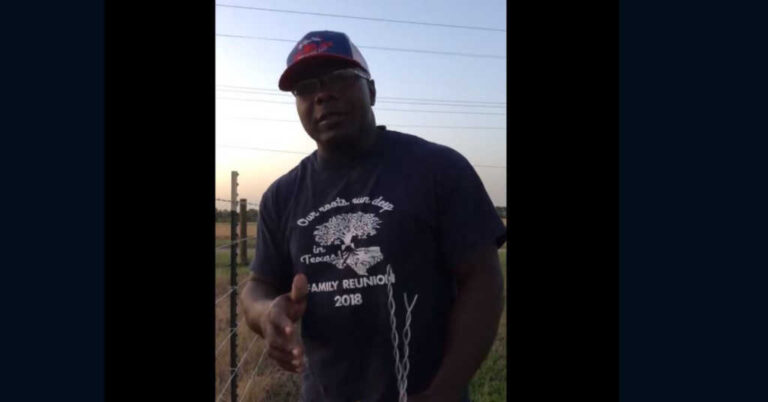
Jerry Roberts, a maintenance manager at a farm in Texas, unleashed a six minute message that has garnered support from all over the country.

“Protesting isn’t going to change anybody. Protesting is not gonna change anything,” Roberts said. “There’s only one thing that’s going to change people and that is Jesus Christ, the power of the Holy Spirit, sanctification of the world of the living God. John chapter 17 verse 17, that is the only thing that’s going to change people’s lives. God is the only one that’s gonna give you a new heart and a new spirit. That’s it. God himself. The living God. The God and Father the Lord and Savior Jesus Christ. So what we need to do is turn to the Bible and stop turning to social media and stop turning to the ways of the ungodly.”

You can watch his entire message here, or keep reading below.

“We don’t do things the way the world does things,” he began before summarizing the story from Luke 24 about the road to Emmaus. Two men were walking, and their conversation was fixated on Jesus’ crucifixion and death, and still downtrodden.

https://www.facebook.com/charismatanewsorg/posts/2571862999747298

“What manner of conversation are you having?” Roberts asks before explaining that we should not get trapped, mired in the things that look bleak all around us, and instead fix our eyes on something higher.

“You’re falling into Satan’s trap. Satan wants us talking about the things of this world. He wants to talk about this word called racism that the world come up with – which is really the word respecter of person.”

Roberts repeatedly pointed to Scripture as our guide for navigating the tough issues of the day, explaining that there is nothing new under the sun, and that includes racism. “We should not be surprised at the things going on in this world when the Bible clearly explains the things that are happening today.”

Read Also https://charismatanews.org/2020/06/21/what-coat-are-you-wearing/

He encouraged Christians to lean on the Bible and not to get mired into the discussions of the today without pointing back to God. He argued that staying focused on the negative will only serve to fuel anger and division.

“Make sure you’re someone speaking about things that edify. We have so much more to be talking about than the things of this world.”

He singled out ministers especially to be very intentional and careful about what they’re preaching.

“Know the state of your flock. You have people in your flock that are not born again. When you’re up on the pulpit talking about the things of this world, you’re feeding that monster that’s already inside of them. You’re feeding that raging temper, so be careful about what you’re talking about.”

Another contrast he drew from the Bible was in how we’re seeing people treat authorities. “While the world is slandering and beating down those in authority, 1 Timothy chapter 2 verse 2 tells us we should be praying for authority,” he said, before continuing on. “I heard this thing that black lives matter. Listen, if you are a follower of Jesus Christ all lives matter not just African American lives because Jesus died for all. Every life on this earth matters.”

The Most Important Decision You Will Ever Make

0

I would like to talk to you about a very important decision. As a matter of fact, this is the most important decision you will ever be faced with. This decision is more important than where you choose to go to school, your career choice, who you decide to marry, or where you decide to live. This decision concerns eternity. Think about it. Forever is a long, long time.

So many people are only concerned with today or a few months down the road. At best, some are concerned with retirement. I want to go beyond that. I want to talk about “life after death.”

Are you making any provision for that?

Did you know that you are not just a body made of flesh and bones, blood and muscle? You are a spirit being, you have a soul and you live in a body. When you die, which everyone does sooner or later, your physical body will be put in a grave.

It will decay and turn to ashes and dust. But what about “the real you”—the inner you, your personality, your mind, will and emotions?

The spiritual part of you can be thought of as the part of you that cannot be seen with the natural eye. This part of you will live forever. And where the spiritual you lives depends on the decision you make as you read this book.

There are two forces in the world—good and evil, right and wrong. We have a “knowing” of that inside of us even without being told. There are two forces in the spirit realm—God and the Devil: good angels, which are spirit beings created by God to help Him carry out His business, and bad angels, called demons.

These bad angels were once good angels who made a choice to rebel against God. Lucifer, an archangel (also called Beelzebub, Satan or the Devil), led these angels in this rebellion, and God threw them out of heaven and created a place for them and their master called hell. (See Rev. 12:7-9) God and the good angels have their home in heaven. Satan and the bad angels have their home in hell.

Between heaven and hell is the earth and the atmosphere above the earth. Good and bad angels patrol the earth at all times. Satan also roams about seeking whom he may devour. The Bible tells us that in 1 Peter 5:8. The Holy Spirit of God (God’s own Spirit) also dwells on the earth as well as in the heavenlies, and the job God has given Him is to seal, keep, preserve and protect God’s people (those who have chosen to serve God). The Holy Spirit also has the job of wooing and winning people who have not yet chosen God and His way of living.

Have you made your choice? The choice is yours. No one can make it for you. God created you with a free will, and He will not force you to choose Him. He did not force the angels. Part of them rebelled, and He let them do what they wanted to do. But remember, bad choices bring their own penalty.

Joyce Meyer

DIVINE PROVISION AND ENABLEMENT

0

Today I want to talk about Grace, which is Divine Provision and Enablement.

“So he got up and ate and drank. Strengthened by that food, he traveled forty days and forty nights until he reached Horeb, the mountain of God.”
‭‭1 Kings‬ ‭19:8‬ ‭NIV‬

After the standoff between Elijah and the four hundred and fifty prophets of Baal in 1 Kings 18, Ahab, king of Israel took the matter to his wife, Jezebel. Jezebel then sent a message to Elijah, threatening to end his life before the end of the next day. So he fled into the wilderness without food or water. He was hungry, thirsty, tired and distressed. He gave up, sat down and asked God to take his life.

Sometimes we reach a point in our lives and we wonder why God brought us into this world. Our surrounding circumstances are so bad, like Elijah, we want to give up and die. I am here to tell you not to quit. Even in your lowest moments, press on and do not give up.


God heard the prayers of Elijah and an angel woke up him to eat and drink some bread and water. Elijah slept again and was awakened to eat and drink some more for a journey that took 40 days and 40 nights.


It is hard to believe that a piece of bread and water will empower any human being for a 40-day journey. However, anything provided by God does not obey human or scientific laws. God gives divine provision and enablement beyond human understanding.


God gives us the grace to carry on in our marriages and businesses. Even after we feel the end has come, God provides for us in ways we could never imagine. Today, may you receive divine provision and enablement.

PRAY WITH ME
Lord Jesus, I thank you for my life. I thank you for Grace and Salvation. Help me to persevere even in difficult situations. I pray for divine provision and enablement in my life and I receive it all by faith, in your name, Jesus. Thank you, Lord. Amen
#RoyalhouseChapel

Apostle General Sam Korankye Ankrah