Home Blog Page 141

Holy Spirit: Are We Flammable or Fireproof? – Reinhard Bonnke

0

Are you flammable or fireproof? In this opus about the Holy Spirit, evangelist Reinhard Bonnke gives you the secret to his success: the fire of the Holy Spirit.

Bonnke has compiled some of the greatest uncompromising truths about the Holy Spirit that have been at the cornerstone of his ministry for over 50 years. Birthed in critical times and seasons on the mission field, these truths – Holy Spirit Fire Points – capture deep lessons about the Holy Spirit that are nonnegotiable for the believer or minister desiring to move in the supernatural power and gifts of the Holy Spirit.

If you want a vibrant, fruitful ministry or Christian walk, then this book is a must-read. The baptism of the Holy Spirit is still the key to lighting the globe with the fires of evangelism, and our knowledge of, response to, and faith in the person, presence, and power of the Holy Spirit is the transformative difference.

There is a dynamic, dead-raising power on the inside of you. Evangelist Reinhard Bonnke has penned some strong teachings on the Holy Spirit for you and has written dynamic Points of Power on the Holy Spirit (Fire Points). This book will challenge your thinking on the Holy Spirit and inspire you to believe in the amazing power of the Spirit within you.

This dynamic book on the Holy Spirit includes 9 sections that will fan the flame within you, including:

Holy Spirit Highlights The Spirit and the Son- Jesus the Baptizer A Mighty Rushing Wind – Pentecost Dipped in Fire- The Baptism of the Holy Spirit Tools of Fire – The Gifts and Power of the Holy Spirit People Aflame- The Holy Spirit and the Believer A Forest of Fire- The Holy Spirit and the Church Fired Up – The Holy Spirit’s Challenge Entering a Life of Fire: How to receive the Baptism in the Holy Spirit.

In each section, you will love the short, power-packed “Fire Points” from Evangelist Bonnke and correlating scripture verses.

In this book, you will encounter the faith and pneumatology of Reinhard Bonnke – a refreshing and invigorating perspective of the Holy Spirit that will challenge your thinking on the activity of the third person of the Trinity.

The Art of Leadership

1

What a difference it would make if Ghana had leaders who saw ahead and prepared for the future!


A prudent man foreseeth the evil, and hideth himself: but the simple pass on, and are punished.

Proverbs 22:3


A leader is someone who sees ahead.  A leader is someone who has the future in mind.  The leader can see the evil ahead.  The leader can see growth and expansion ahead.


Three Things a Leader Should See Coming


  1. A leader should see the evils ahead.


There are some evils that will come whether you want them to or not.  Jesus promised that temptations would come.


Woe unto the world because of offences! For it must needs be that offences come; but woe to that man by whom the offence cometh!

Matthew 18:7 


Betrayal will come as the years go by.  Temptations will come.  Satanic attacks will come.  Know that good times and bad times are sure to come.  The marriage vows say: “For better or for worse, in prosperity and in adversity”.  A real leader can virtually predict the ways things will go.  Ask God for wisdom to see ahead.  By wisdom, you can predict the future.


As a leader, you should see that as the elections are approaching: there could be confusion without ID cards and that the confusion could produce anarchy.


  1. A leader should see the growth ahead.


Of the increase of his government and peace there shall be no end,…

Isaiah 9:7


You must see things that are going to grow like the kingdom of God

The leader must see that the number of cars in the country is increasing, the number of students is increasing, the number of people is increasing.

A true leader knows that the population is going to grow.  This means that potential souls are going to increase.  This also means that we are going to need larger buildings and facilities.  We will also need more workers.


Build with the future in mind.  Train people with the future in mind.  Jesus predicted that His church would grow.  He could see it coming!


And I say also unto thee, That thou art Peter, and upon this rock I will build my church; and the gates of hell shall not prevail against it.

Matthew 16:18


Ghana’s first president Dr Kwame Nkrumah, whom we remembered a few days ago, saw many years ahead and built a huge hydroelectric dam for the nation.  This dam produced electricity many times in excess of the needs of little Ghana.  He was seeing ahead.  Open your eyes and see ahead.  Know that things will get better as the years go by.


  1. A leader should see the changes ahead.


See that you are going to grow and that you will not be able to do the things you used to do anymore.


Remember now thy Creator in the days of thy youth, while the evil days come not, nor the years draw nigh, when thou shalt say, I have no pleasure in them

Ecclesiastes 12:1


Years ago, the Lord directed me to plant churches in different places.  I realized that the city was expanding.  It could take people more than two hours to move from one end of the city to the other.  I felt that many of the people who lived far away would soon stop coming to church.    So I began what I call the Metropolitan Churches.  That was one of the most strategic moves I ever made.  I have retained many of the people God gave me by establishing almost a hundred churches in the city.


Businessmen need to see ahead.  Some of you are engaged in businesses that will soon be unprofitable.  I have often advised businessmen to diversify because I could see a change coming which would make their current line of business obsolete.  I have watched as great businesses deteriorated until there was nothing left.  A leader is someone who sees ahead.

Indeed, what a difference it would make if Ghana had leaders who saw ahead and prepared for the future!

Dag Heward-Mills

The Art of Leadership

5

Our nation will be a blessed nation if our leaders interact with the great and the small.

A good leader will interact with two main groups of people: the great (humanly speaking) and the small (humanly speaking).  The great people are the nobles, the rich, the influential and powerful people of society.  There are not many of such people in the church.


For ye see your calling, brethren, how that not many wise men after the flesh, not many mighty, not many noble, are called:

1 Corinthians 1:26


The “small” speaks of the poor, the down-and-out, and the people of little material substance.


Four Reasons Why it Is Important For A Leader to Relate with the Great


  1. It is important for a leader to interact with the great because Jesus interacted with great people.


Jesus interacted with Nicodemus privately.  Jesus honoured several invitations to dine with influential and powerful people.  These interactions were so important that they were recorded in the Bible.


There was a man of the Pharisees, named Nicodemus, a ruler of the Jews:  The same came to Jesus by night…

John 3:1,2


When the even was come, there came a rich man of Arimathaea, named Joseph, who also himself was Jesus’ disciple:

Matthew 27:57


  1. It is important for a leader to interact with the great because great people have their role to play in the church and in the country.


Some of them will play vital roles for the church such as Joseph of Arimathaea, who helped to bury the body of Jesus.  This was an important fulfilment of Scripture.


When the even was come, there came a rich man of Arimathaea, named Joseph…  And when Joseph had taken the body [of Jesus], he wrapped it in a clean linen cloth, And laid it in his own new tomb, which he had hewn out in the rock:…

Matthew 27:57,59,60


  1. It is important for a leader to interact with the great because great people are used by God to finance the gospel.


If you think that everyone will contribute the same amount of money to the work of God, then you are ignorant and inexperienced.  God raises up certain people so that the income of some churches is far more than others.  This creates a necessary balance so that the work of God can go on among both the poor and the rich.


As it is written, He that had gathered much had nothing over; and he that had gathered little had no lack.

2 Corinthians 8:15


  1. It is important for a leader to interact with the great because the contribution of one influential person can result in the salvation of an entire nation.


Esther’s strategic relationship with the king was the one factor that saved the entire nation of Israel from being wiped out by Haman.  Her uncle reminded her that she had been strategically placed for the salvation of an entire nation.


…who knoweth whether thou art come to the kingdom for such a time as this?

Esther 4:14


A Christian billionaire once told me of how he had used his relationship with the president of a country to obtain permission to hold open-air crusades that had hitherto been banned in that country.


Three Reasons Why it Is Important For A Leader to Relate with the Poor


  1. It is important for a leader to interact with the poor because the principal calling of Christ was to the poor.


When Jesus spoke of the anointing on his life, he was specific about whom his anointing would affect.  He specifically said that he had been anointed to preach the gospel to poor people.  We are Christ’s body and that same anointing is upon us.


The Spirit of the Lord is upon me, because he hath anointed me to preach the gospel to the poor; he hath sent me to heal the brokenhearted, to preach deliverance to the captives, and recovering of sight to the blind, to set at liberty them that are bruised, To preach the acceptable year of the Lord.

Luke 4:18,19


  1. It is important for a leader to interact with the poor because most people in the world are poor, therefore our ministries must reach the poor.


If we are to bear much fruit, a lot of the fruit will be among the poor people.


  1. It is important for a leader to interact with the poor because the sign of a higher anointing is that we are ministering to the poor.


Today, most ministers are excited if they are able to visit with the president of a country.  They gladly take pictures with presidents and publish them in their monthly magazines.  There is nothing wrong with this.  However, when Jesus was asked whether the great messianic ministry had arrived on earth, he replied that poor people have the gospel preached to them.  It takes a higher anointing to minister to poor people.


And said unto him, Art thou he that should come, or do we look for another?  Jesus answered and said unto them, Go and show John again those things which ye do hear and see:  The blind receive their sight, and the lame walk, the lepers are cleansed, and the deaf hear, the dead are raised up, and the poor have the gospel preached to them.

Matthew 11:3-5


Indeed, our nation will be a blessed nation if our leaders interacted with both the great and the small!

Dag Heward-Mills

Busted at Mass

0

As a Protestant pastor, I have a confession to make. In fact, I’ve already confessed it to a Catholic priest.

For more than 15 years, I snuck into the Catholic mass, taking the elements while knowing full well that Catholic doctrine allows only Catholics to share in the family meal. A guest in someone’s home should abide by the family rules, and I did not. For that, I repent.

My deeper sorrow, however, is not for what I did among Catholics, but rather, for what I did not do among my fellow Protestants—namely, experience power and joy in the sacrament. In fact, if God hadn’t intervened dramatically, I might still be searching elsewhere.

At my first pastorate, I was surprised to discover that Communion was celebrated only quarterly. Our denomination was in merger talks with another denomination whose tradition includes weekly Communion. How often to offer the sacrament threatened to become a major stumbling block to uniting. The discussions, however, never seemed to reach beyond simply affirming that each congregation was free to do as it pleased. A rich opportunity for education and renewal was thereby miscast as an issue of tolerance and individual rights—and lost.

Those who defended our own congregation’s quarterly Communion generally believed, as one woman put it, “If you do it more often, it’s just not special anymore.” To that, a fellow pastor remarked to me, “Quarterly? Would they say the same about making love?”

I encouraged the church to reconsider our policy, and devoted a month to preaching and teaching on the subject. Afterward, I was pleased when the congregation voted to increase Communion celebrations to monthly.

Dry spell

Then, beset by a crisis in my life, I felt the need for Communion more often.
I decided to attend 7 a.m. mass daily at the Catholic parish nearest to my house, and found myself substantially strengthened for each day. During that time, one of our church leaders mentioned at a Church Council meeting that he would like an opportunity to take Communion during the week. I said I’d be happy to oblige, and we began a trial 45-minute Communion worship service on Wednesday nights, which drew only five or six people.

As I entered the local Catholic church one morning for my usual mass, I discovered a funeral mass in progress. This hadn’t happened in all the years before, so I decided to skip it. The next day I had an early church meeting, so I decided to attend a noon mass at another parish which I had visited before.

As I walked up the front steps, I noticed someone trying unsuccessfully to open the door. “It’s locked,” he said, puzzled. As several others arrived, we checked the side doors, but to no avail. One man said he’d heard they were remodeling the sanctuary. Confused, I turned and left with the others.

When I returned to my “home” mass a few days later, however, another funeral mass was in progress. As I walked back to my car, I puzzled over this recent turn of events. Being closed out of mass three times in a row struck me as more than coincidence. I wondered: Could God be trying to tell me something? I decided to forego mass for the next two weeks and see.

Two weeks later, my personal crisis had become more stressful, and I missed the uplift from mass. Then one morning as I rolled over to hit the snooze button, it occurred to me that I should try at least once more. Lord, I prayed, if for some reason you don’t want me going to mass, show me today. Give me some sign. Waiting, but sensing nothing, I shrugged, dressed and drove to the Catholic church.

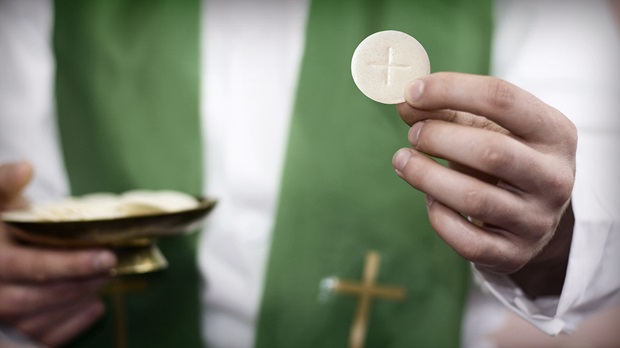
The usual mass was being celebrated, and with a sigh of relief I stepped into a pew and knelt down. At the appropriate time, I joined perhaps a hundred others in the line to the altar, and when I reached the priest, held out my hands for the host. Turning as usual with the wafer in my hands, I took several steps back towards the pew.

“Excuse me!” a voice rang out from behind me.

Thinking nothing of it, I continued walking.

“Excuse me!” the voice said again, aimed clearly in my direction.

I turned to look, and to my shock, the priest was walking toward me.

Silence fell over the huge, cathedral sanctuary as the dozens of others in line stopped and turned to look at me.

“Excuse me,” the priest repeated matter-of-factly, “but you have to take that up front.”

“Uh … pardon me?” I blurted out, confused.

“Are you a visitor?” the priest asked.

I nodded, embarrassed.

“Are you a Catholic?”

“Actually, well … no, I’m not.”

The priest reached out his hand.

“I’m afraid I’ll have to ask you to return the host to me,” he said courteously. “But I’d like very much to meet with you after the mass. Would you please wait for me so we can talk then?”

“Uh … well, sure,” I stammered, handing him the host. The priest smiled, then turned and went back to his position.

A surprising sign

Quickly, I retreated to a rear pew. Heart pounding, I leaned back hard, hoping to blend into the pew’s wood.

I couldn’t believe it. What in the world was going on? At least we’d already done the “Passing of the Peace,” so I wouldn’t have to look anyone else in the eye.

At the last phrase of the benediction, I turned and fled the sanctuary, beelining for my car. When I rounded the corner, I checked my rearview mirror and glimpsed the priest out front, turning as if looking for someone.

A familiar breakfast cafe was not far away, and I went there to settle myself. As I reached for a menu, it struck me: My prayer before getting out of bed!

Sure, I’d asked God for a sign. But I just figured maybe a Scripture would come to mind during the mass, or maybe a responsive reading might sort of “jump out at me” with a message.

Lord, did the sign have to be so embarrassing?

It seemed clear that I’d received a sign, though certainly not one I had expected. What could all this possibly mean? I had to go back to the priest and apologize for disturbing the mass.

Gobbling down my eggs and toast, I left and drove back to the church. There, I went directly to the rectory office, and after a moment, the priest came out, smiling graciously.

“I’m so sorry for the confusion this morning,” he said, drawing me into his office.

“Actually, I’m the one who owes you an apology,” I confessed as we sat down. Then, with a deep breath, I poured it all out. “I’m a Protestant minister in town, and I’ve been taking mass here for some time. I knew I was acting against your doctrine, and I must ask you to forgive me. I won’t do it again.”

Taken aback, the priest smiled. “I certainly didn’t know all that; all I know is I prayed that you’d come back so we could talk.”

“I’m sure that’s partly why I’m sitting here right now,” I said. “I can only tell you that something happens to me at a Catholic mass that doesn’t happen when I take Communion at my church. I don’t know what it is, but there’s power here, and I’ve been drawn to it.”

We talked further, and before I left, we prayed together that I would see more clearly what God was trying to teach me in this strange experience.

Over the next few weeks, I began to see my attraction to the Communion/Eucharist as an essential part of my Christian journey.

Communing with Christ in the present

When Jesus breaks the bread and commands his followers, “Do this in memory of me,” he is not telling them—or us—merely to think about what he did in the past. He means what my mother meant when she told me, “Remember your grandmother on her birthday.” It’s not simply to stir up a mental image of Grandma, but to write her a letter, buy her a gift, give her a phone call—to interact with her in the present.

The difference between remembering a person in the past and actually being with that person in the present—especially someone you love—is quite dramatic.

Similarly, the biblical stories of Jesus are a genuine comfort to Christians. But to look forward to communion with excitement, you must believe that Jesus will actually be there at the table with you, to meet you where you are now.

The Risen Lord spoke to the two disciples on the road to Emmaus, teaching them many things. But it was not until “he broke the bread” that “their eyes were opened and they recognized him.”

The breaking of the bread led them to see that Jesus was indeed in their midst, which motivated them to get up “at once” to run and share the Good News with the others that “He is risen, indeed!” The sacrament of Communion is a preface to evangelism.

One Maundy Thursday we invited people to come forth and kneel for the sacrament, and the entire congregation responded. After, many came to me to say “how meaningful” the evening had been, but I was deflated. I know when I have preached well, but that night I was utterly flat.

Later I sat alone in the empty sanctuary reflecting on the service.

As I leaned back and took a deep breath, a stillness settled over me. Suddenly I knew the Risen Christ had been present and active during Communion that night, as always. My job was not to preach mightily, but simply to be the faithful doorman who announces the entrance of the Master, then steps back to open the door. At worship, my task is to lead the congregation into the presence of God. Sometimes that happened by preaching, but not necessarily at the sacrament.

I went to the kneeler and asked God to forgive me my pride and presumption. I released all my compulsion to “be in charge” of worship, all my responsibility to “make things happen,” my desire to perform as a preacher.

A deep sense of relief washed over me.

Protestant pastors and congregations alike could receive more from God during worship by stepping back and allowing the Risen Christ to come and do his transforming work among us. I’m learning that nowhere is this reality more alive than in the sacrament of Communion.

Gordon Dalbey is the author of Broken by Religion, Healed by God: Restoring the Evangelical, Sacramental, Pentecostal, Social Justice Church. (Civitas Press, 2011). Visit him at abbafather.com

https://www.christianitytoday.com

Bless Those Who Admonish You

0

Let a righteous man strike me—it is a kindness; let him rebuke me—it is oil for my head; let my head not refuse it” (Ps. 141:5). If there is a religion that unapologetically emphasizes human fallenness, sin, moral corruption, self-deceit, greed, pride, and perverse selfishness, it is safe to say that it is the religion of the Bible.

Because of our foundational beliefs in the reality of sin, Satan, and human depravity, we should understand well why people in positions of authority are easily corrupted. In fact, the more thoroughly we understand the biblical doctrine of sin, the stronger our commitment will be to genuine leadership accountability.

BIBLICAL ELDERSHIPSHARED LEADERSHIP

God has provided for his church and its leaders a formal structure for genuine accountability, the collective leadership of a biblical eldership. Not only is this concept scriptural, it is psychologically and spiritually healthy for leaders.

The shared leadership of a biblical eldership provides close accountability, genuine partnership, and peer relationships—the very things unhealthy leaders like Diotrephes shrink from at all costs (3 John 9–10).

Shared leadership can provide a church leader with critically needed recognition of one’s blind spots, eccentricities, character weaknesses, and sins. We all have what C. S. Lewis called “a fatal flaw.” We can see these fatal flaws so clearly in others, but not in ourselves.

These fatal flaws or blind spots distort our judgment. They deceive us. They can even destroy us. This is particularly true of multitalented, charismatic leaders. Blind to their own flaws and extreme views, some talented leaders have destroyed themselves because they had no peers to confront and balance them and, in fact, they wanted none.

But this is not God’s way. God made us to live in Spirit-knit community and to have strong accountable relationships. The New Testament teaches that every member of the believing community is responsible for encouraging, praying for, exhorting, serving, admonishing, teaching, building up, caring for, and loving one another (1 Cor. 12:25Rom. 15:14Gal. 5:13Col. 3:161 Thess. 4:185:11Heb. 3:1310:24–25James 5:16;1 Peter 4:101 John 4:7).

The church elders should model for the entire church the one-another commands, including admonishing and exhorting one another. To hold one another accountable for sin is Christlike love in practice. To fail to admonish one another demonstrates not love but cowardice and selfishness.

DISCIPLINING LEADERS IN SIN

The Scripture emphatically charges the elders to confront sin within its membership or lose credibility before the church and walk in disobedience to God. The important accountability factor of a shared leadership does not work if leaders do not have the courage to confront fellow leaders regarding their sin and if there is no desire to faithfully follow the instructions of Scripture regarding a leader’s sin (1 Tim. 5:19–25).

No part of Christian ministry is more difficult than investigating, confronting, or disciplining sin in the life of a church leader. One can easily think of a thousand excuses for evading the correction or discipline of a church leader. Knowing the human propensity to avoid such harsh realities, Paul solemnly charges Timothy (and the church and its leaders) to comply with his instructions in 1 Timothy 5:19–20 regarding the discipline of a church leader: “In the presence of God and of Christ Jesus and of the elect angels I charge you to keep these rules without prejudging, doing nothing from partiality” (1 Tim. 5:21). Holding one another accountable for sin or failures is a matter of obedience to the Word of the Lord—it is not an option.

WELCOME CORRECTION AND REBUKE AS THE INSTRUMENT OF GOD’S HAND

Godly leaders recognize that they may be misguided or in error, so they welcome constructive criticism and correction. Proverbs repeatedly makes this point: “reprove a wise man, and he will love you. Give instruction to a wise man, and he will be still wiser; teach a righteous man, and he will increase in learning” (Prov. 9:8–9).

Sadly, most of us take criticism and rebuke poorly. Because of our perverse pride, we are defensive and overly sensitive to criticism—even truthful, constructive criticism. But we can’t change for the better or grow into Christlikeness without others correcting us. In affirmation of this principle, one Christian leader said to me, “My critics have been my best teachers.”

The psalmist David expresses beautifully the attitude of humility and wisdom with which we should welcome correction: “Let a righteous man strike me—it is a kindness; let him rebuke me—it is oil for my head; let my head not refuse it” (Ps. 141:5).

I do not hesitate to say that the relationship with my fellow elders for almost forty years has been the most important tool God has used, outside of my marriage relationship, for the spiritual development of my Christian character, leadership abilities, teaching ministry, and sanctification in holiness.

So I ask you to get down now upon your knees before God, and with all your heart, bless those who have the courage and love to “care-front” you about your sin and character flaws. They are your real friends and teachers. They are the instruments in the hand of God to perfect holiness in your life.

By Alexander Strauch

Evangelism and Church Planting

0

We are seeing an explosion of church planting in many places in Asia and Africa as our church planters boldly declare the name of Jesus with miracles  accompanying the preaching of God’s Word.

As we plant churches, we train and mentor church leaders so that they can disciple new believers, enabling a generation of new leaders to be raised up and a movement of new churches to be birthed.

World Outreach International is committed to training our workers to not only bring people to a personal knowledge of Christ but to also make them disciples – the final command of Jesus.

Those disciples in turn are encouraged to share the Good News of personal salvation and to connect with churches that will nourish and strengthen them,  through pastoral care and spiritual leadership, so that they too will become equipped to make disciples.

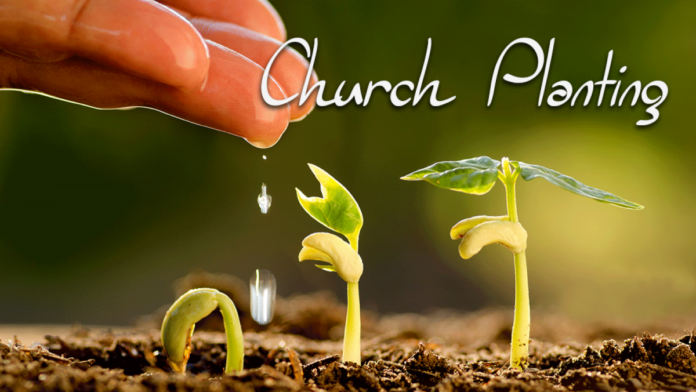
Church planting happens when these disciples gather together for fellowship, prayer and the study of God’s Word and numbers grow to the point where new pastoral leaders are appointed and a new church springs up out of this growth.

Church Planting Movements (CPM) occur when there is intentional rapid and multiplicative increase in indigenous churches planting churches within a given people group or population segment.

The key components of CPM are:

  • Rapid increases in new church starts
  • Churches are multiplying themselves
  • These are all indigenous churches

Growth is generated from within the local Church rather than from without. It is the missionary’s job to introduce the Gospel, but then the momentum becomes indigenous so that the initiative and drive of the movement comes from within the people group rather than from outsiders.


https://world-outreach.com

Church Planting

0

At HeartCry, we believe that church planting is the primary task of missions.

There are many gifts and callings in the body of Christ, but all of them must work together on the mission field toward the planting of biblical churches. It is one thing to do mass evangelism and to boast about the numbers of decisions made or the hands raised; it is quite another to establish a biblical church. Although Satan will oppose any ministry that purposes to advance Christ’s kingdom, his greatest disdain and most forceful attack is against those who would seek to establish a biblical church in the terrain which he has claimed for himself (I John 5:19).

In Matthew 16:18, the Lord Jesus declared, “I will build My church; and the gates of Hades will not overpower it.” This text assures us that Christ is still at work in the world today, calling out a people for Himself – a people who have been redeemed by His blood and set apart for His glory and good pleasure. This redeemed body is most completely manifested to the world through local fellowships or churches that function according to the clear dictates of Scripture.

For this reason, HeartCry is dedicated to working with and supporting pastors and missionaries across the globe who are laboring to establish biblical churches. It is our non-negotiable conviction that the greatest need of any nation, people group, culture, or religious context is the establishment and preservation of biblical local churches that shine as beacons of the Gospel through word and deed.


http://www.heartcrymissionary.com

My Top 10 Church Planting Tips

0

This year I faced one of my greatest fears: planting a church. I sought advice from veteran pastors and church planters. Their counsel has come through classes, formal coaching relationships, and one-off meetings or phone calls.

Now, our church (Immanuel Anglican in Chicago’s diverse Uptown neighborhood) has launched. As I reflected on the past year, I made a quick list of the most helpful advice I was given during this first, vulnerable year of planting. Of course, this list is specific to our church’s context, and most of our story has yet to be written. But I think the advice I’ve received could help others as well.

So without further ado, the top 10 insights I gleaned from others this year…

1. “Sustain high learning agility.” – Mark Reynolds, vice president of leadership programs at Redeemer City to City.

In 2012 I was part of a church planting training. Mark taught several classes. He said “learning agility” (meaning mental and ministry adaptability) so often, that by the end of the course we couldn’t help but associate that phrase with him. But I’m glad he repeated himself. This piece of counsel is the key that unlocks the nine tips below.

Mark warned us that many church planters are not willing to have high learning agility. They are sometimes so enamored with a particular ministry model or idea that when it does not work in the real world, they get embarrassed, defensive, and discouraged. Mark encouraged our class to find good coaches, learn from our mistakes, and constantly adapt to the conditions. At every stage of our initiative, veteran coaches have made adaptation and growth possible for me and our church.

2. “Go slow to go fast.” – Stewart Ruch, senior pastor at Church of the Resurrection in Wheaton, Illinois (our sending church).

Church planting is this vulnerable, exciting space where something is supposed to come out of nothing. Everyone, including you, constantly wants to know: How’s it going? What’s happening? Where are the results?So when we moved back to Chicago to plant a church, I felt a strong urge to start make something happen—to go fast. And there are many faithless ways to generate activity in the early days. Stewart taught me that building a community is slower than you want it to be. It takes time to develop trust, grow as a leader, and wait on the Lord together in prayer. However, once the community is in place, you have an entire team with gifts and energy that take the church so much farther than you could on your own. Your people will have more enthusiasm about the church plant if they’ve helped you shape it anyway. So go slow to go fast.

3. “Gather a Launch Team instead of a Core Group.” – Al Barth of Redeemer City to City.

Al, a church planting veteran, surprised me with this one. He taught our class that a typical church plant Core Group can be like a close-knit board meeting, made up of leaders who make executive decisions. As such, these groups are difficult to leave (there’s no end date), they are difficult for the church planter to lead (less freedom, more like a hired hand), and people are often wary of joining such a high-commitment group. A Launch Team is more like an ever-expanding party, where there is a winsome urgency to gather others, take risks, and be creative together. Launch Teams are also easier to leave, because the launch of the church gives the team a defined off-ramp.

In 2013 our Launch Team partied, sweated, risked and made lots of memories together. I loved leading this team. Many of them ended up staying with us after we launched in October, and those who didn’t are still beloved friends.

4. “Jesus builds his church, so stop watching the door and start feeding your people.” – Mark Bergin, lead pastor of The Painted Door in Chicago.

Mark spoke these words to me because I was worrying about who wasn’tshowing up. When we finally started to gather people, I had thoughts like, “Why wasn’t ____ or ____ there tonight?” Or: “Why doesn’t X or Y type of person come, and how can we change that?” Who God brings and who God does not bring to your church will surprise you. Mark’s timely word was instrumental in my own experience of God’s grace related to the makeup of my church. Since Jesus builds his church, getting certain people in the door was ultimately not my responsibility. Instead, I was called to feed, lead, and commission the people that Jesus had already brought. I can still feel the relief that washed over me when Mark spoke these words. He was both coach and pastor in that moment.

5. “Finding worship space is an uphill spiritual battle; start praying.”– Kevin Bruursema, New Life Community Church in Chicago.

Kevin has been involved in catalyzing many New Life church plants in the city (there are 19 of them). Kevin’s words about worship space were prophetic. He knew what I know now: worship space is hugely influential to the development of your church, and finding the right venue can be as much a spiritual battle as it is a logistical one.

On two different occasions, we were in desperate need of space. The first time was in February, when our Launch Team outgrew the largest available house in our congregation. We prayed, and God provided a perfect multi-purpose space that we used for several months. The second time was in August, when we were weeks from Launch Sunday but without enough space to invite more people. We took Kevin’s advice, and organized a 40-day period for prayer and fasting. At the beginning of the prayer journey, we had exhausted our options and had no idea where we would go. In other words, the logistical battle had been lost, and all we had left was prayer. Our intercession took on a desperate-but-hopeful intensity! We knew God would provide but didn’t know where or how. By the end of the 40 days, we were in negotiations with a neighborhood high school that has allowed us to welcome substantially more people and actively serve the neighborhood. Even though this challenge was specific to me, Kevin taught me that if you are involved in church planting long enough, you will experience this reality as well.

6. “Identify your motives for church planting, and be vulnerable enough to communicate them.” – This is my paraphrase of advice about building trust from authors Henry Cloud (from his book Integrity), Patrick Lencioni (The Five Dysfunctions of a Team) and Stephen M.R. Covey (The Speed of Trust).

Each of these authors encourage leaders to build trust by communicating their intentions. Unless people know your story, when they find out that you’re planting a church, they are likely to project negative motives on you, such as: He’s egotistical; he’s just trying to prove something; he’s mad at his old church … ” Simon Sinek underlined this point in this TED talkwhen he argued that leaders should “start with ‘why’ instead of starting with ‘what.'” Every potential launch team member and supporter will ask (even if they don’t say it out loud): “What’s the real reason you are doing this?” I learned that if I honestly told my story and explained why I moved back to Chicago to plant an Anglican church in Uptown, people often moved from being a skeptic to being a supporter of some kind.

7. “Collaborate with your fellow planters and pastors; don’t compete with them.”– While I have heard this from many good pastors in the last year, Tim Keller says it best in Center Church, when he reflected that Christian leaders who see the Kingdom grow in their city are “more concerned about reaching the whole city … than about increasing their own tribe and kingdom.”

This is a paraphrase of Philippians 2:2: “Be of one mind … do nothing from selfish ambition.” There is now a critical mass of church leaders in Chicago who model this posture, including Jon DennisJackson Crum, and Mark Jobe. They and others have set a tone of collaboration, and as a result some of my best allies are other Chicago pastors and planters. My friend and fellow planter Brian Fulton organized an informal church planters huddle that includes him, myself, and Josh Sherif. We regularly share ideas, resources, and personal support. Our discussions have ranged from confession of sin to what goes into child activity bags for Launch Sunday. If you are planting or pastoring, I encourage you to fight the temptation to posture. If you don’t collaborate, you miss an opportunity to aid other church plants, and you lose what other pastors could give to your church.

8. “Don’t be afraid to ask for money and people.” – Aaron Wojnicki, founding pastor of Faith Community Church in Prospect, Kentucky. Aaron, who planted in the greater Louisville area, challenged me to ask senior pastors of supporting churches directly for money and people. He deconstructed the common association of meager resources with spiritual purity or greater faith. Having the resources of people and money makes church planting possible, not easier. People and money are like oxygen; they are two essential components for your church to stay alive and thrive. You are more likely to have a strong, healthy start if you humble yourself and ask for both without any shame or hesitation.

9. “Be flexible with how people grapple with your vision.” – Daniel Hill, founding pastor at River City Community Church, a multi-ethnic church in Chicago’s Humbolt Park neighborhood. Daniel planted in 2003, and his advice had the perspective of nine years of involving and raising up strong leadership in his church. In short, Daniel counseled me to be patient with people who over-engage or under-engage with my visionfor the church. This involves taking the risk of giving people room to disagree, and give them the choice of self-selecting out rather than making that choice for them. Strong leaders need freedom to disagree with you and share their ideas, knowing that you take them seriously.

Again and again I saw this process make the vision and direction of the church stronger, more thoughtful, and freed from unhelpful or inaccurate paradigms. The other side of this advice is that some people need time and space to decide whether or not they will join you. They need the freedom to under-engage. I allowed people to attend our meetings so they could “taste and see” without a firm commitment. Some people who became highly involved after our launch needed the freedom to simply be present in our community before the launch. Daniel was right—keeping your vision solid and exercising flexible patience is a tension to maintain, not a problem to solve. If you eliminate the tension, you forfeit the opportunity to include some of your best people.

10. “Follow Jesus on the journey he has planned for you, and invite your people along.”– This is a combination of advice from two fathers in the faith: my dad, Lou Damiani, and my bishop, Stewart Ruch.

I learned that when God called me to plant a church, he intended for me to go on a journey with him. The beginning and end of this journey are not results, but the love of God in Christ. That is the promised land! Church planting is uncomfortable and dangerous work. When Jesus calls you to take it up, he intends to draw near in previously unknown ways. If you’re willing to respond in your soul to where God is calling you, you can take people with you. The other side of the coin is this: Don’t commission yourself to a journey that belongs to someone else. There are plenty of compelling church plant stories out there. I am not called to re-create them, and neither are you. They are good for inspiration and bad for copying! Your journey is your own and will be partially discovered as God allows it to unfold.


Aaron Damiani is the rector of Immanuel Anglican Church, a church plant in the Uptown neighborhood of Chicago, Illinois.

www.christianitytoday.com
20 Quotes to Encourage Church Planters

0

I’m pretty picky when it comes to quotes. I think you will find the following list filled with memorable sayings that will come in handy.

Here are 20 quotes that I hope you find encouraging as you live out the calling and adventure we call Church Planting:
  1. “Desperation is a funny thing. It either humbles you, which in turn makes you hungry enough to go find the answers to your questions. Or it demoralizes you and makes you depressed.” – Brian Jones
  2. “It takes a wise and sensitive person to realize what God does not want them to do.” – Ed Stetzer
  3. “Church planting teaches two things more than any other: that God is faithful and that we must learn how to depend on that faithful God.” – Christine Hoover
  4. “Our greatest fear should not be of failure … but of succeeding at things in life that don’t really matter.” – Francis Chan

  5. “As wise stewards of the mystery of Christ, we must subscribe to a definition of biblical church planting as evangelism that results in new churches.”- J. D. Payne
  6. “If God only used perfect people, nothing would get done. God will use anybody if you’re available.” – Rick Warren
  7. “You can’t let praise or criticism get to you. It’s a weakness to get caught up in either one.” -John Wooden
  8. “Being a pastor is like death by a thousand paper cuts… You’re scrutinized and criticized from top to bottom, stem to stern. You work for an invisible, perfect Boss, and you’re supposed to lead a ragtag gaggle of volunteers towards God’s coming future. It’s like herding cats, but harder.” – Forbes Magazine – ‘Ranking The 9 Toughest Leadership Roles’
  9. “Try not to become a person of success, but rather try to become a person of value.” – Albert Einstein

  10. “The church plant often takes on the personality and passions of the church planter and his wife. This is why it’s important to cling to Christ with biblical vision.” – Christine Hoover
  11. “Don’t be afraid to give up the good to go for the great.” -John D. Rockefeller
  12. “Plant the kind of church that you would want to be a part of even if you weren’t the lead pastor. But don’t be discouraged when you’re still not that church three years in!” – Anson McMahon
  13. “We are to be light in the darkness, yet some of us have spent so much time being light among other light that we often forget the fact.” – Jeff Hoglen
  14. “You are not God’s gift to the pulpit. The gospel is!” – Anson McMahon
  15. “If we judge ourselves only by our aspirations and everyone else only by their conduct, we shall soon reach a very false conclusion.” – Calvin Coolidge
  16. “Doing acts of mercy gets me out of myself. It gets my focus off of me and onto other people.” – Rick Warren

  17. “One of the great problems in the church scene is that once there is a measure of success after kickoff—usually among the poor, the irregular, those in need of mercy—church folk forget their roots and begin to only focus on ‘discipleship,’ which in many cases is just a synonym for ‘personal growth.’  From then on, they only give lip service to caring for the people who built the atmosphere that launched them—the very starting point that brought them life, to begin with.  In the name of personal growth, the system becomes fixated on inward selfishness, and what got them where they are today evaporates.” – Steve Sjogren (From his book entitled Heaven’s Lessons)
  18. “If God is speaking to your heart, don’t let your mind get in the way of what God wants you to do.” – Mark Batterson
  19. “Don’t let your church be a cul-de-sac on the Great Commission highway.” – Ed Stetzer
  20. “Expect great things from God; attempt great things for God.” – William Carey

By Steve Sjogren

20 Quotes to Encourage Church Planters

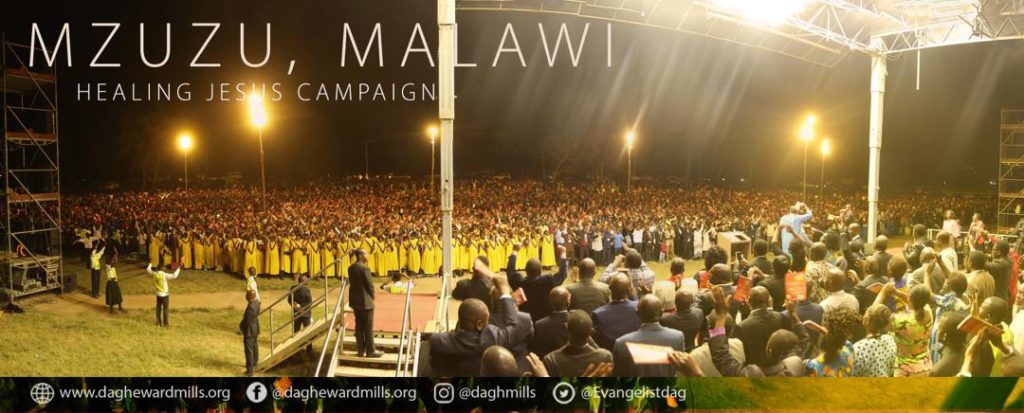
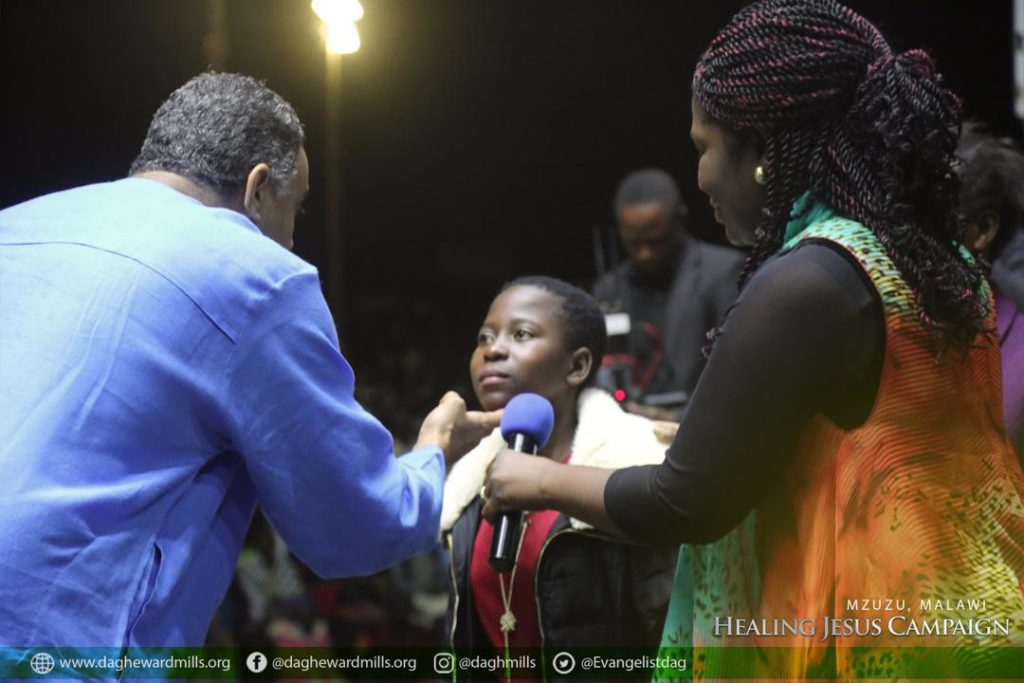
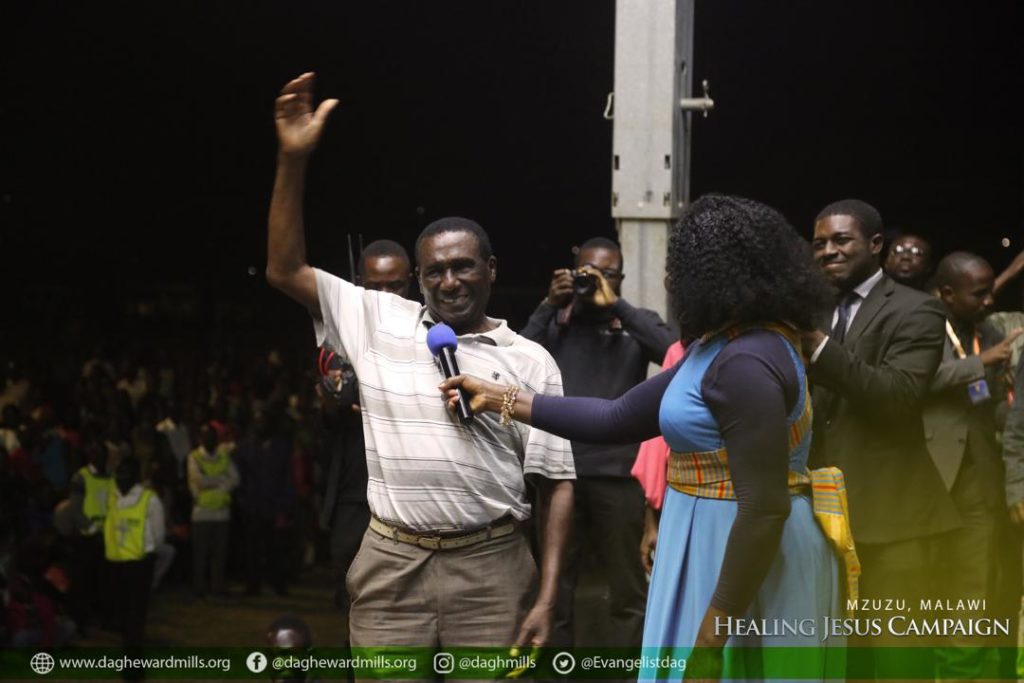
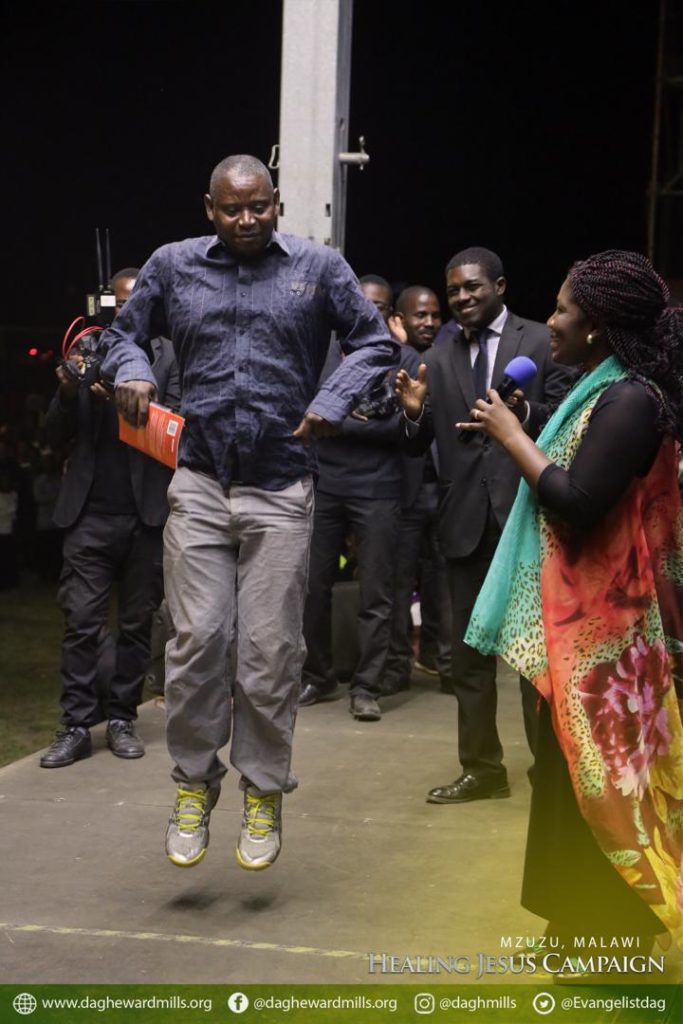
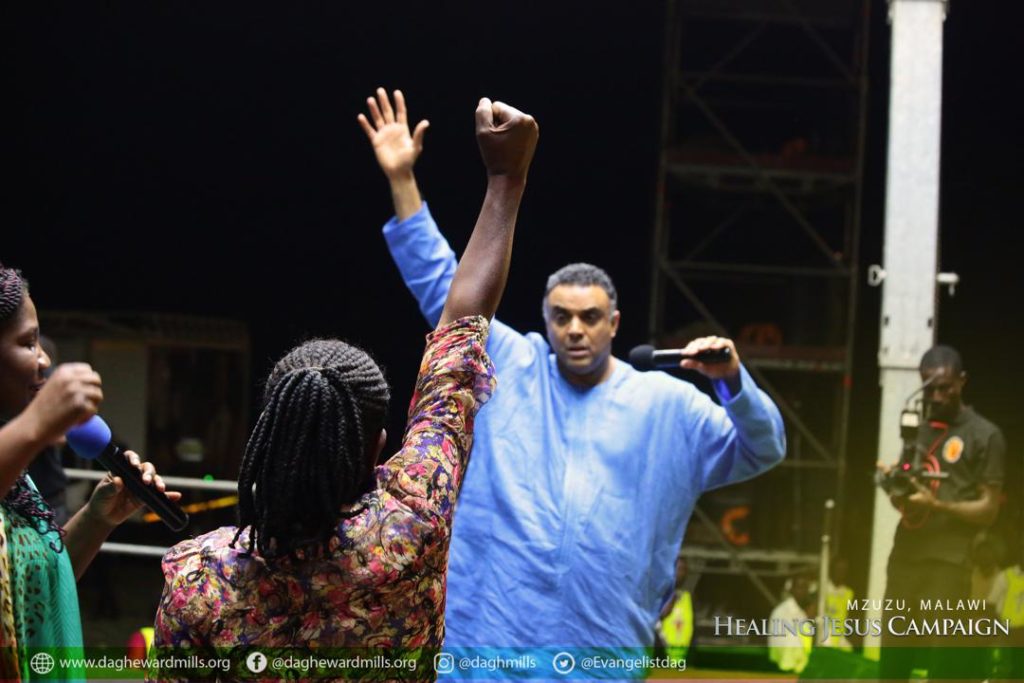
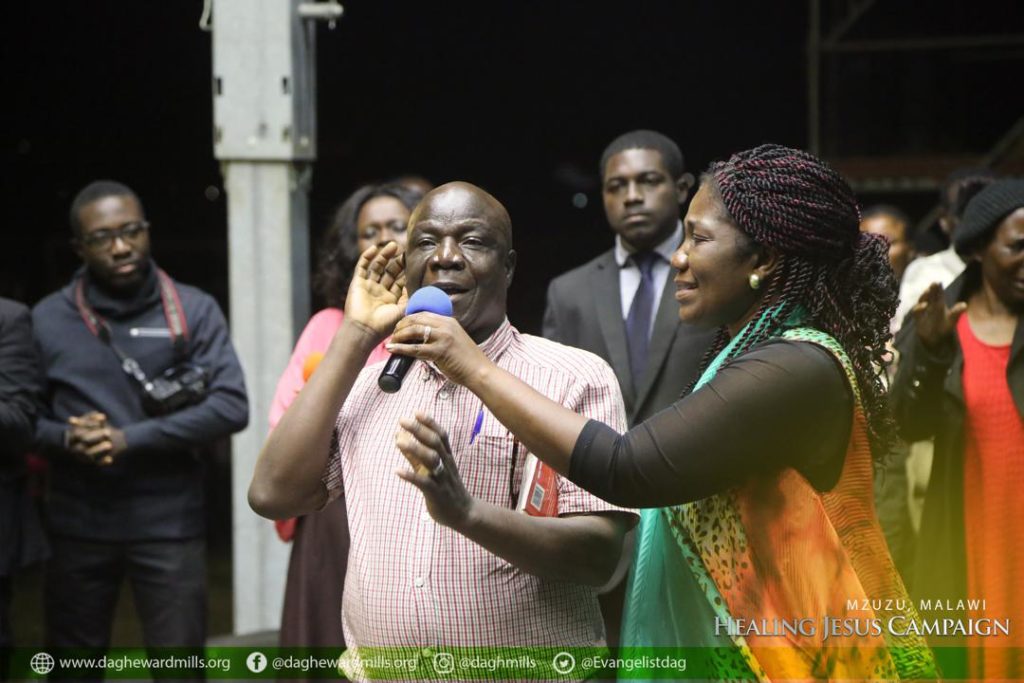
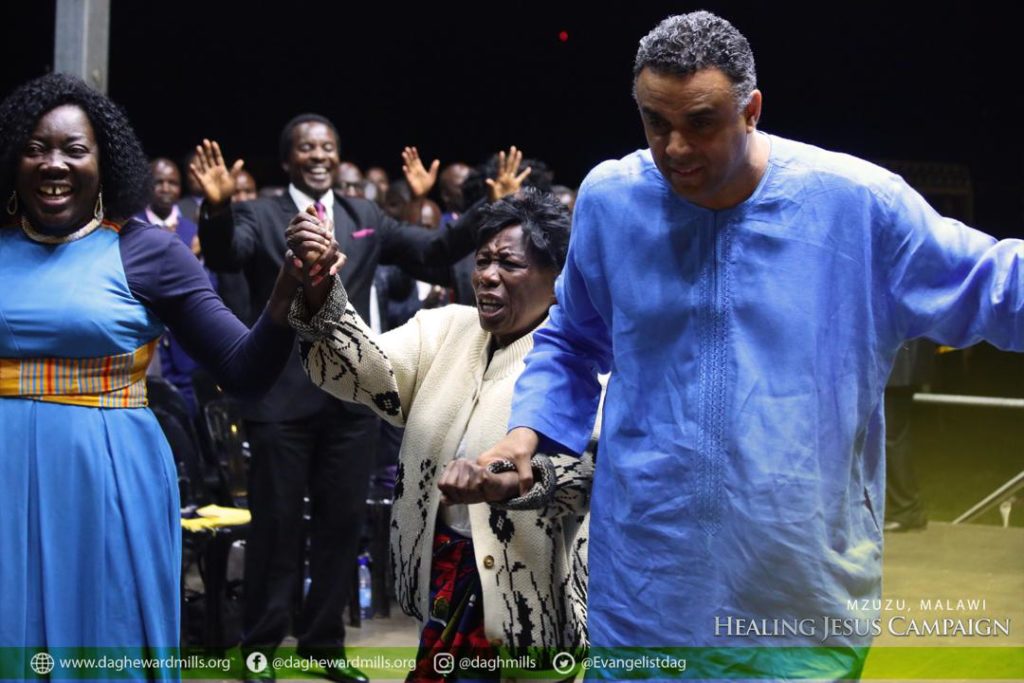
Salvation Breaks Out In Mzuzu

0

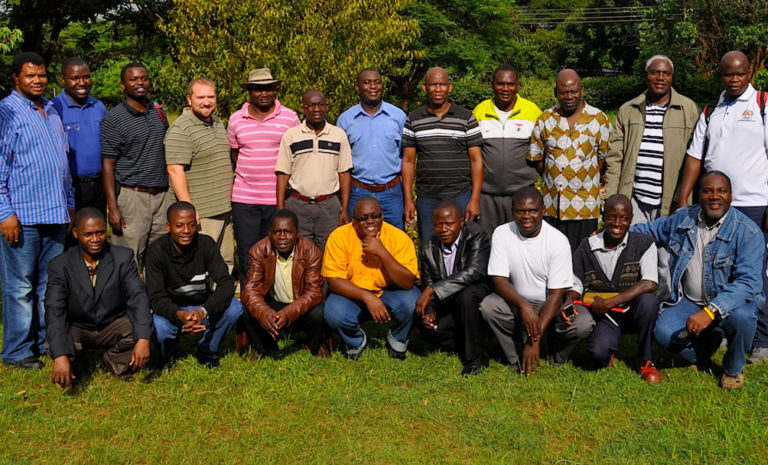
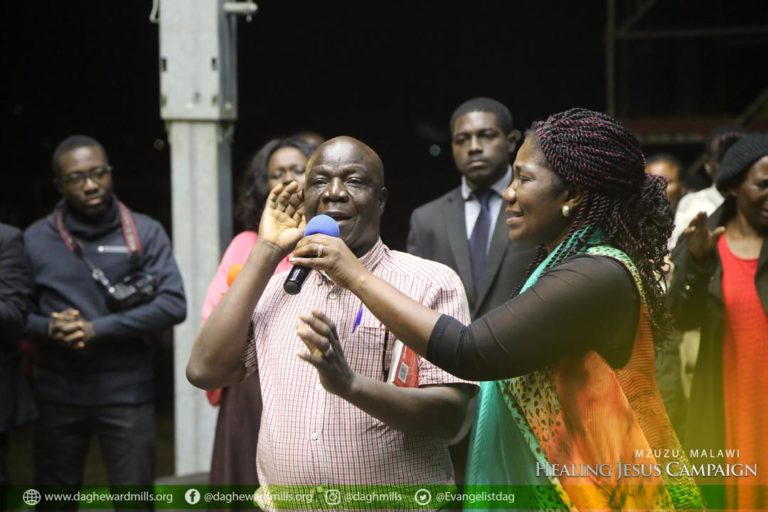
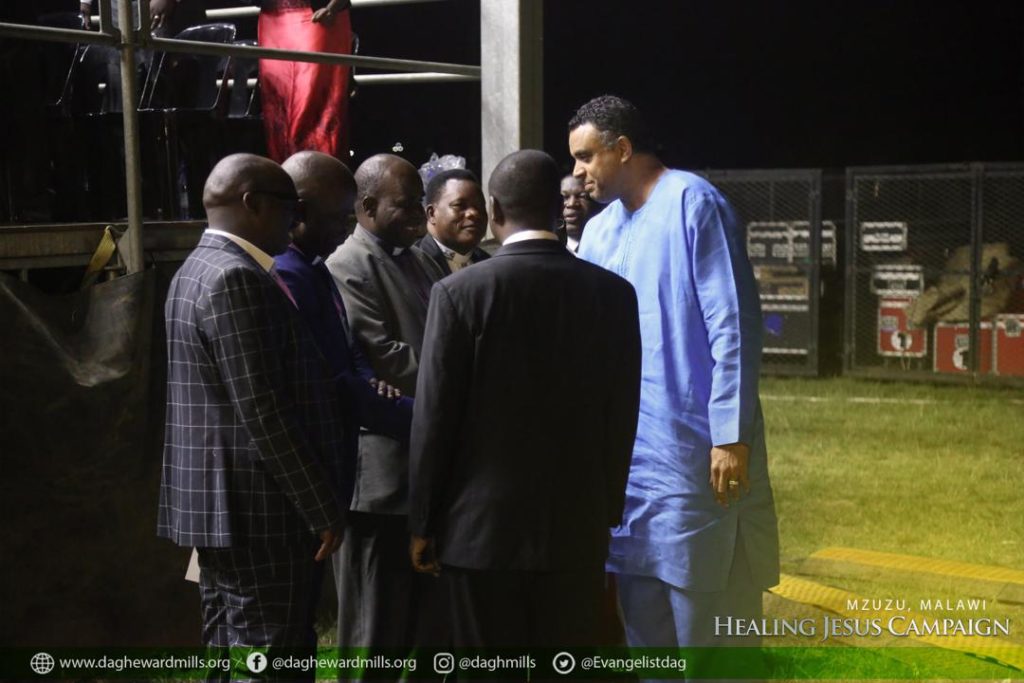
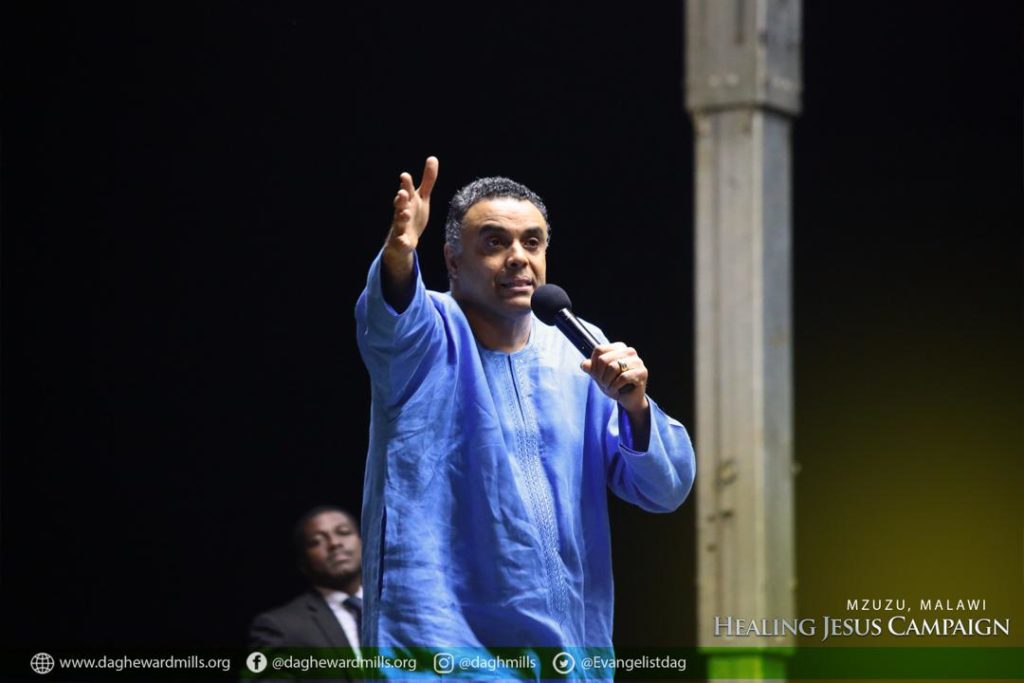
Healing Jesus Campaign Mzuzu In Pictures: