Home Blog Page 21

Question of the Day:How do I handle lack of money?

0

Remember: As the Body of Christ, we don’t have a lack of money! God has provided every dollar we will ever need not only to have all our needs met, but also to bless others.

When you’re feeling lack, what you need is to get hold of God’s Word about your finances and have a renewing of your mind concerning money in your life. The devil would like to keep you thinking you will never have an abundance of money. That’s a lie!

We daily need our minds renewed to the truth about God’s plan for the prosperity of His people. When we place our faith in the living God (Matt. 25:21), seek His kingdom (Matt. 6:33), and walk in the truth of His Word (3 John 1:;2-4), diligently sow our financial seed (Proverbs 3:9-10), and consistently believe and say what His Word says about our finances (2 Corinthians 4:13), we will begin to live in the overflowing blessings of abundance God has provided.

The prosperous life for the Christian is ours! Our job is to take hold of it and live abundantly!

Kenneth Copeland Ministries

KCM.ORG

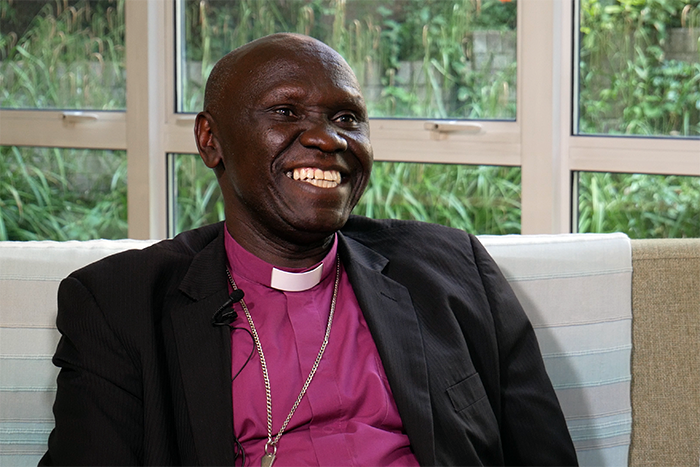
Former child refugee named as next Secretary General of the Anglican Communion

0

A South Sudanese bishop who was forced with his family into exile before he was one year old, the Right Revd Anthony Poggo, has been named as the next Secretary General of the Anglican Communion. Bishop Anthony Poggo, the former Bishop of Kajo-Keji in the Episcopal Church of South Sudan, is currently the Archbishop of Canterbury’s Adviser on Anglican Communion Affairs. 

Bishop Anthony was selected for his new role by a sub-committee of the Anglican Communion’s Standing Committee following a competitive recruitment process led by external consultants. 

He will take up his new role in September, succeeding the Most Revd Dr Josiah Idowu-Fearon, who steps down after next month’s Lambeth Conference of Anglican bishops, which is being held in Canterbury, Kent, from 26 July to 8 August. 

The Anglican Communion is the world’s third largest Christian denomination. It comprises 42 independent-yet-interdependent autonomous regional, national and pan-national Churches (provinces), active in more than 165 countries. 

The Churches of the Anglican Communion are in communion (or relationship) with the Archbishop of Canterbury. They are structurally independent and there is no “head office”.   

The Secretary General of the Anglican Communion leads the staff team at the Anglican Communion Office, the international secretariat serving the four “Instruments of Communion” – sometimes called the “Instruments of Unity”. These are the Archbishop of Canterbury, the Primates’ Meeting, the Anglican Consultative Council, and the Lambeth Conference. 

Born in 1964, in what is now South Sudan, Bishop Anthony and his siblings were taken by his father – an Anglican priest – and his mother into Uganda to flee the first Sudanese Civil War. In 1973, at the age of nine, he returned with his family to South Sudan. 

Bishop Anthony said that when he was about 12, somebody shared with him the importance of having a personal relationship with Jesus Christ, he said. “I then took the step of accepting Christ and following him. 

“At the time, I thought ‘my father is a priest. Why am I being asked to take this step’. But then I realised that your relationship with Christ is a personal relationship. You have to take the step of faith on your own accord rather than through your parents. Later in life I learned that God only has children; he doesn’t have grandchildren – which means that you become a child of God on your own accord, not through your father and not through your mother. 

“I have found it very important to spend time reading the Word of God, especially with my Scripture Union background, because the Word of God is an important aspect of our lives for our spiritual growth.” 

After graduating from Juba University with a degree in Management and Public Administration, he joined the ecumenical mission agency Scripture Union. While there he felt a need for theological training and gained an MA in Biblical Studies from the Nairobi International School of Theology in Kenya. 

He then returned to Uganda to minister to Sudanese refugees with Scripture Union, the Bishop of Kajo-Keji then, the Right Rev Manasseh Binyi Dawidi, who himself was serving the Sudanese refugees in exile in Uganda asked him to consider ordination. “I said ‘Yes, I would’, because I was already training clergy and he felt that it would be important for me to be ordained clergy in order to train clergy.” 

He was ordained a Deacon in 1995 and a Priest in 1996 and continued working for Scripture Union before joining Across, a Christian mission agency working in Sudan from Nairobi, leading the charity’s publishing arm. While there he studied for an MBA in publishing at Oxford Brookes University in England. He rose through the ranks at Across, eventually becoming the Executive Director of the organisation. 

In 2007 he was elected Bishop of Kajo-Keji, a position he held until 2016 when he moved to Lambeth Palace to support the Archbishop of Canterbury, Justin Welby, as his Adviser on Anglican Communion Affairs. 

“It is a huge privilege to be appointed as the next Secretary General of the Anglican Communion, taking over from the Most Reverend Dr Josiah Idowu-Fearon. His are big shoes to fill”, Bishop Anthony said. 

“I would like to thank the Anglican Communion’s Standing Committee for the trust and confidence in appointing me to lead the staff team at the Anglican Communion Office as it undertakes it role in supporting the Instruments of Communion. 

“I look forward to taking on my role at the beginning of September and work alongside the team at the ACO in preparing for ACC-18.” 

ACC-18 is the 18th plenary meeting of the Anglican Consultative Council, and will take place in Accra, Ghana, in February 2023. 

“One of the things that we will be focusing on from September is to support the instruments of the Anglican Communion as they implement the outcomes of the 2022 Lambeth Conference”, Bishop Anthony said. “Please pray for me as I take on this role in leading the ACO team so that the Anglican Communion family will continue in its role of being ‘God’s Church for God’s world’ in such a time as this.” 

Bishop Anthony Poggo’s appointment as Secretary General has been welcomed by leaders in the Anglican Communion. 

The Archbishop of Canterbury, the Most Revd and Right Hon Justin Welby, said: “I am delighted that Bishop Anthony Poggo has been appointed Secretary General of the Anglican Communion. Over the past six years he has built up an immense knowledge of our global Communion and its people as my Adviser on Anglican Communion Affairs. And in that time many people in the Communion have got to know Anthony too – and I am sure that they will join with me in welcoming his appointment. 

“Anthony’s wise counsel and his heart for the Gospel will be put to good use in his new role as Secretary General. He starts his new ministry at an exciting time for the Anglican Communion, with next month’s Lambeth Conference helping to set the agenda and focus of our shared mission and ministry for the next decade, as we continue to discern and put into practice our calling to be God’s Church for God’s world.” 

The Archbishop of South Sudan, the Most Revd Justin Badi-Arama, is the Primate of Bishop Anthony’s home-province – the Episcopal Church of South Sudan. He said: “We thank God that out of the suffering Church in South Sudan, God has raised bishop Anthony to this highest position. 

“He is coming at a time that the Anglican Communion is facing many challenges. But as Mordecai said to Esther; We trust God that ‘may be it is for such a time like this that God brought up’ (Ester 4:14). 

“We encourage him to always be guided by the scriptures as we support him in prayers.” 

The present Secretary General, Archbishop Josiah Idowu-Fearon, from the Church of Nigeria (Anglican Communion), said: “I give glory to the Lord for the appointment of Bishop Anthony Poggo as Secretary General of Anglican Communion. He is endowed with many gifts and it is my prayer that he would bring it all to his ministry within and beyond the Anglican Communion. 

“I look forward to our working briefly together before handing over to him after the Lambeth Conference. May the Lord equip Bishop Anthony for a fruitful ministry as the Secretary General of the Anglican Communion.” 

The Chair of the Anglican Consultative Council (ACC), Archbishop Paul Kwong from the Hong Kong Sheng Kung Hui, said: “I warmly welcome Bishop Anthony Poggo as Secretary General of the Anglican Communion. He will bring to the Communion many gifts in particular to the Anglican Consultative Council. 

“His vision of the Communion and her mission, not to mention the incredible breath of experience, will be an invaluable asset to the Communion. I look forward to serving with him at ACC and other instruments of Unity in the Communion.” 

The Vice-Chair of the ACC, Canon Maggie Swinson from the Church of England, said: “I am delighted that Bishop Anthony will be taking up the role of Secretary General. He brings a wealth of experience from his previous role and I very much look forward to working with him.”


Archaeologists discover mosaic with inscription to Peter that may point to location of his home

0

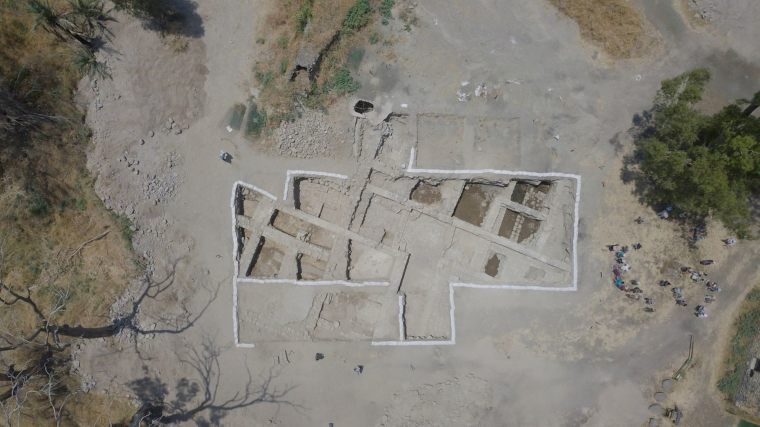
Archaeologists say they have discovered an inscription that may further indicate the location of the biblical town identified as the home of the Apostles Peter and Andrew. 

Archaeologists announced last week that, while digging various holes and channels in a series of excavations, they uncovered an ancient mosaic with a large Greek inscription regarding the Peter and Andrew of the New Testament.

Some say the mosaic may confirm the theory that the structure — commonly called the “Church of the Apostles” — was once built over a living space that belonged to the apostles. 

The archaeologists who made the discovery are from Kinneret College in Israel and New York’s Nyack College, led by professors Mordechai Aviam and Steven Notley.     

The inscription was translated by Professor Leah Di Segni of Hebrew University and Professor Yaakov Ashkenazi of Kinneret College.

The inscription refers to a donor, “Constantine, the servant of Christ,” and mentions a petition for intercession by St. Peter, “chief and commander of the heavenly apostles.” 

“The title’ chief and commander of the apostles’ is routinely used by Byzantine Christian writers to refer to the Apostle Peter,” said Notley in a statement. 

“This discovery is our strongest indicator that Peter had a special association with the basilica, and it was likely dedicated to him. Since Byzantine Christian tradition routinely identified Peter’s home in Bethsaida, and not in Capernaum, as is often thought today, it seems likely that the basilica commemorates his house.” 

The inscription is framed with a circular medallion and composed of two lines of black tesserae. It forms part of a larger mosaic floor in the church’s sacristy, which is partially adorned by floral designs. 

The discovery is a result of the El Araj Excavation Project, a joint initiative of the Kinneret Institute for Galilee Archeology at Kinneret College and Nyack College.

The excavation is sponsored by the Center for the Study of Ancient Judaism and Christian Origins (CSAJCO), the Museum of the Bible, the Lanier Theological Library Foundation and the Hong Kong-based HaDavar Yeshiva

“One of the goals of this dig was to check whether we have at the site a layer from the 1st century, which will allow us to suggest a better candidate for the identification of Biblical Bethsaida,” said Aviam in a statement. 

“Not only did we find significant remains from this period, but we also found this important church and the monastery around it.”

The Roman remains that have also been excavated from the basilica may prove the testimony of Flavius Josephus. He believed the village was turned into a town called Julias, thought to have existed until around the third century A.D. 

As archeologists review the findings, they believe this further links el Araj/Beit haBek to the ancient Jewish village of Bethsaida. 

The basilica church will be cleaned, and excavations will continue at the start of October.

In 2017, researchers with Kinneret College said they believe they had found the remains of Julias.

Bethsaida is identified in John 1:44 as the hometown of Philip, Andrew and Peter. 

Christianity Today

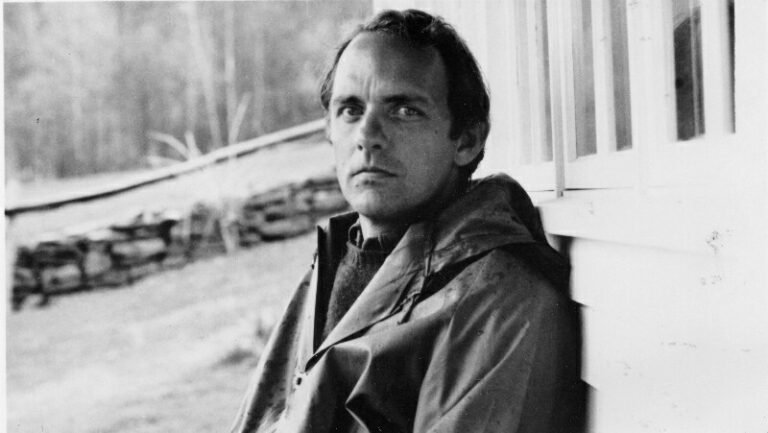
Frederick Buechner, Presbyterian minister and author, dies at 96

0

Frederick Buechner, a Presbyterian minister, theologian, speaker and prolific author of both fiction and nonfiction books, has died at the age of 96.

Buechner’s passing was announced on his official Facebook page Monday, where it was said they broke the news “with great sadness” but also with “greater appreciation for his well-lived life.”

Born in New York City in 1926, Buechner served in the United States Army near the end of World War II, then went on to earn college degrees from Princeton University and Union Theological Seminary of New York.

Born in New York City in 1926, Buechner served in the United States Army near the end of World War II, then went on to earn college degrees from Princeton University and Union Theological Seminary of New York.

In 1956, he married Judith Friedrike Merck, with the couple having three children, and would later be ordained in the United Presbyterian Church in 1958.

A prolific writer, over the years Buechner would author nearly 40 books, including novels, theological works, as well as a collection of short stories.

Honors for his work include the O. Henry Award, the Rosenthal Award, the Christianity and Literature Belles Lettres Prize, and being recognized by the American Academy and Institute of Arts and Letters.

He was also a finalist for the Pulitzer Prize and the National Book Award. He was also awarded eight honorary degrees from various academic institutions, including Yale University and the Virginia Theological Seminary.

“When I started out writing novels, my greatest difficulty was always in finding a plot,” he said in a 1996 interview, as quoted by Encyclopedia.com.

“Since then I have come to believe that there is only one plot. It has to do with the way life or reality or God … seeks to turn us into human beings, to make us whole, to make us Christs, to ‘save’ us … In my fiction and non-fiction alike, this is what everything I have written is about.”

In 2006, Washington National Cathedral held an event celebrating Buechner, in which a panel of clergy spoke about how Buechner had inspired their work.

One of the speakers at the 2006 event was the Rev. Barbara Brown Taylor, a former student of Buechner when she was enrolled at Yale Divinity School and a notable author in her own right.

“I’ve learned that language is revelatory. That it can ignite hearts, move mountains and change lives,” said Taylor at the time, recalling that Buechner’s voice was “restraint but insistent; as if he had something important to say but would not yell.”

“Dr. Buechner, you rearranged Yale,” she added.

Another panelist, the Rev. Canon Eugene Taylor Sutton, said Buechner’s book, Telling the Truth: The Gospel as Tragedy, Comedy, and Fairy Tale, heavily influenced his life.

“I have not been the same preacher since I read it, nor the same Christian,” said Sutton in 2006, noting that Buechner has become a “household name to aspiring preachers across the nation.”

Jim Denison, a theologian and head of the Dallas, Texas-based Denison Ministries, wrote in a 2018 op-ed piece published by The Christian Post that Buechner was “one of my all-time favorite writers.”

“His latest book, The Remarkable Ordinary: How to Stop, Look and Listen to Life has been especially profound for me,” wrote Denison at the time.

“Buechner offers this practical tip: see other people as family. This helps us choose against anger, revenge, lust, or other destructive emotions that mar our ability to discern the image of God in them.”

Texas Megachurch votes to leave UMS over homosexuality issues

1

Two large Texas Methodist churches, including a megachurch located north of Houston, voted to disassociate themselves from the United Methodist Church (UMC) because of its ongoing debate over homosexuality.

The Woodlands Methodist Church has around 14,000 members. The congregation voted Sunday to leave the UMC Texas Annual Conference.

The Woodlands Church announced the results of the vote on the church’s website. Out of more than the 3,000 members who voted, 2,678 voted in favor of disaffiliation—96.3% of the total ballots cast. The ballots were collected, counted and certified by the independent accounting firm of Harper Pearson, Company, PC, of Houston, Texas, the website noted.

The UM News reported the Woodlands Methodist is among the denomination’s very largest churches, ranking fourth in membership and second in worship attendance in 2018. The church is known for its ties to Good News, a longtime traditionalist caucus within the UMC that has opposed same-sex marriage and the ordination of LGBTQ people.

In a video to members posted to the church’s website, Woodlands Methodist Senior Pastor Mark Sorensen said, “We are ready to move on past the division and the differences that have been an ongoing distraction in our denomination for far too long.”

“We are changing to stay the same,” Sorensen noted. “With this vote, we are preserving the ministry that we know and love.”

Below the video of Sorensen, the church posted a verse from the Bible’s Old Testament—Isaiah 43:18-19 which reads: “Forget the former things; do not dwell on the past. See, I am doing a new thing! Now it springs up; do you not perceive it? I am making a way in the wilderness and streams in the wasteland.”

Faithbridge Church’s Membership Also Votes to Leave Denomination

Just a few hours after the Woodlands Church’s vote, all 549 members present at the Faithbridge Methodist Church, located in Spring, Texas, also voted to leave the Texas Conference, according to UM News.

Faithbridge Senior Pastor Ken Werlein noted the “bittersweetness” given his family’s tradition in the UMC and other denominations in videotaped remarks to the congregation on Aug. 7, according to the outlet.

“On the other hand, I’m also realistic about where the denomination is heading, and so I have no second thoughts,” he said. “We’ve done the right thing, the smart thing, the wise thing to keep Faithbridge Faithbridge.”

Both Woodlands Methodist and Faithbridge will remain in the UMC until Dec. 3, when the Texas Conference has a special session to consider approving the churches’ disaffiliations as well as others, UMC News reported.

Chrismanews.com

Indian National Day of Prayer Raises Tricolor and Red Flags

0

After 75 years of independence, Christians in India are proud to be part of the world’s largest democracy. But they also know it could use lots of prayer.

So on Sunday, hundreds of Protestant and Orthodox churches dedicated 30 minutes of their worship services to 40 prayer points, seeking God’s blessing for their nation as well as peace and prosperity in Indian society.

The Evangelical Fellowship of India (EFI) launched the National Day of Prayer (NDOP) six years ago, joined by the National Council of Churches in India (NCCI) two years later. The event is observed on the Sunday closest to India’s Independence Day, thus this year it fell the day before the August 15 holiday.

Denominational leaders told CT this year’s NDOP was different and significant, taking place during the Indian government’s 75-week initiative called Azadi Ka Amrit Mahotsav (Elixir of Freedom) “to celebrate and commemorate 75 years of independence and the glorious history of its people, culture, and achievements” from March 12, 2021, to August 15, 2023.

“God loves the nation of India and is at work in it,” stated EFI and NCCI in their joint call to prayer. “The Church has been called to pray and work for the peace, prosperity, and stability of the nation. The state of our nation and the challenges it faces stirs us to look to the face of the Almighty God and to pray for His unceasing blessings on India.

The two umbrella bodies appealed to Indian Christians to “earnestly intercede for our country, our leaders, and our fellow citizens.”

Churches in India “pray for the nation and its needs every Sunday and in our various weekday prayer meetings,” said EFI general secretary Vijayesh Lal. But in 2017, a special day of united intercession was identified and endorsed as a need.

The suggested prayer points span all sectors of society: from health and wisdom for Prime Minister Narendra Modi, President Droupadi Murmu, and other politicians to judges, military, media, and youth. They also highlight societal issues including gender inequality, caste discrimination, poverty, illiteracy, and religious polarization.

A section focused on Indian churches requests that they “boldly proclaim and stand for the truth,” making Jesus known and imitating his humility and compassion, as well as “engage with God’s Word” and “speak out for the poor, marginalized, and discriminated and continue to serve them.”

Tens of hundreds of congregations gathered to pray for their nation in their respective churches across India.

“It was a beautiful ecumenical gathering,” said T. P. Mordecai, joint secretary of Assam Christian Forum, highlighting the first such observance in Guwahati, the largest city in Northeast India. Participants included the Indian affiliate of Cru, Arunachal Christian Fellowship, and various evangelical and Catholic churches that “came together to intercede for the nation,” he said.

Isaac Dutta, EFI’s secretary for Northwest India, said more than 200 churches in his home state of Punjab set aside 30 minutes from their regular Sunday services for dedicated prayer for the nation. He said a “big difference” this year was the presence of India’s saffron, white, and green flag—colloquially know as the Tricolor—in most sanctuaries, given that Modi had called for a Har Ghar Tiranga (Tricolor in every home) Movement from Aug. 13–15 in order to “deepen our connect with the national flag.”

Dutta also said Punjab churches prayed for those doing injustice to become just.

In Chennai on India’s southeast coast, the Evangelical Church of India’s three seminaries and 10 Bible schools all hoisted the Indian flag on their campuses. “We prayed for … all in authority, that God would give them wisdom to rule righteously,” said Bishop David Onesimu, principal of Madras Theological Seminary and College.

In the state of Kerala on India’s southwest coast, Bishop Thomas Abraham of the St. Thomas Evangelical Church of India said his Reformed Orthodox church has observed the NDOP every year. “But this year was a special year, as it was a jubilee year,” he said. They prayed for authorities using 1 Timothy 2:1–2 as a model: “I urge, then, first of all, that petitions, prayers, intercession and thanksgiving be made for all people—for kings and all those in authority, that we may live peaceful and quiet lives in all godliness and holiness.”

In Lucknow in North India, Bishop Rolly Singh said his evangelical church members pray for their nation every day. On NDOP they gathered scores of youth. “Sessions were held explaining various articles of the freedom of religion under the Indian Constitution,” he said, “and then prayers were offered for peace, tranquility, and unity for authorities and the body of Christ in the country.”

When asked why Indian Christians pray for those who persecute them, Abraham said, “We are to do this for the Lord’s sake.” He emphasized that “prayer has power and can change situations.”

“The Lord Jesus laid down his life for everybody,” said Dutta. “It is our duty to pray for those who persecute us and pray that the Lord would enlighten them and lead them in the right way.” He quoted from the Sermon on the Mount: But I tell you, love your enemies and pray for those who persecute you (Matt. 5:44).”

“It is God’s desire that none should perish,” said Ebenezer. “Thus [our persecutors] also need to hear the Good News and rule the people with justice.”

Christianity Today

Mission Schools Sexual Abuse Suit Dismissed on Technicality

0

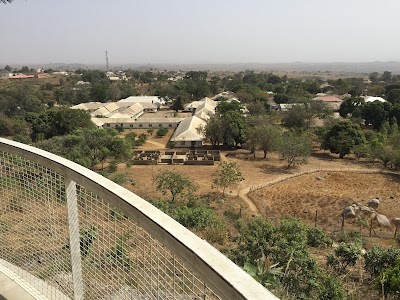
ANorth Carolina judge has dismissed a lawsuit alleging a missionary agency was responsible for abuse at a boarding school in Nigeria, ruling the statute of limitations in Nigeria prevents him from hearing the case.

“It was a gut punch—building yourself up for things, hoping, hoping, hoping, then having the rug pulled out from under you at the very last moment,” plaintiff Daniel Robinson, the son of Canadian missionaries, told CT.

The suit against SIM—formerly known as Soudan Interior Mission, Sudan Interior Mission, and Society for International Ministries—claims that seven employees at two schools in Jos and Miango, Nigeria, sexually abused children as young as five. The abuse reportedly went on from 1962 to 1981.

Six of those former missionary kids filed suit in December 2021, arguing the North Carolina–based missionary agency “breached its duty in hiring, retaining and supervising” staff at the schools. The missionary organization counters that, in fact, the schools were not under its supervision.

“We were surprised to have been named in litigation,” SIM said in an official statement sent to CT. “While some SIM USA staff children attended these schools, SIM USA did not manage either school. Both schools were run by local, independent entities in Nigeria, without operational input or oversight by SIM USA.”

One of the schools, however, was named for SIM founder Thomas Kent. Both were staffed by SIM-affiliated missionaries.

The question of oversight didn’t get argued in court, though, because Superior Court Judge Robert C. Ervin ruled last week that a North Carolina law lifting the statute of limitations on sexual abuse cases for a two-year period does not apply to sexual abuse that happened in other places. The state law limits civil liability based on the rules of the jurisdiction where the crime was allegedly committed.

“Good luck if you’re a survivor of child sexual abuse on the mission field overseas,” said Boz Tchividjian, an attorney representing the plaintiffs. “It’s so unfair to them because now the institution that should be being held accountable for placing dangerous people with these children is basically immune from accountability simply because the country that they’re serving in has a statute limitations law that is very limiting or doesn’t even have one at all.”

SIM, founded in 1893, currently has 4,000 ministers working in more than 70 countries. Nathan Krupke, chief operating officer, said in an email that the organization currently has a child safety coordinator and safe recruitment procedures, awareness training, and a code of conduct that includes a commitment to report to law enforcement where possible.

Krupke said SIM, like many organizations, is still working to reckon with the many abuses that occurred in the past.

“We acknowledge the pain of what they experienced, and express our grief for them,” he said. “We seek to understand the harm in each individual situation, and what needs have been created because of the harm.”

Robinson and the other survivors believed that the lawsuit gave them the best chance to push for accountability. He said it was filed despite pushback from a tightly knit missionary community and, in some cases, missionary parents who didn’t want to believe what their children were saying.

He believed for a long time that he was one of only a couple of people who suffered abuse at Hillcrest School until he found a Facebook group called Hillcrest Survivors. It currently has 227 members.

“I would like to make personally sure that none of the things that ever happened to me and my fellow victims can ever happen to anybody ever again,” Robinson said.

The people accused of abuse include James McDowell, a principal of the Hillcrest school who reportedly confessed last year to “molesting two students.” The official Hillcrest School Facebook group posted a letter from the school quoting the confession in April 2021. McDowell did not return an email from CT seeking comment.

Others named in the lawsuit include a dorm supervisor, dining hall employee, and four more employees. Some of them have passed away. CT was unable to reach the others.

The suit tells stories of abusers sexually assaulting children in the dorms, in cars, and in bathrooms. Survivors say they were given alcohol in some cases, and in others they were told the authorities were just “inspecting” their private parts after showers.

The survivors who spoke to CT said they all have dealt with long-lasting and detrimental effects of the abuse, including low self-esteem, depression, anxiety, a mental breakdown, suicidal ideation, long-term disability, post-traumatic stress disorder, and anger at God.

They have been retraumatized, they said, by the way they’ve been treated by Christians.

“Having the church reject me made it 1,000 times worse,” said plaintiff Susan Semons.

They struggle to reconcile what they experienced with what they were taught by their parents, their church communities, and even at the schools.

“It baffles me—their ability to see me as a person and the damage that was being done by their decisions and their policies and their people,” plaintiff Melanie Jansen said. “Nobody wants to take responsibility for the devastation that has happened to us.”

The plaintiffs will meet with their attorneys this week to consider appealing the judge’s decision to the North Carolina Court of Appeals.

“This seems to be the road that I’m on,” said Jansen. “I pray regularly for the strength to endure it. This is what God has put in front of me. So here we are.

Christianity Today

Ukrainian church seeks Kirill’s removal over ‘heretical’ defense of Russian invasion

0

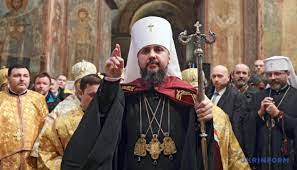
Metropolitan Epiphanius, the head of the independent Orthodox Church of Ukraine, has issued a letter to Ecumenical Patriarch Bartholomew, “first among equals” of Orthodox Christian leaders, asking Bartholomew to call Patriarch Kirill, leader of the Russian Orthodox Church, a teacher of heresy for his theological backing of the Ukraine war and deprive Kirill of his right to lead the Russian church.

The letter was approved at a meeting of the synod of the Orthodox Church of Ukraine Wednesday (July 27) on the eve of the feast day of the Baptism of the Kyivan Rus. The feast day, which commemorates the baptism of medieval Kyiv, has also been designated as Ukrainian Statehood Day by the Ukrainian government. 

“Each murdered child, each raped woman, each destroyed residential building and temple is not only a war crime, but also an act of renouncing Christ,” the letter reads. “The moral responsibility for the committed crimes rests not only on the direct perpetrators, but also on their ideological inspirers — Moscow Patriarch Kirill and like-minded hierarchs who for decades propagated the ethno-phyletic and racist doctrine of the “Russian World” and are now blessing the attack on Ukraine.”

The “Russian World” teaching imagines a transnational Russian civilization with a political center in Moscow, spiritual center in Kyiv, common language and religion (Russian and Russian Orthodoxy) and traditionalist social values in opposition to the “globalized” and “liberalized” West. 

Tensions have been rising for years between the Moscow church and the Ecumenical Patriarch, who resides in modern-day Istanbul. Kirill broke communion with the Ecumenical Patriarch in October 2018, ahead of Bartholomew’s decision to recognize the Orthodox Church of Ukraine as a canonical, independent church in early 2019

Since then, Moscow has encroached on territory historically overseen by the Greek Orthodox Patriarch of Alexandria, Theodore II, by setting up a parallel network of churches on the African continent, which is under the authority of the Greek church. Moscow’s first African churches appeared after Theodore joined with Bartholomew to recognize the independent Orthodox Church of Ukraine. 

According to the July 27 letter, Kirill aims to “radically increase the presence of the Russian Orthodox Church outside of Russia … and in this way impose hegemony and the dictates of the Moscow Patriarch on the Orthodox world.”

The letter cited the Declaration on the Russian World Teaching, published in March, which calls out the “Russian World” teaching as heretical and further “rejects all forms of government that deify the state (theocracy) and absorb the Church, depriving the Church of its freedom to stand prophetically against all injustice.” 

The declaration, which remains unaffiliated with any official Orthodox church institution, has since been signed by nearly 1,500 Orthodox theologians across the globe (including many clergy). 

Wednesday’s letter also made reference to an Open Address to the Heads of the Orthodox Churches, made by members of the Ukrainian Orthodox Church, which, unlike the Orthodox Church of Ukraine, maintained ties to the Moscow patriarchate. This statement similarly condemns Kirill’s support of the “Russian World” teaching and questions his right to occupy the position of Patriarch. 

The Ukrainian Orthodox Church, which long predates the Orthodox Church of Ukraine, still refuses to recognize the independent church, though an unofficial meeting between clergy of the two groups, facilitated by the Ukrainian government, took place earlier this month

While the Orthodox Church of Ukraine’s letter is addressed to the Ecumenical Patriarch, the letter speaks to concerns for the entire global Orthodox Christian community. “It is important to understand that the ideology of the modern ROC (Russian Orthodox Church) contains a threat not only for Ukraine,” the letter states, “but also for the entire Orthodox world.”

“Russia is a country that for centuries linked its identity with Orthodoxy” the letter also says, but has since “been insidiously replaced by a civil religion that is apparently based on Orthodox tradition, but alien to the spirit of the Gospel and content of the Orthodox faith of the Holy Fathers.”

According to the official Twitter account of Ukraine’s President Volodymyr Zelenskyy, the Ecumenical Patriarch talked with Zelenskyy on July 28, expressing his continued support for Ukraine in light of Russia’s aggression. No official statement regarding the Orthodox Church of Ukraine’s letter has yet been made by the Ecumenical Patriarch

Religion News Service

Planting healthy, accessible neighborhood churches is the best way to reach people with Jesus’ good news and fulfill His Great Commission.

0

To bring the message of the gospel to nations, the Alliance Legacy shares how their team engages with many local churches to secure property and plant small, welcoming neighborhood fellowships.

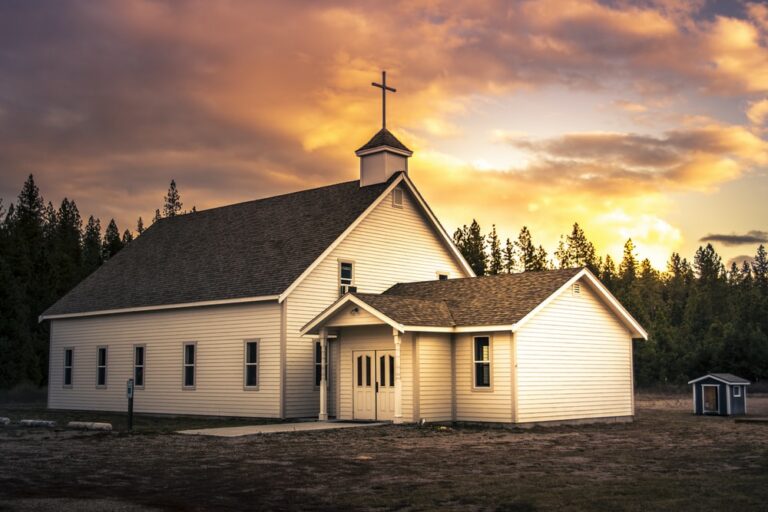
We work hard to ensure these neighborhood churches are inviting to outsiders—where “walk-ins are always welcome.” So passersby can see what’s happening inside and listen in without feeling forced to enter, we leave our church windows and front doors wide open during services.

We also encourage regular attendees to sit in the front of the church, so space is available in the back for those hesitant to enter for the first time. This “walk-ins welcome” posture has resulted in many changed-life stories.

Our neighborhood churches also serve as a resource for people in great difficulty. A widow in our group shared that when her husband died, she didn’t know where to turn. The Alliance church in her community stepped in to take care of all the many details. This congregation continues to assist with her family’s food needs and children’s education.

A Place of Healing Prayer 

Neighborhood churches are also a place of prayer for healing the sick. One pastor confessed to us that he felt overwhelmed when a family laid an ill relative on a mat on his church’s porch. The man’s hospital treatments hadn’t cured him, and his family had run out of money.

So this pastor and his congregation took on the health need in prayer. Slowly, the man regained his strength—one day he literally took up his mat and walked (see John 5:9).

The Alliance

Christian and Missionary Alliance Considers Calling Women ‘Pastors’

‘I WAS FIRM IN MY DECISION TO PROVE TO MYSELF AND EVERYONE ELSE THAT I WAS THE REAL DEAL.’

Ukrainian refugees could be housed in unused church buildings, say Irish archbishops

How the iPhone Helped Spread the Gospel in the Last 15 Years

0

Fifteen years ago on June 29, 2007, Apple started selling the highly anticipated iPhone. At the time, many questioned whether the device would succeed and how people would use it. It turned out to be a tremendous success and has even played a significant role in helping believers spread the gospel of Jesus Christ.

A year after the iPhone’s release, Apple opened the doors to its digital App store, offering the free YouVersion Bible App among the first 200 apps in their store. 

“I am super grateful for the iPhone because it made it possible to have the Bible app,” YouVersion Bible App founder Bobby Gruenewald told CBN News. “We saw the technology had potential to reach people with the Gospel. But we had no idea, though, how God could use it in such a powerful way to reach people in every single country and territory with his word and we’ve been able to be a really incredible witness to what God has done.”  

To date, the app has had more than 500 million downloads to devices all over the world. The YouVersion Bible App offers a free Bible experience for smartphones, tablets, and online at Bible.com. YouVersion offers 2,760 Bible versions in 1,831 languages for free, and without advertising.

“I was just trying to figure out how to use technology to help people read the Bible more consistently. And just had enough faith to start, to try something, and of course, what we’ve seen God do is incredible. Our faith has grown, but in the very beginning had no idea what it was going to become,” said Gruenewald. 

  Gruenewald, who’s also a pastor at Life.Church in Oklahoma, tells CBN News the next phase of the app will help people connect with local churches.  

“We’re really excited to provide that because we really care passionately about the capital “C” Church and we really believe the Bible app is a great tool to help be able to connect people to church and local communities to help them grow spiritually,” he explained. 

CBN NEWS

Archbishop of York may offer rooms in his palace to refugees from Ukraine

Maverick City Makes Grammy History as 1st Christian Group Performer in 20 Years: ‘Thank You Jesus’