Home Blog Page 24

Why more pastors suddenly want to quit: The inside story on preacher burnout

0

An increasing number of pastors have reported considering quitting their jobs. What’s driving this trend — and what can believers and parishioners do to help stem the tide?

Christian Post reporter Leonardo Blair explores this important issue, what the data has to say, and how preachers’ own spiritual practices serve as an important barrier to burnout. He recently reported on Barna data suggesting that pastors who prioritize self-care are less likely to consider quitting. 

As an increasing number of pastors are now reporting they have considered quitting their jobs due to stress, loneliness, political divisions and worries like their church being in decline among other things, a new report from Barna shows that pastors who prioritize self-care are less likely to feel this way.

Using survey data collected October 2021 and March 2022, Barna researchers found that pastors who have considered quitting full-time ministry are less likely to prioritize their self-care and are more likely to agree they feel like their own spiritual formation has taken a back seat to pastoral duties.

Among pastors who feel like quitting, less than half or 45% of them say they prioritize their self-care, while some 62% of pastors who have not considered quitting say they do.

Nearly 50% of pastors who feel like quitting said they often feel depressed compared to just 21% among pastors who have not considered quitting. Pastors who feel like quitting are also more likely to feel that their own spiritual formation has taken a backseat to their church responsibilities. Some 67% of pastors who have considered quitting report feeling this way compared to 52% of pastors who have not considered quitting.

Researchers also noted differences in weekly faith practices such as engagement with the Bible among pastors who have considered quitting and those who have not.

“When it comes to weekly faith practices that might help sustain pastors’ well-being, data highlight notable differences between pastors who have considered quitting and those who have not,” said Barna. “While all pastors prioritize praying throughout the week, pastors who have considered leaving are less likely than other pastors to prioritize reading the Bible for personal devotions (70% vs. 80%) and time to worship (58% vs. 68%) on a weekly basis.”

Despite the challenges, a majority of both groups of pastors reported that they could not see themselves doing anything else for a living, but the sentiment was much stronger among pastors who had not considered quitting.

Some 58% of pastors who have felt like quitting couldn’t see themselves doing anything else compared to 91% of pastors who haven’t thought about quitting.

More than half of pastors, 56%, who considered quitting full-time ministry in the last year, according to Barna, said, “the immense stress of the job” was a huge factor behind their thinking. Beyond these general stressors, two in five pastors, 43%, reported that “I feel lonely and isolated,” while some 38% said “current political divisions” made them think about calling it quits at the pulpit.

An equal 29% share of pastors also said they felt like quitting because they weren’t optimistic about the future of their church; they were unhappy with the impact the job had on their family or they had a vision for the church that was in conflict with where the church wanted to go. Another 24% of pastors say they considered quitting because their church is steadily declining.

While pastors who have not considered quitting experience some of the same challenges highlighted by those who have considered it, the research shows that the difference maker for them is their mindset to ministry.

Some 83% said they did not consider quitting because they believe in the value of their ministry; 75% say they have a duty to stay and fulfill their calling to ministry, and 73% say they are satisfied with their job. A majority of pastors who have not considered quitting also cite strong family and community support and confidence in their ability as leaders.Contact: leonardo.blair@christianpost.com Follow Leonardo Blair on Twitter: @leoblair Follow Leonardo Blair on Facebook: LeoBlairChristianPost

Christian Post

Dreamstime.

The persecuted Methodists of Gibraltar

0

ibraltar today is a famous British Overseas Territory, which is located at the southern tip of the Iberian Peninsula, with Spain bordering it to the north.

Anglo-Dutch forces captured Gibraltar from Spain in 1704, during the War of the Spanish Succession. It was then ceded to Britain in perpetuity under the Treaty of Utrecht in 1713.

Following this, “the Rock” became an important base for the Royal Navy. This was particularly apparent during the Napoleonic Wars and in the Second World War. Its strategic significance is due to the fact that it controls the narrow entrance and exit to the Mediterranean Sea: the Strait of Gibraltar. This is a mere 8.9 miles (14.3 km) wide.

The sovereignty of Gibraltar is an ongoing area of friction in Anglo-Spanish relations, as Spain asserts a claim to the territory. This situation has become more difficult as a consequence of Brexit – but that is another story. The friction that is the subject of this column is older than that and involves the treatment of early Methodist soldiers, who were stationed at Gibraltar.

The origins of Methodism in Gibraltar

The Methodist Church in Gibraltar was founded by a group of “soldier preachers” in the early months of 1769. The first permanent Methodist meeting place on “the Rock” was in the home of Sergeant (later Sergeant Major) Henry Ince of the 2nd (The Queen’s Royal) Regiment of Foot.

He had heard John Wesley speak in Ireland and he was a Methodist preacher (what would later be termed a “Methodist Local Preacher”) but not a member of the ordained clergy.

Ince was to become famous for his work on the Upper Galleries of Gibraltar during the Great Siege of 1779–83 (when Spain and France unsuccessfully tried to capture Gibraltar from the British during the American Revolution).

In the beginning, Ince – supported by Private W. Morton of the 2nd Regiment and Sergeant Henry Hall of the Royal Scots – met with the approval and protection of Lord Edward Cornwallis, the Governor of Gibraltar.

Cornwallis signed a Garrison Order in June 1769, which declared: “Whereas divers soldiers and inhabitants assemble themselves every evening to prayer, it is the governor’s positive order that no person whatever presume to molest them, nor go into their meeting to behave indecently there.”

It was a surprisingly sympathetic approach, although its last injunction hinted that there were those who were inclined to “molest” the Methodists and disrupt their meetings “indecently.”

A soldier’s letter home – written in November 1769 and quoted in a mid-nineteenth-century history of the Wesleyan Methodists – recorded that:

We have between thirty and forty joined in the Society from the different regiments, besides some townsfolk and one officer. We have preaching every night and morning. We have three nights of the week set apart for class-meeting after the sermon, and on the Sabbath day at eight in the morning, two in the afternoon, and six in the evening.

It was clearly a highly dedicated little fellowship. However, not everyone was pleased to see the spread of Methodism. The objections to Methodist activity were rooted in the fact that it occurred outside the parochial structure of the Church of England. This put these growing Methodist “societies” outside the control of local parish vicars.

John Wesley (1703–91) urged Methodist converts to still attend the local parish church and to receive Holy Communion there. Indeed, he himself died as an Anglican and saw his movement as aiming to bring about evangelical revival from within the Church of England.

It was not to be. The point of no return was when Methodist societies in both North America and the British Isles determined to have their own people ordained to lead them and administer their own sacraments. This process was accelerated by determined resistance to Methodism from within the Anglican Church and sanctions increasingly being applied to individual Methodists, particularly those who put their head above the parapet. That military metaphor brings us back to the garrison at Gibraltar.

The persecution of the Methodist soldiers of Gibraltar

In 1792 a group of soldiers began meeting under the leadership of another member of the military, Andrew Armour. The Methodists had a reputation for upright moral behaviour and their opposition to drunkenness. When a later governor, General O’Hara (as reported in the Methodist Magazine of 1802) was asked to put a stop to the Methodist meetings, he replied: “Let them alone; I wish there were twenty for one of them, and we should have fewer court-martials in the Garrison than we have.”

Despite this, long-standing opposition from some within the military authorities came to a head in 1802, when Governor O’Hara died and was succeeded by HRH Edward, Duke of Kent. This change of overall command was taken as an opportunity to persecute the Methodist solders by the garrison chaplain and Lieutenant-Colonel Ramsay of the 2nd Regiment. Incidentally, this regiment is the oldest English line Infantry Regiment in the British Army. But in 1803 its commander turned on the Methodist members of this historic unit.

This persecution started with a ban on soldiers attending Methodist meetings or preaching to others. When believers continued to meet for fellowship, this led to five court martials. The five arrested were Corporals James Lamb and Richard Russell and Privates James Hampton, John Reeves and John Fluccard, one of whom was only fourteen years of age.

Of the five, Corporals Lamb and Russell were reduced to the ranks, and all were sentenced to five hundred lashes each. Lamb and Russell received two hundred lashes that evening. The rest of the sentences were suspended; but were to be carried out if they attended another Methodist meeting.

In addition, Lieutenant-Colonel Ramsay was reported to have gone to the guardhouse before the trial and to have told the corporals that “he certainly would flog them.” Clearly, they had been found guilty even before the trial had begun.

The persecution ended the next year, with the appointment of a new governor, but it was a shocking insight into an alliance between some of the elites within the established church and military, in response to men whose offence was primarily that they acted outside the established church and felt empowered to preach the gospel to their fellow soldiers. All the while accompanied by moral uprightness and opposition to drunkenness!

Although the Duke of Wellington was not implicated in any of the persecution of Methodists in Gibraltar, it should be noted that this conservative aristocrat was not pleased to find overly-recognisable Methodist activity within his regiments during the Peninsular War, against the French in Portugal and Spain. However, it was not their meetings which troubled the duke, it was their enthusiasm. He was particularly irked when Methodist soldier-preachers targeted officers with moralising sermons!

The Gibraltar fellowship survives

Despite the difficulties, the Methodist community grew, and the Methodist Conference (the church’s organising centre) decided to support the work in Gibraltar by providing missionary ministers. So it was that, in 1804, the first Methodist minister was appointed, and was charged with the care of both military and civilian members of the Methodist society there.

However, that same year this first minister, James M’Mullen, and his wife, both died of yellow fever within a month of arrival (leaving a young daughter).

A second minister, the Rev. William Griffith senior, arrived in 1808 and built the first Methodist church in Gibraltar in 1809. This was in Prince Edward’s Road, on the site of Sergeant Major Ince’s earlier army quarter. Later, a manse and a charity school were added to the suite of premises.

The work continued to be arduous. Repeated outbreaks of yellow fever and of cholera (the latter from the 1830s) adversely impacted on the work of the mission and for many years there was sporadic opposition from the garrison chaplains.

In the 1830s, the Methodist minister, the Rev. Dr. William Harris Rule, during his nine years in Gibraltar (1832–41) championed religious toleration within the military and successfully opposed the ongoing punishment of soldiers for being Methodists. As a result, the War Office accepted the right of Methodist and nonconformist soldiers to attend their own religious services. The situation had come a long way since the floggings of 1803.

The aim of the Methodists in the military was always evangelism. They saw the ministry to soldiers and sailors as being particularly significant because they travelled around the British Empire and took the gospel message with them. As a result, links with the British and Foreign Bible Society had been established since 1807. This was because Bible distribution was regarded as an important means of evangelism.

The mission beyond the military

Alongside work within the regiments of the Gibraltar garrison, the Methodists were also active among the local inhabitants of Gibraltar. In 1824, the Rev. William Barber was appointed as a second missionary, solely to work with them. This work was later developed by the Rev. W. H. Rule who founded the first Mission schools in Gibraltar. However, these activities led to considerable opposition from some members of the Roman Catholic population.

In the 1830s, Rev Rule also attempted to establish Methodist missions across the border in Spain, based on Cadiz. This accompanied related work there by the Bible Society. However, the political and religious situation in Spain meant that all were eventually forced to leave the country and they failed to establish a permanent Protestant community in Spain at this time.

On the recommendation of a commission, which was set up in 1996, the Methodist Church in Gibraltar is now a circuit within the South-East District of the British Methodist Church.

Martyn Whittock is an evangelical historian and a Licensed Lay Minister in the Church of England. As the author, or co-author, of fifty-four books, his work covers a wide range of historical and theological themes. In addition, as a commentator and columnist, he has written for several print and online news platforms; has been interviewed on radio news exploring the interaction of faith and politics; appeared on Sky News discussing political events in the USA; and recently has been interviewed regarding the war in Ukraine, including its religious dimensions. His most recent books include: Trump and the Puritans (2020), The Secret History of Soviet Russia’s Police State (2020), Daughters of Eve (2021), Jesus the Unauthorized Biography (2021), The End Times, Again? (2021) and The Story of the Cross (2021). He has just completed Apocalyptic Politics (2022 forthcoming), which examines apocalyptic beliefs driving political radicalization across global cultures. He grew up within Methodism, where he was accredited as a Methodist Local Preacher, the same position held by Sergeant Henry Ince in the 1760s.

No Systemic Abuse at Saddleback Successor’s Former Church

0

Leaders of one of the nation’s largest and most prominent congregations say their new pastor has been cleared of allegations of abuse at his previous church.

In June, Andy Wood, pastor of Echo Church, a multisite church based in San Jose, California, was named the new pastor at Saddleback Church and the successor to founding pastor and bestselling author Rick Warren.

After the announcement, former staffers at Echo raised concerns about the culture at the church, calling it unhealthy. At least one former staffer referred to Wood as abusive. Questions were also raised about Wood’s decision to have disgraced megachurch pastor Mark Driscoll, founder of the now defunct Mars Hill Church in Seattle, speak at a leadership conference Wood runs.

Wood, his former church, and Saddleback have repeatedly denied any allegations of abuse.

On Monday, Saddleback’s elders sent an email to the congregation of more than 20,000, saying a follow-up investigation by Vanderbloemen, a Christian executive search firm, had cleared Wood. They also said the church had hired a separate firm, Middlebrook Goodspeed, to review Vanderbloemen’s work.

“The team at Vanderbloemen interviewed former employees, former volunteers, peers, and current employees to ask them about their experiences with Andy,” Saddleback elders wrote, citing the two firms. “The sample can be said to be thorough. After our work, we concluded there is no systemic or pattern of abuse under Andy’s leadership, nor was there an individual that we felt was abused.”

The Vanderbloemen report will not be made public, according to a church spokesperson.

Fewer than half of Evangelicals believe Bible is literally true: study

0

While biblical literalism has long been held as the most dominant method of interpreting Scripture among Evangelicals, results of a new poll released by Gallup show that fewer than half of Evangelicals and born-again Christians believe the Bible should be taken literally.

Biblical literalism holds that “except in places where the text is obviously allegorical, poetic or figurative, it should be taken literally” as God’s Word, according to Got Questions Ministries, which holds this view of the Bible.

The poll, conducted through telephone interviews from May 2-22 with a random sample of 1,007 adults, found that just 40% of respondents who identify as Evangelical or born-again view the Bible as the “actual word of God,” while 51% see the Bible as the “inspired word of God,” meaning that men were inspired by God to write the collection of books now referred to as the Bible.

In general, among all U.S. adults, only 20% say the Bible is the literal word of God, which is a historic low according to Gallup. In 2017, the last time the research firm asked Americans about their views of the Bible, 24% of respondents accepted it as the literal word of God. A record 29% of Americans say the Bible is a collection of “fables, legends, history and moral precepts recorded by man.”

“This marks the first time significantly more Americans have viewed the Bible as not divinely inspired than as the literal word of God. The largest percentage, 49%, choose the middle alternative, roughly in line with where it has been in previous years,” Gallup said.

In 2015, just under 60% of Evangelical churches espoused a literal interpretation of Scripture, data from Pew Research showed. In 2019, Pew Research also noted that some 61% of Southern Baptists, who tend to express higher levels of religious commitment than Americans overall, accepted the Bible as the literal word of God. This share exceeded the share of those who hold this belief among all U.S. adults, 31%, and among other Evangelical Protestants, which had fallen to 53%.

The recent Gallup data show that only 30% of Protestants say the Bible is literally true, while just 15% of Catholics do. Almost two-thirds of Catholics view the Bible as the inspired word of God.

As was the case in 2017, belief in a literal Bible is highest among those who are more religious and among those with less formal education,” Gallup said. “Americans who identify as Evangelical or born again are much more likely than others to view the Bible as literally true, although even among this group, the percentage believing in a literal Bible is well less than 50%.”

The data from the Gallup poll comes less than a year after, a study from Arizona Christian University found that of an estimated 176 million American adults who identify as Christian, just 6% or 15 million of them actually hold a biblical worldview.

The study found, in general, that while a majority of America’s self-identified Christians, including many who identify as Evangelical, believe that God is all-powerful, all-knowing and is the Creator of the universe, more than half reject a number of biblical teachings and principles, including the existence of the Holy Spirit.

Strong majorities also errantly believe that all religious faiths are of equal value, people are basically good and that people can use acts of goodness to earn their way into Heaven. The study further showed that majorities don’t believe in moral absolutes; consider feelings, experience, or the input of friends and family as their most trusted sources of moral guidance; and say that having faith matters more than which faith you pursue.

© The Christian Post

Does it matter that the Church of England can’t define a ‘woman’?

0

It’s not often that the Church of England is talked about in the pub.

But the other day it was. And you know an Anglican issue is really cutting through in the public’s mind when something is spontaneously raised in this way.

The matter highlighted was the C of E’s apparent difficulty in defining a “woman”. Or, at least, that is roughly how the subject was reported. Fox News headlined: “Church of England refuses to define the word ‘woman.” The Daily Mail said: “Church of England: What is a woman? We can’t decide.” There was other coverage in the Daily Telegraph, on LBC radio, and on TV stations GB News and Talk TV.

The issue hit the news after a question was asked in the church’s Parliament, the General Synod, last week. Synod member Adam Kendry asked: “What is the Church of England’s definition of a woman?”

In response, Robert Innes, the Bishop in Europe, said that “there is no official definition”. He went on: “There is no official definition, which reflects the fact that until fairly recently definitions of this kind were thought to be self-evident, as reflected in the marriage liturgy.”

He added: “The LLF project however has begun to explore the marriage complexities associated with gender identity and points to the need for additional care and thought to be given in understanding our commonalities and differences as people made in the image of God.”

So – does it matter? The short answer to this is “no” … but the slightly longer answer is “yes” … Let me explain.

In the short term, it doesn’t matter. Why? Well, the Church of England has no definition of a woman for precisely the same reason that almost certainly the church you currently attend doesn’t have an official definition of a woman either. It might do – but I reckon that would be highly unusual. Has your PCC or team of Elders ever sat down and issued such a definition? I doubt it.

And the Church of England also has no definition of a woman for exactly the same reason that the conservative church groupings which some indignant commentators might hold up as paragons – for example, ACNA in the US, or the conservative Anglican Gafcon movement – don’t have a definition either. (At least, when I googled, I couldn’t find any).

The reason is simply this: a definition has never thus far in church history been needed. Everyone has known what a woman is – in other words, an adult human female. The church you attend probably doesn’t have a definition of a woman any more than it has a definition of a child or a man or a table: in a nutshell, we all know without having to be told.

Saying (as the Bishop in Europe did) that there is no legal C of E definition is not quite the same as saying, “We don’t know.” And answering on behalf of the whole Church of England – rather than a purely personal capacity – the Bishop was not in a position to make up an official definition on the spur of the moment; that is not how things work.

But while all these things may explain and contextualise the lack of any official definition at this moment, that is not to say that the Church of England shouldn’t be speaking up on this issue. For in the medium term, it does matter. With extreme transgenderist ideology being pushed (or more accurately forced) upon many sectors of society, in the face of a vehemently opposed public, the C of E does need to step up and give a Biblical, sane lead on this issue.

So far, it is not clear that it is capable of doing so. A few weeks ago Justin Welby was asked what a woman is, and this is the answer he gave: “A woman is someone who is sexually a woman, who is born and identifies as a woman or who has transitioned. There is a difference between how you identify a woman and how you ensure that trans people are valued and cared for in exactly the same way as every other human being. They’re not less, they have their particular challenges, every human being has their particular challenges. But we can’t get away from the science. We’ve got to start there.”

That answer, as it reads at least, seems to me to be muddled. If you “start” with the “science” as Justin Welby stresses, then it seems difficult to end up with a definition of “woman” which includes (as he seems to) someone who has “transitioned.” So there seems an inherent contradiction in this line of reasoning, if I understand it correctly. Perhaps he is differentiating sex and gender (as some do), but if so, that is not clear. And furthermore, to be honest, as Christians, don’t we start with the Bible? It is interesting he doesn’t even mention that in passing in his answer.

No wonder campaigner Maya Forstater (whose court case established that gender critical views are protected as a belief under the Equality Act 2010) told the Daily Mail after the Synod debate that the Church of England’s long-established understanding – that it is fairly obvious what a woman is – “makes sense whether your starting point is biology or the Bible”. She added that the C of E could not act “as if this fundamental truth did not matter”.

It is time for the Church of England to stand up, speak up and give a lead on this issue – while being hugely pastorally kind to those who really struggle in this area. On this subject, at least, the bishops may even find they have the overwhelming majority of the British public being supportive of them.

David Baker is Contributing Editor to Christian Today and Senior Editor of Evangelicals Now, available at https://www.e-n.org.uk in print and online. Use the code Keswick22 to gain a 20% discount on the first year of a new full subscription (print and online) for the first year (offer expires 15th August). He writes here in a purely personal capacity.

Shaping Your Child Into a Spiritual Warrior

0

The stats suggest that well more than half of young people will leave the Church after they leave their childhood Christian home. I’m convinced that the major reason for this is a lack of learned and modeled engagement in the deeper spiritual life on the part of parents and kids.

Mom and dad, you and I will go to incredible lengths and allow our kids to endure incredible difficulties to guarantee high test scores for college, to pass driver’s education, but why aren’t we urgently guiding them into deeper spiritual lives?

What is a great career compared to eternal life? What does it matter if they make a better living if it comes at the cost of really living life with God?

I’ve collected five principles we can apply in the direction of raising our kids not only as successful people but, most importantly, as capable spiritual warriors.

1. It starts with us. God has given us children for our benefit and for His glory. The warrior motif in Psalm 127 is pretty clear. “Children are a gift from the LORD; they are a reward from Him. Children born to a young man are like arrows in a warrior’s hands.” (Psalms 127:3-4 NLT)

It must become our joy to see them fighting spiritual battles. (Colossians 2:5)

2. It continues with God. I was talking to a loving mother one day about my willingness to die for the Lord if that was His will. I was telling her how we must entrust our kids with God to follow Him anywhere. She was stunned, proclaiming, “I don’t want that for my child!” Our protectiveness must end where God’s leading begins. It isn’t easy to watch your baby go off to spiritual battle, but if our kids would know The Lord in fullness we must entrust them to Him completely.

Proverbs 3:5, “Trust in the LORD with all your heart; do not depend on your own understanding.” (NLT) Mom and Dad, their lives are for the Lord.

3. Have the hard conversations. I’m a Pastor. When your kids are at church I can do my very best to teach and preach God’s Word over them. But I can’t disciple them for you. Make the home a place for serious discussion on topics that matter.

Consider Proverbs 22:6, “Direct your children onto the right path, and when they are older, they will not leave it.” (NLT) The Greek root for “Direct” or “Train up” in the King James Version is “chanak” and it most literally means “to narrow.”

Our role in their lives is to narrow their focus to the most important things. The spiritual wars are waging and it is our calling in the lives of our children to give them the biblical and practical information they need to make wise spiritual decisions. (Matthew 7:13)

4. Teach them to put on their armor. I practice and teach my kids a system of self defense called “Totally Christian Karate.” Unlike so many other forms of self defense and martial strategy that I’ve been involved with for many years, it is a system of physical movements primarily aimed at teaching spiritual warfare. The physical movements are metaphor for the real spiritual battles we face.

The founder of the system renamed one hundred and one traditional karate movements after Bible passages. My favorite are the three primary blocks against our enemy the devil who is always prowling around like a roaring like seeking whom he may devour. (I Peter 5:8) An upward block is a “helmet of salvation.”

Don’t make religionists of your kids. Lead them to Jesus to trust in Him for salvation. But don’t stop there! Teach them to walk in confidence in the face of trials in the world because if we are in Christ, we are not of this world. A low block is a “belt of truth.” We must model and instruct our kids to avoid the confusion of the postmodern world. We must model and shape their thinking according to the regular infusion of Scripture into their lives and our family conversation.

A middle block is a “breastplate of righteousness.” It is my favorite block of all. Short. Simple. It is an instant defense against the accuser. Model and teach our children to live rightly before God and man. Avoid scandalous behavior and learn to be content with godly living. Teach them that we’re not missing out on anything to avoid running along with the crowds. Holiness is a far greater treasure than popularity with people who are perishing. (Ephesians 6:10-20)

Of course, you don’t have to use something like TCK to accomplish it. We’ve got to instill in our kids to see their life as a useful instrument in the hands of God and that they can overcome temptation and trial using the weapons of our warfare. (II Corinthians 10:3-5James 4:7)

5. Teach them greater responsibility. When Peter Parker’s uncle told him “With great power comes great responsibility” Spider-man sprung into action. The follower of Jesus has access to a power far greater than any spider bite caused genetic mutation. We have access to the Kingdom of God and the collective spiritual and practical strength of the Body of Christ in the world.

We have the Holy Spirit and love. We also have a mandate and a mission.

In Matthew 28:18-20 we get our marching orders as spiritual warriors. “Jesus came and told His disciples, “I have been given all authority in heaven and on earth. Therefore, go and make disciples of all the nations, baptizing them in the name of the Father and the Son and the Holy Spirit. Teach these new disciples to obey all the commands I have given you. And be sure of this: I am with you always, even to the end of the age.” (NLT)

We have a responsibility to take Christ to our neighbors and the nations. Get your kids involved directly with local outreach and foreign missions. To make black belt level spiritual warriors, you’ve got to start with white belt training. Everything from shoe boxes to bake sales are a good start but keep them advancing until they are using their own spiritual gifts to make a Kingdom impact!

The day after they leave our homes, they will be the same person they were the day before. Make today count. Fearlessly get them ready to go. Our mission is to reach our neighbors and the nations, our mandate is the very presence and power of the Holy Spirit and the love of Jesus filling our hearts.

Mom and Dad, making spiritual warriors starts with our attitude, continues with our modeling and training and continues with our prayerful support of them continuing in what they’ve been taught. Let’s get serious about training warriors for Christ!

Dr. Chris Surber – All Rights Reserved. Copyright @2021 – CBN – CBNNEWS.COM. https://www1.cbn.com/parenting/shaping-your-children-spiritual-warriors

The War Chronicles… Rick Joyner

0

UKRAINE AND RUSSIA
The war in Ukraine continues to be the dominant event that has the attention of
the world. It is already shifting the geopolitical map of the world. It has set in
motion forces of great change and has the momentum to become a force for even
greater change. As the saying goes, “If you don’t change your direction you will end up where
you are headed.” The first question we should ask then is, “Where is this headed, and if this
is not headed where we want, how can we change direction?”

We will look at this both in the natural and in the spiritual, since they are interwoven. As I have shared, the first prophetic revelation I received after my conversion was that the greatest revival of the church age would
come out of Russia. At the time, I did not know anyone else who has received this revelation—until I met Bob Jones. He and I talked about this many times.
When the Iron Curtain fell, I thought this might lead to the revival. As missionaries poured into the former Soviet Union, great moves of God emerged in Russia, Ukraine, and many other former Soviet Bloc nations. Yet all this combined was not what I had been shown. When I asked the Lord about this, He showed me all those called to these movements would become laborers in the great revival to come.
Since we “see in part,” I confess I am still not sure what will make this revival coming out of Russia “the greatest of the church age.” It might be its quality, the number of people brought into the kingdom, its worldwide impact, or a combination of factors. I still don’t have clarity on this, but I do know I would not have been shown this so early in my Christian walk unless we were to have some part in this. And in the last few weeks, our part has become clearer.
At this writing, the dangers remain great for this conflict to spread. It has the potential to be the beginning of a worldwide conflict. It has certainly drawn the attention of the world to Ukraine and Russia, which has

Europe has been deeply shaken by this conflict. No doubt this was a needed wakeup call. Every weakness in the European Union, NATO, and Russian Federation is now being illuminated. One definition of crisis is “the point in a disease when it is determined if a patient will live or die.” This is a present reality for all these entities. At this time, only NATO seems strengthened by this crisis, as its role has been magnified.
More nations suddenly want to join NATO, and current members are learning how vital it is to keep their obligations to NATO. Still, it was the threat of Ukraine joining NATO that ignited this war. It may be difficult
to imagine what a great horror this was to Putin and Russia. We should remember the Cuban Missile Crisis and how horrified America was when Soviet Bloc nukes and forces were brought so close to us.
The fact that Russia is taking such a terrible and unexpected military toll may help or hurt the chances of a resolution. It is not safe to corner a bear, and the Russian bear is now cornered. This is the greatest fear of
Europe and the rest of the world: that Russia could use nukes or other weapons of mass destruction to stave off its looming defeat.
Still, our greatest danger is the vacuum of world leadership, especially in the U.S. The U.S. is the only country with the power to bring this conflict to a better conclusion. It is not that the U.S. has done nothing. It has supplied Ukraine with needed supplies and weapons and imposed many sanctions on Russia. Yet we would have been far more effective had this not been so late in coming. This reveals the state of our current leadership—
reactive, timid, and slow.
The United States’ tentative response to this crisis cannot help but embolden Putin and alarm our allies.
When your leadership is reactive rather than proactive, you surrender control to your adversary. The most powerful factor in any conflict is initiative that keeps your adversaries guessing and allows you to control the
circumstances. Our current leadership does not seem capable of this.

A few months ago, the whole world witnessed how being reactive can put even the most powerful nation on earth at a great disadvantage to a much weaker foe. We paid a terrible and humiliating price for our disgraceful
Afghanistan withdrawal. Just a little initiative could have
changed the entire outcome of that debacle. We see repeats of this in the current supply chain crisis, inflation, and cultural battles that are destroying our nation.
Again, when a strong, decisive leader sees lack of decisiveness in their counterpart, they will use this to their advantage. Putin is a strong, decisive leader. So long as he sees weakness in his U.S. counterpart, he will continue believing he can win this war. In nearly every world conflict right now, most of the initiative and decisiveness are being demonstrated by our adversaries, not the righteous. If this does not change soon, we will
end up where we are headed, and that is not a place any
of us want to be right now.
What can we do about this? First, we can be proactive by preparing for the coming Russian-Ukraine revival. Preparation results in far greater outcomes. That is why Jesus implored His disciples nearly 2,000 years ago to
pray for laborers in His harvest. As we come to the great harvest at the end of this age, we are called to be its laborers. We are the ones Christians have been praying for since Jesus walked the earth.
It’s time to arise, take the initiative, not react to the enemy’s initiatives, but tear down the strongholds of darkness and build fortresses of righteousness, justice, and truth to prepare the way for our coming King.
Next month, we will examine more ways we can be proactive and take initiative in the major crises of our times and start turning the tide of defeat into victory.
In His Service,

Rick Joyner
I Corinthians 15:58

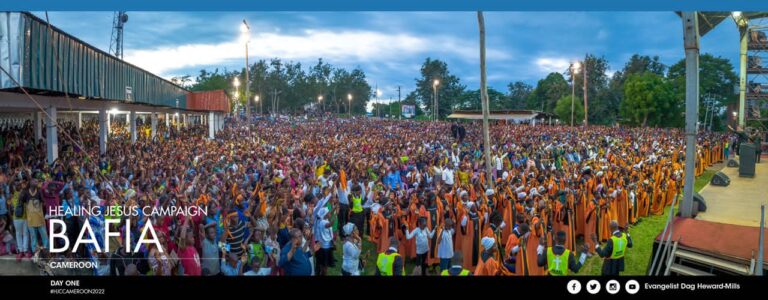
Dag Heward-Mills in Miracle Crusade in Bafia

0

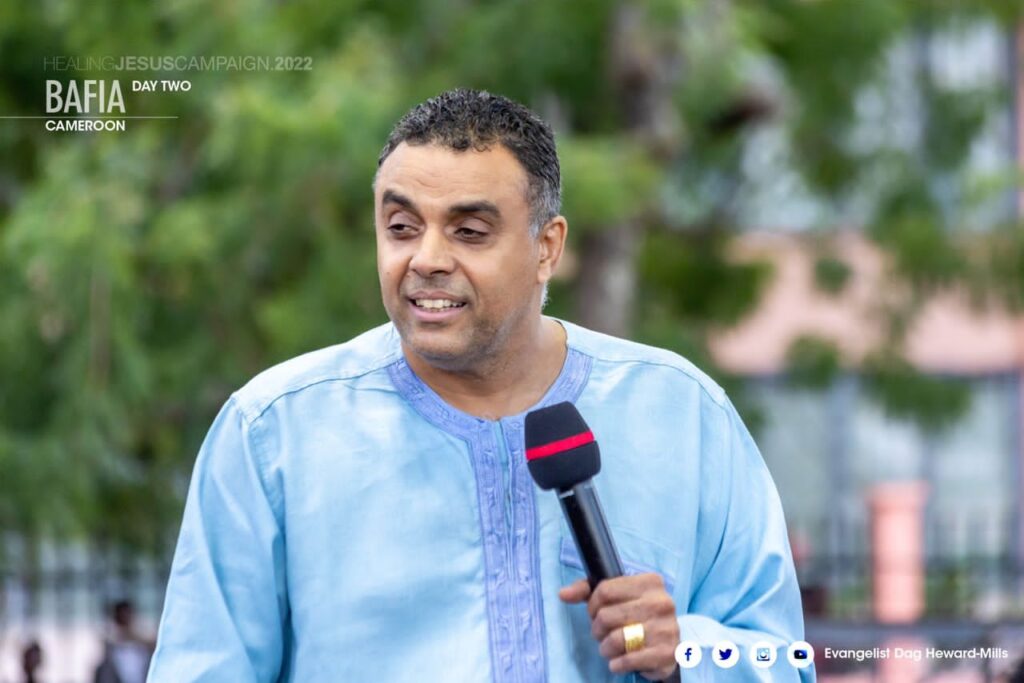
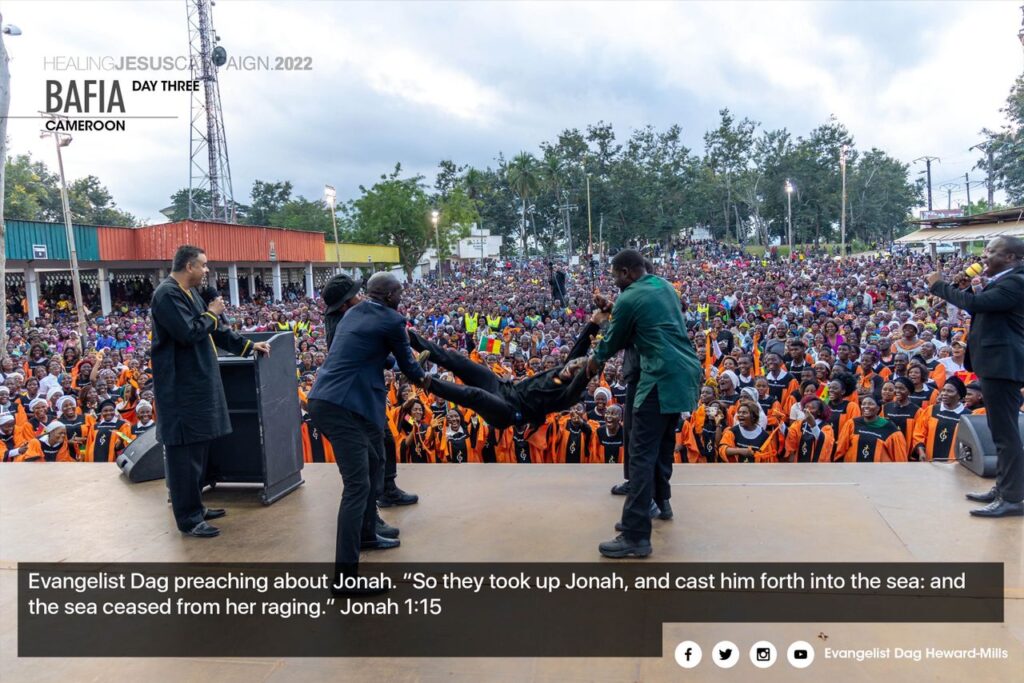
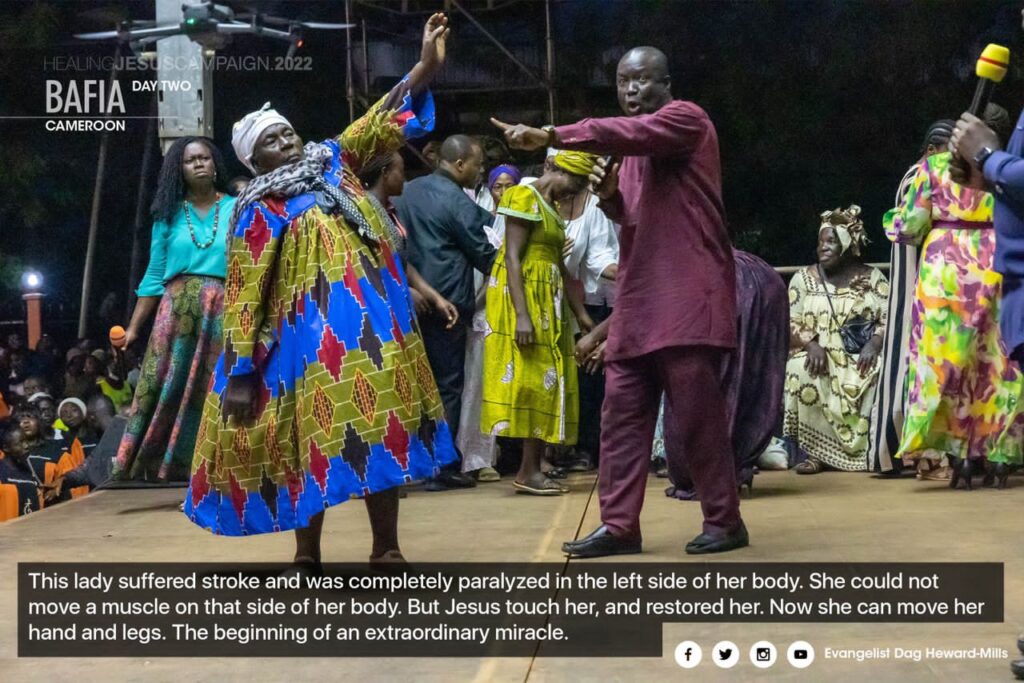
International Evangelist Dag Heward-Mills has just concluded a power-filled three day crusade in the city of Bafia.

The people of Bafia had the renowned Evangelist not only bring the message of Jesus to the level where anyone could understand, but also the healing power of Jesus.

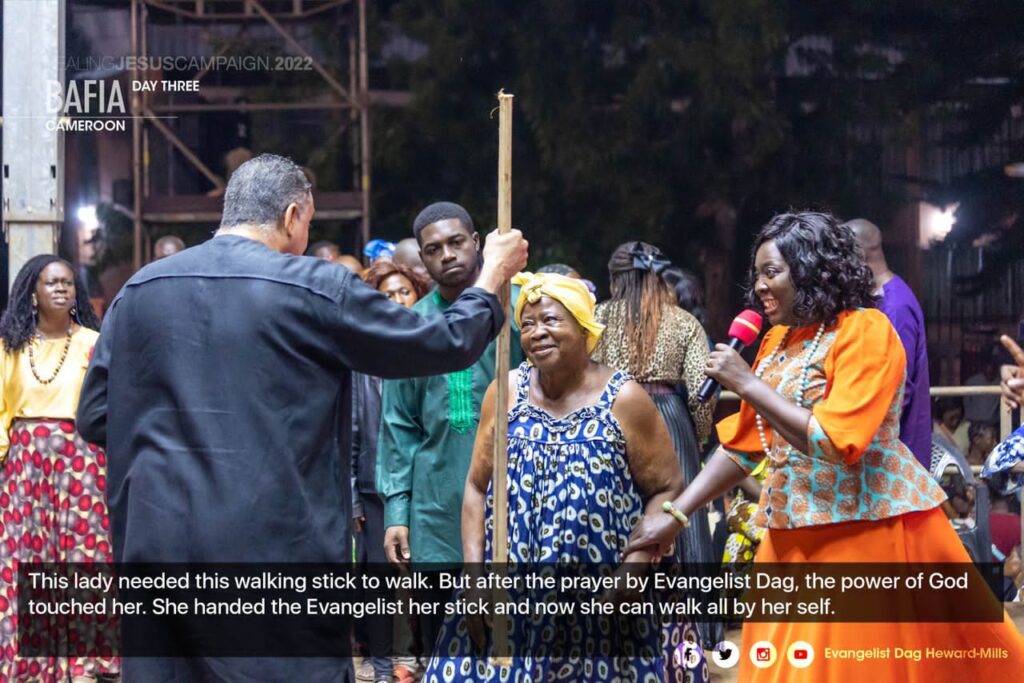
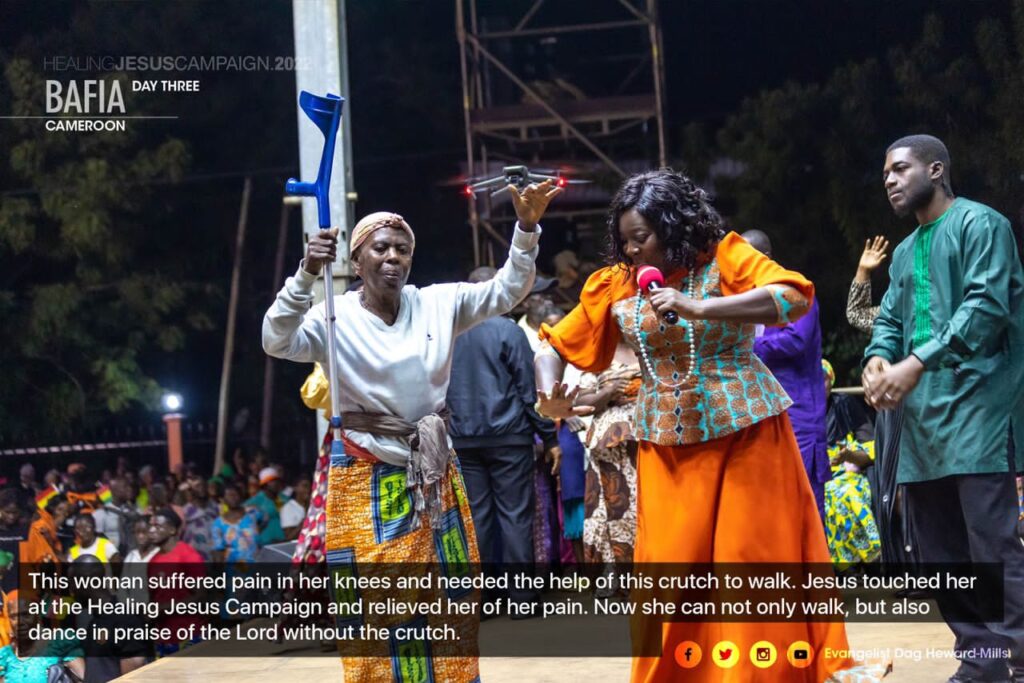
Outstanding in this three-day crusade were the miracles experienced by the locals. People with stroke were healed!

Those who needed sticks and crutches to walk could walk without their dependent sticks!!

Literally the Healing Jesus visited Bafia!!!

JINJA FOR JESUS!

0

I want to thank Evangelist Daniel Kolenda for having a vision and the courage to follow that vision!

Before I came to the Christ for all Nations Evangelism Bootcamp, the most people I had ever preached to was 2500, and that was one time. I was always thankful for the 300-500 people crowds I would preach to, but I wanted to be more effective. 

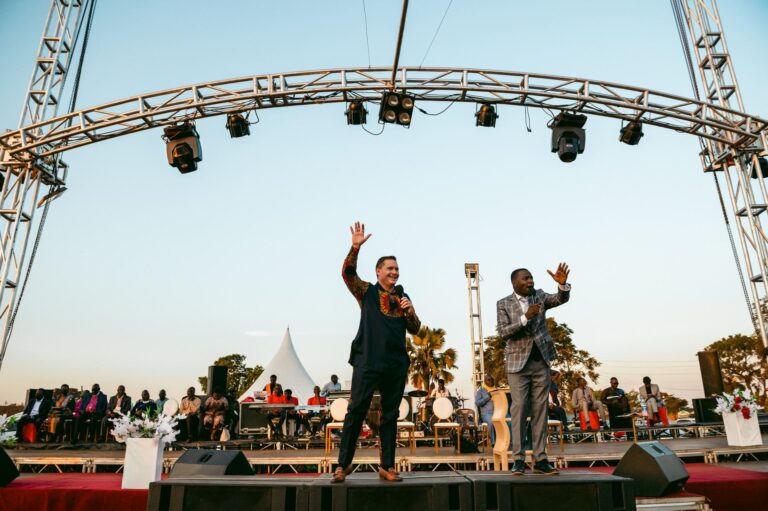
Now, just two years later, Reverend Peter Vandenberg and I just left a field with 100,000 people rejoicing for what Jesus had done in their city! 

Thank you both (most importantly, Jesus!) for teaching me, training me, and making me more effective!

The Decade of Double Harvest is truly upon us!

As Reverend Vandenberg and I left the field last night, we knew God was moving mightily in Jinja. The crusade had been reported on through many newscasts, and we had received several communications from both local and national leaders because they had heard what was happening in Jinja. Yet, I was still overwhelmed when we arrived on the Crusade field tonight to a crowd that had almost doubled from the previous night! My heart was bursting watching these precious people dancing and rejoicing!

I preached a simple Gospel message (that Evangelist Kolenda taught me) on the law of salvation, and thousands surrendered their lives to our King Jesus!

In Spite of Cyclone Threat, 56,000 Hear the Gospel on Margarita Island, Venezuela

0

Tropical Storm Bonnie threatened to become a cyclone as it headed straight for Margarita Island. The government had to suspend all classes nationwide and limit airport activities. It looked like it would be necessary to cancel the Festival de la Familia that had been planned for months.

However, the pastors of Margarita Island had been praying for a long time that God would bring a great evangelistic event to the Caribbean island, and they knew very well that Jesus Christ is Lord of all—even over storms and cyclones. 

They prayed tirelessly that God would turn the storm north, bypassing the island altogether. In the end, the event was affected only by light rain.

The Evangelical Council of Venezuela and the Christian churches of Margarita Island joined forces to organize this evangelistic effort that took place from July 1-3, featuring David Ruiz, the Spanish-speaking evangelist of the Billy Graham Evangelistic Association.

“Aren’t you the one who will be speaking at the Festival de la Familia at the stadium?” a waitress asked Ruiz during breakfast. 

“I recognized you from the photo. My neighbor who lives to the right of my house is a Christian and she invited me. My other neighbor who lives to the left is also a Christian and she invited me, too. So, after so many invitations, I thought I must go. I will be there.”

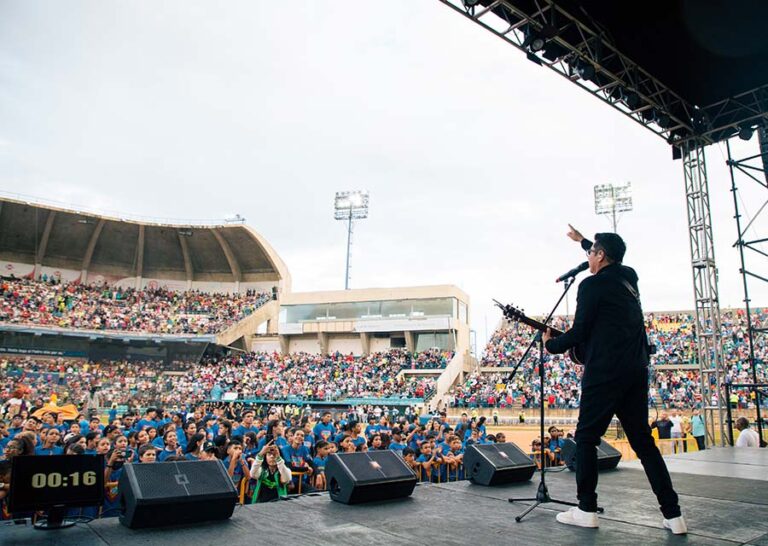
An evangelistic event of this magnitude had never been organized on Margarita Island, with even the national baseball teams not able to fill Nueva Esparta stadium like the Festival de la Familia.

Approximately 56,000 people attended the three-day event.

“We have witnessed that this is God’s time for Venezuela,” Ruiz said. “People know they have a need of God, and the churches on Margarita Island prayed unceasingly for their community and made a great effort to invite their neighbors. They even handed out invitations in the stores. It was wonderful to see that even the children invited other children. And God was the one who finally worked the miracle by touching so many hearts.”