Home Blog Page 34

Over 1,000 UK churches ready to host Ukrainian refugees

0

The number of UK churches stepping up to host Ukrainian refugees has surpassed 1,000.

Sanctuary Foundation is appealing to churches, businesses, organisations and individuals to pledge their support for new arrivals coming from war-torn Ukraine.  

The foundation was launched by Dr Krish Kandiah to encourage people to take part in the UK government’s new scheme asking Britons to house Ukrainian refugees in their own homes. 

Dr. Kandiah thanked churches for their generosity and said that he was praying it would “make a big difference” to people coming to the UK.

“Churches across the UK are again responding with great compassion and generous hospitality towards Ukrainian refugees, just as they stepped up to support the Afghan evacuee families and the new arrivals from Hong Kong over the past few months,” he said.

Dr Kandiah said the response from churches had demonstrated their role as a force for good in society.

“Every time I see the church demonstrate the grace and love of God to our neighbours from all over the world, I celebrate the genius of God in designing the church to be a force for good at local, national and global levels,” he continued.

“We are now in a position to offer homes to tens of thousands of Ukrainian refugees.

“Churches, individuals, businesses and charities can all put themselves forward to help in what is proving to be the largest scale humanitarian sponsorship scheme ever seen in the UK.”

He said that the Sanctuary Foundation was now developing resources to mobilise more people in helping new arrivals, as well as training and support for hosts.

Dr Kandiah added, “We hope and pray that this will make a big difference to Ukrainian refugees who come to the UK, but also that it will encourage our brothers and sisters in the Ukrainian church. Thank you to the 1000-plus churches and individual Christians who are making all of this possible.” 

SOURCE: CHRISTIAN POST

The Importance of Entrusting Our Fears to God

0

It is surreal to consider how different the world has become in three weeks.

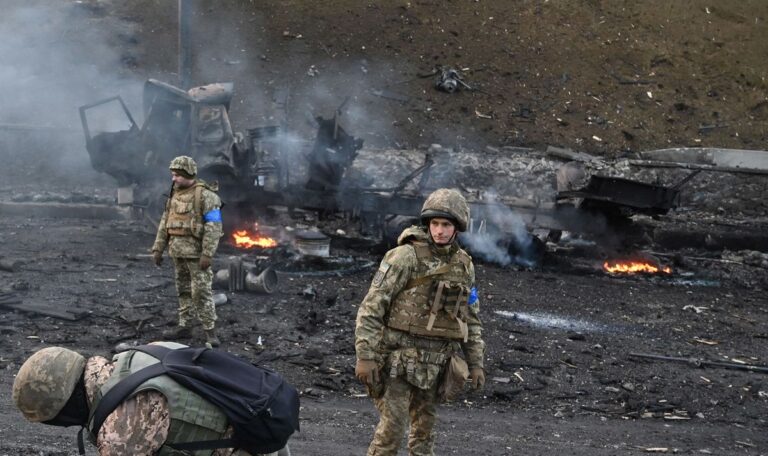
As of this morning, more than three million refugees have fled Ukraine since the Russian invasion began on February 24. Ukrainian President Volodymyr Zelensky’s speech to the US Congress later today “could be [the] most important by a foreign leader since Churchill in 1941.” The leaders of the Czech Republic, Poland, and Slovenia traveled to Kyiv last night to meet with Mr. Zelensky to offer a broad package of support. The White House announced that President Biden will travel to Brussels for a March 24 NATO summit on the invasion.

The Metropolitan Opera presented a benefit performance Monday night in New York City, with all ticket sales and donations going to support relief efforts in Ukraine. And a Russian television producer courageously interrupted a live TV state media broadcast on Monday to hold up a sign protesting the war. Her actions prompted others to protest; she was found guilty of organizing an illegal protest and fined.

“WORLD WAR III MAY ALREADY HAVE ARRIVED”

It is obvious that Putin’s invasion of Ukraine is changing the world far beyond Ukraine. The question is, how much of the world?

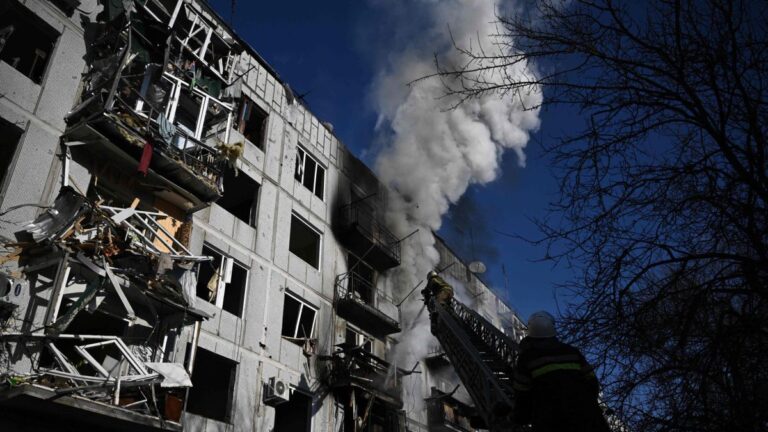
Veronika Melkozerova, a journalist based in Kyiv, writes in the Atlantic, “Every night I close my eyes thinking I might be next on Putin’s death-toll list. Nowadays, you never know where the Russians will drop their bombs—onto a residential building, a kindergarten classroom, a monastery, or a maternity hospital.” She understands that people of the West “are scared of World War III” but adds, “Don’t you understand that World War III may have already arrived?”

Putin clearly wants to rebuild a new Russian Empire, which could lead him to advance beyond Ukraine into NATO-allied countries and force the US into the conflict. I noted on Monday the growing concern that Russia could use “tactical nuclear weapons” to win its war with Ukraine; that same day, United Nations Secretary-General Antonio Guterres told reporters, “The prospect of nuclear conflict, once unthinkable, is now back within the realm of possibility.”

China’s continued escalation of its nuclear capacities only adds to the growing danger. Adm. Charles Richard leads US Strategic Forces, which oversees the military’s nuclear arsenal. He told lawmakers last week, “Today, we face two nuclear-capable near peers who have the capability to unilaterally escalate to any level of violence, in any domain worldwide, with any instrument of national power, at any time.”

HOW MIGHT GOD REDEEM THE FEARS OF THESE DAYS?

By now your stress level is probably higher than it was when you began reading this article. And we haven’t even considered that the world has now surpassed six million COVID-19 deaths as the US nears one million such tragedies. Vox has reported that “deaths of despair” (suicide, drug overdoses, and alcohol-related liver disease) “amount to the equivalent of a catastrophic pandemic every single year.” And now we are dealing with an enemy that might deploy nuclear weapons with unforeseeable global consequences.

However, none of this surprises God. He is not reading these words with the same anxiety you and I might be feeling.

Since I am convinced that the Lord redeems all he allows, I asked myself today how he might redeem the fears of these perilous days. Instantly a simple thought occurred to me: by showing us how deeply we need what only our Father can give.

It is human nature to depend on human nature. From the first sin in human history to the last sin you and I committed, the common denominator has been the same: we want to be our own god (Genesis 3:5), to be king of our own kingdom. To show us our need for his redemptive grace, God then responds by allowing us the consequences of our misused freedom (cf. Romans 1:24-32). Inevitably, such self-exaltation comes at the expense of others. Putin’s invasion of Ukraine is the latest in a line of murderous crimes extending to the dawn of human history (cf. Genesis 4:1-16).

THE DEFINING QUESTION OF OUR LIVES

Denison Ministries Creative Director Josh Miller has a fascinating new article on our website titled “‘Blessed are the self-sufficient’: How the anti-Beatitudes explain our cultural anxieties.” After exposing the fallacy of living by our culture’s self-sufficient values, he asks, “What kingdom defines your life?”

This is the defining question of our lives. You and I can seek to advance our own kingdoms, or we can “seek first the kingdom of God and his righteousness” in the assurance that “all these things will be added to you” (Matthew 6:33).

When we turn our world and our fears over to the true king of the universe, what does he give us in return? Jesus assured us, “Peace I leave with you; my peace I give to you. Not as the world gives do I give to you. Let not your hearts be troubled, neither let them be afraid” (John 14:27, my emphasis).

When we name our fears and trust them specifically and unconditionally to Jesus, we experience more than his help and hope—we experience him. We experience his peace, his joy (Hebrews 12:2), his abundant life (John 10:10). We can say with Paul, “It is no longer I who live, but Christ who lives in me” (Galatians 2:20). We can experience fully “Christ in you, the hope of glory” (Colossians 1:27).

Henri Nouwen observed:

“We tend to emphasize the distance between Jesus and ourselves. We see Jesus as the all-knowing and all-powerful Son of God who is unreachable for us sinful, broken human beings. But thinking this way, we forget that Jesus came to give us his own life. He came to lift us up into loving community with the Father. Only when we recognize the radical purpose of Jesus’ ministry will we be able to understand the meaning of the spiritual life. Everything that belongs to Jesus is given for us to receive. All that Jesus does we may also do.”

Do you “understand the meaning of the spiritual life” today?

SOURCE: CHRISTIAN HEADLINES

Minnesota churches pack thousands of meals for Ukrainians impacted by Russian invasion

0

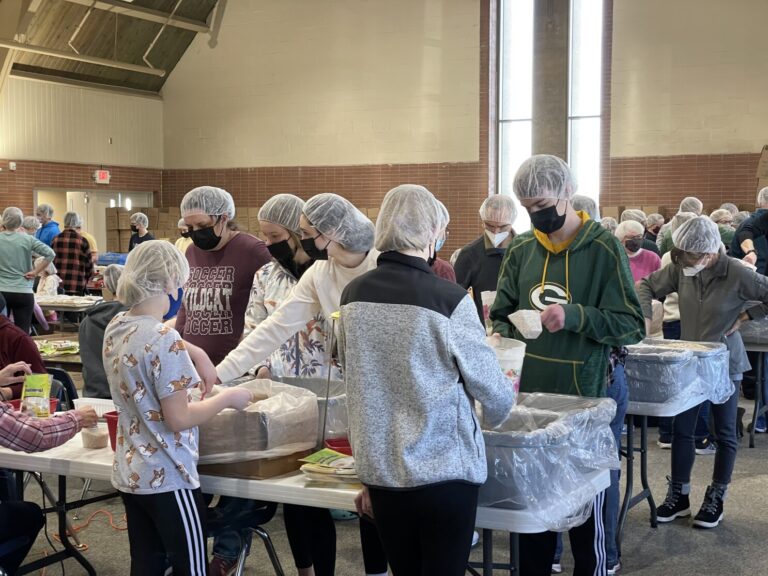
Four congregations based in Minnesota recently came together to pack around 100,000 meals for the needy, with half of them slated to be sent overseas to help those impacted by the Russian invasion of Ukraine.

Bethel Lutheran Church of Rochester hosted the meal-packing event last Saturday, with 250 volunteers packing the meals on behalf of Food for Kidz and the Channel One Regional Food Bank.

Local congregations that aided the event included Gloria Dei Lutheran Church, Holy Spirit Catholic Church and the Church of Jesus Christ of Latter-day Saints.

Bruce Gudlin, an organizer of the event, told The Christian Post that he believes the charity effort went “very well.” He said the volunteers were divided into “several two-hour shifts.”

Half of the meals will be distributed locally, while the other half will be sent to Poland. From there, they will be distributed to those impacted by the war in Ukraine.

The meal-packing last Saturday is not a standalone event, but rather a regular occurrence for the Lutheran congregation, Gudlin said.

“Each year, the churches campaign for donations which are used to purchase the raw food ingredients. These ingredients are purchased in bulk by our nonprofit partner, Food For Kidz,” he said.

“The meals are then packaged by volunteers in a space donated by Bethel Lutheran Church. These efforts allow 100% of the donations to go towards food with an end result of a highly nutritious meal for just 17 cents.”

The church is already “fundraising for our next meal pack,” Gudlin said. People can donate by going to this website and selecting “Food for Kidz.”

Since Russian forces invaded the eastern part of Ukraine, many churches and other charities have been sending aid to those adversely affected by the Eastern European conflict.

In an earlier interview with CP, the Rev. Franklin Graham, president of the North Carolina-based Evangelical humanitarian organization Samaritans’ Purse, spoke of how the charity had set up a field hospital in the western Ukraine city of Lviv.

He said people fleeing the fighting in Ukraine have general “health needs” to be addressed as well as injuries sustained due to the conflict.


“You’ve got people that are diabetic, you’ve got people with heart conditions, high blood pressure, all of these kinds of things are just normal everyday problems of life,” said Graham.

“On top of that, you have a lot of people that … have been wounded … due to the shelling. And so, you have to throw that into the mix.”

“We will be doing a lot of treating trauma,” he added.

As many Ukrainians have fled to neighboring countries, Poland has taken in about 1.8 million Ukrainian refugees since the invasion began. According to the United Nations, Poland has taken in about 60% of the 3 million people who’ve fled Ukraine in the last month.

Many churches in neighboring countries like Poland have opened their doors to shelter and aid refugees.

In the U.S., many churches have stepped up their efforts to aid Ukrainian refugees by either holding supply drives or fundraisers.

In Ludlow, Massachusetts, Saints Peter and Paul Ukrainian Catholic Church is hosting a supply drive to benefit those impacted by the invasion in Ukraine. Supplies donated to the drive are shipped out to a handful of locations in western Ukraine to aid orphanages, wounded military and civilians, according to WWLP.

The Bethany Slavic Church in Ephrata, Pennsylvania, started a Ukraine War Refugee Aid Fund that has raised over $200,000.

Meanwhile, the Nativity of the Mother of God Ukrainian Catholic Church in Springfield, Oregon, has raised over $40,000 to help those impacted by the invasion.

Other churches in the U.S. have sent members to aid the relief efforts on the ground in Ukraine’s neighboring countries.

‘I WAS FIRM IN MY DECISION TO PROVE TO MYSELF AND EVERYONE ELSE THAT I WAS THE REAL DEAL.’

0

At 19, I met the loveliest girl I’d ever laid eyes on. With national service looming, we decided to marry the following year.

Then, after our honeymoon, I was off to serve my country. But months of training as a machine gunner came to naught, as a combat training incident saw me reclassified with serious hearing loss. I knew my squad depended on me. We’d all trained together, but now I’d failed them. I had a real sense of guilt and failure, which flowed into the future.

Following the army, I was determined to prove to myself (and everyone else) that I was the ‘real deal’. I wanted to prove my self-sufficiency. I started my own business and dragged my family around Australia, chasing success. The next six years were a whirlwind – three kids, ten different addresses, across four states. When the business was going well, I had a feeling of control and calling the shots. But I remember the moment when I realised I was on shifting sand. We’d built a new house and owned it outright, but I felt utterly empty.

Meanwhile, all my struggling for identity was impacting my wife, and eventually, she crashed. Knowing I was responsible for her despair, I wanted to find the solution. A friend suggested we see an ‘Eastern’ hypnotherapist and I worked hard to convince her to come, but the session was a disaster.

On the way home, she suddenly said, “Stop the car!” I obliged and she jumped out and ran into a little church, which, amazingly, was unlocked. I was fuming. What was she thinking? Surely she didn’t think a church was going to help?

A few weeks later she broke the news. She was going to a ‘Christianity Explained’ course. I thought I should go with her, to ensure she didn’t get caught up with any crazy Christians. I endured the course (or, more correctly, they endured me!), but then my wife wanted to go to church regularly. Again, I went with her to show her it was a waste of time. I targeted the minister, bombarding him with questions.

Surprisingly, over time, I found Church strangely fascinating. I was hearing things I’d never heard before. The church was led by Reverend Donald Howard, who was extraordinary. I argued, debated and grilled him, but he never took a backward step. He was immovable, while I was like a reed blowing in the wind. Over time, as Donald answered my questions from the Bible, I was challenged to see that no matter how hard I tried, I could never be truly self-sufficient. And in fact, I didn’t need to be. Jesus had died for me, and for the sins of the whole world.

But I felt I still needed evidence in order to believe. I remember saying that Jesus would have to walk in through my door and prove to me who he was, for me to believe. The minister told me that there was someone just like me in the Bible and pointed me to John 20. I discovered it was about a bloke named Thomas who also wanted proof. In Thomas, I heard my own cynical, mocking, sarcastic voice. But Jesus graciously walked through ‘Thomas’s door’ and proved that he had risen. His words to Thomas changed my life. Jesus said to him, “Blessed are those who have not seen and yet have believed” (John 20:29). Jesus was challenging me, 2000 years later, to see him through Thomas’s eyes. Like Thomas, my eyes and my heart were opened and I responded by calling Jesus, “My Lord and my God.”

I had no idea what had just happened, but at age 45, God began to change me. The kids, now young adults, thought a different guy was living in our house. Eventually, our whole family came to faith. It was an amazing work of God. I don’t claim any merit at all. God worked in our family phenomenally and I give all the glory to him. Ten years later, I went to Bible college. That was the hardest, but most rewarding year of my life. How amazing to toss that craving for ‘self-sufficiency’ in the bin and learn, that in Jesus, we have ‘life to the full’!”

SOURCE: ETERNITY NEWS

Christians who attend church have more flourishing relationships than non-churchgoers: Barna

0

Practicing Christians in the United States are twice as likely to say they have flourishing relationships than the general adult population, according to a study by the Barna Group.

According to the study, which was released earlier this month, 61% of practicing Christians said they’re flourishing in romantic relationships and friendships, compared to only 28% of all U.S. adults who responded the same.   

Some 52% of “churched adults,” which Barna defined as adults who have attended church in the past six months but might not identify as Christian, said they were flourishing relationally. 

Data for the study was based in part on an online survey conducted from Sept. 16 to Oct. 4, 2021, of 1,003 churches adults, with a margin of error of plus or minus 2.9% at a 95% confidence level.

Alyce Youngblood, vice president of editorial at Barna, said in a statement to The Christian Post that the study suggests there was a direct positive correlation between the number of practicing Christians that are flourishing in relationships and the spiritual formation that takes place in church.

The study defined spiritual formation as the process in which a church body fulfills the “mission to nurture, send and equip disciples.”

According to Youngblood, the study recognized that the higher the spiritual formation rate within a church, the more likely the church will contain a higher rate of practicing Christians.

The study, she added, further emphasized that the more practicing Christians there are in a church, the more flourishing relationships there will be. 

“We see a connection here,” she said. “Three-quarters of churched adults who give high scores for spiritual formation in their church are also experiencing relational flourishing — compared to only 32% of churched adults who do not give high scores for spiritual formation.” 

“In Barna’s research of both human flourishing and church thriving, qualities tend to hang together; positive qualities in one area relate to positive qualities in the other.”  

The study stated that “a church that not only welcomes and connects people but [has] an awareness [of] the realities of what it takes to be content and satisfied in relationships today, is key in supporting the whole-life flourishing of congregants.”

According to Youngblood, in the Barna study, the direct causes for why practicing Christians are flourishing relationally and experiencing higher levels of spiritual formation is unknown because the study can only show correlations. However, she said, through the study, she was able to observe a number of positive outcomes associated with higher levels of Bible engagement and church attendance among the respondents.

The study, Youngblood said, is not the first evidence of “strong, consistent and deep connections among people who are engaged in faith communities.”

Youngblood noted that the correlation showing an uptick in both flourishing relationships and higher spiritual formation “has surfaced in secular research on the topic as well.”

“I’m not surprised by this finding. Barna consistently sees that practicing Christians experience rich community, often more so than Christians who aren’t practicing their faith, or people who could be called ‘nones,'” she explained. 

“I do feel it’s encouraging to see these relational patterns persist even in research we conducted during the pandemic era. … Despite the distance or disruptions to regular gatherings that have no doubt affected many in this group, committed Christians continue to report great contentment and high satisfaction in their relationships.” 

The study also found that while 72% of practicing Christians report that their church is an essential partner in their spiritual formation, only 58% of churched adults said the same. 

Barna CEO David Kinnaman said in a statement that he hoped Barna’s framework for measuring “what matters” in ministry will encourage future church leaders.

“I firmly believe this moment provides an opportunity to pioneer new ways of leading God’s people and new, deeper pathways to discipling people,” Kinnaman said. 

“It’s a kairos moment. … An opportunity to fashion new wineskins, as Jesus suggested we do. A chance to seek the Lord’s heart for more of what he desires. Of course, God is still changing lives. And he seeks to do that through the Church, through your church.”

Barna added that, much like previous studies, including Households of Faith and Restoring Relationships, the study found that “relationships are key in connection and in faith—and, further, relational flourishing plays a significant role in human flourishing overall.’” 

“God is always doing new things in the world (see Isaiah 43:19). What a privilege it is for us to leverage this moment to pursue a renewed and revived Christian community, “concluded Kinnaman. 

SOURCE: By Nicole AlcindorChristian Post

Christian ministries serving as ‘God’s distribution system’ amid Russia’s war in Ukraine

0

A Christian ministry leader says Ukrainian churches and Christians worldwide are operating as “God’s distribution system” by helping those whose lives have been upended by Russia’s attacks on their country. 

International Cooperating Ministries, a nonprofit organization working to ensure “a healthy church is within walking distance of everyone in the world,” is one of several groups working to provide assistance to Ukrainians fleeing the eastern region of the country, which has come under attack by Russian troops since Feb. 24. 

Keith Townsend, who serves as ICM’s director for Russia and former Soviet Republics, elaborated on the humanitarian efforts already underway by the organization’s partners on the ground in Eastern Europe in an interview with The Christian Post.

Townsend explained that ICM was founded to construct “church buildings for different ministry organizations in different countries” in addition to building “Hope Centers and providing discipleship material to existing churches so that they could nurture their believers.”

“These churches and Hope Centers in western and southern Ukraine, in Romania and Moldova and other countries like that, are taking in the refugees,” he said. “Because we don’t have employees overseas, we use substantial indigenous ministry partners that we work through.”

Townsend explained that while the organization doesn’t normally do humanitarian relief work, ICM received “such an outpouring and a request from our partners that had the ability to take care of these refugees that we opened it up to our investors and donors to provide funds for relief through our partners.” He told CP that “we’re currently channeling relief through our partner Bible Mission Global out of Frankfurt, Germany.”

While ICM is headquartered in Hampton, Virginia, and Townsend resides in Jacksonville, Florida, Bible, Mission Global “has offices in Kyiv and offices in Moscow and offices in Moldova … and they have warehouses and they are sending containers and trucks through this distribution system.”

Townsend said Bible Mission Global has three warehouses in Ukraine and a warehouse in Moldova from which they ship food and other necessities. From there, the churches and the Hope Centers take the lead.

“They’re housing the people, feeding the people, making sure they’re taken care of with their medical issues and things like that,” he added.

Townsend rejoiced that “the Church is doing what it was designed to do” by acting as “God’s distribution system” through “taking care of people and sharing Christ with them at the same time.”

He added, “ICM is serving as a conduit for our donors and trying to help with some of the logistical issues in terms of people that want to send relief from the states to these different places.”

“It’s been a joy in the midst of all this tragedy to see how God’s people have responded,” he said, adding, “God will do what he wants with this conflict but God’s church is operating exactly like it was intended to, to minister to people and getting them hope and to share Christ with them.”

Townsend cited basic medical services such as ongoing medicines for blood pressure and diabetes as the greatest health needs faced by the people pouring into the churches and Hope Centers. He noted that the churches and Hope Centers are full right now, and “they could use 10 times the room if they had it so they literally are at capacity.”

“And what they tried to do is, they tried to actually get the church members to put the people in their homes also,” he said. “So people are taking them in, it’s mostly women and children, they’re taking them in, putting them in their homes and then the churches themselves have taken out the chairs and the pews and all that stuff and the people are actually sleeping and living at the churches and they have kitchens set up to feed them.”

Townsend praised the church members for “doing a remarkable sacrificial job of caring for these people.”

“They’ve opened up their homes, they’re working to take care of them, they’re making sure that they’re fed and clothed properly and have their medical needs taken care of,” he said. 

In some cases, the lack of space at churches and Hope Centers has forced officials there to “move them on” to another location where “there might be space” for them. “They’ve got a good network of human connection going, they know where the Red Cross centers are.”

“The Ukrainians have contacts in Romania and Moldova and Poland where they can refer people to. So they’re doing the best they can [by] helping all the displaced people from the churches that had to evacuate and then trying to push people on to wherever they need to go.”  

Townsend suggested that the churches and Hope Centers became overwhelmed because “nobody expected [a Russian invasion] to happen in this magnitude.” He also painted a picture of an atmosphere of uncertainty stemming from the fact that nobody knows how long the conflict will continue.

In the course of a week, people have donated $500,000 to ICM to help them with their Ukraine ministry efforts. Townsend elaborated on the process that ICM’s partners on the ground undertake to ensure that necessities reach as many people in need as possible.

“It’s about $30,000 to buy what’s [in] the truck, all the food and supplies and then to pay for the transportation. That’s probably going to go up,” he predicted. “That’s been kind of an average so far of about $30,000 for a large container truck and then smaller trucks that can pull trailers, $6,000 or $7,000 for one of those.”

Emphasizing that “there’s a lot of driving involved,” Townsend detailed how “trailers go to the warehouse and then smaller trucks and trailers load up and go all throughout the country to our different locations … dropping off supplies and going back.”

He expressed a desire to “ramp it up” by providing “a greater flow of goods from America,” loading containers in the U.S. and sending them to Poland where they can then be distributed by ICM’s partners on the ground.

The invasion, he added, has made eastern Ukraine “very difficult to get to.” At the same time, he attributed the fact that there are “plenty of trucks and transportation available” to the “shut down” of industries in Ukraine because of the war.

“Normal truck traffic that would be carrying trade back and forth, that’s pretty well stopped, so … there’s a good supply of transportation resources to get supplies in,” he said. “That’s not been a problem. It’s been more of a problem trying to secure enough food supplies. A lot of the countries, Moldova, Romania and Germany, have restricted the amount you can buy at one time. They’re worried about their food warehouses running out of supplies for their supermarkets so you’re having to go further into Europe to try to find food.”

In addition to concerns about running out of supplies and space, Townsend pointed to the winter weather in Eastern Europe as a source of strain on churches and Hope Centers seeking to minister to those fleeing the war-torn areas in Ukraine: “It’s just awfully cold right now. … There’s been a greater demand for clothing for … heavy coats and gloves and things like that.”

Because of the cold temperatures, churches and Hope Centers housing Ukrainian refugees have an increased need for gas. “You’ve got to keep these buildings warm, not just for church services and special activities,” he maintained. “The heating demands have gone up for the churches and the Hope Centers,” which has made the gas bills go up. Gas is “another financial cost they’ll have to deal with.”

Townsend also expressed concern that many of the churches and Hope Centers will find themselves in danger “as the Russians move west.” He warned that “they’ll be in jeopardy for sure.”

ICM has had to respond to crises in the past because, as Townsend put it, “We’re constantly dealing with partners, that their areas are either under attack by radicals in their country or the churches are being closed or burned.”

In one case, ICM worked with partners on the ground to provide assistance to Nepal, which had just experienced natural disasters and earthquakes. He characterized the actions taken by ICM during the Russia-Ukraine crisis as different than how the group has responded to crises in the past.

“We typically serve as a channel to our partners and people can donate directly to our partners, but this is a case where it was a big giant need where we had capable partners right away and we couldn’t wait to try to just let our partners receive donations. So we’re just serving as a conduit right now and trying to make sure that we understand  what their needs are and get them the funds that they need when [they’re] available.”

SOURCE: CHRISTIAN POST

‘We don’t know what the next hour will bring us, but God is still the same as 2,000 years ago’: Christian family determined to remain in Kyiv

0

More than three million people have fled the conflict in Ukraine since the Russian invasion began less than a month ago.

So what is life like for families who have decided to stay as people around them pack up and leave?

Alexander Musiyenko, his wife Iryna and their three children, have decided to stay in the capital Kyiv despite the dangers.  

They’ve been talking to Premier about life under siege and how their faith is helping them through:

“As the war started, there was a lot of panic, fear, anxiety, and people didn’t know what to do. So many started to get packed and rush away to the west, to other countries. We felt that anxiety as well. But at the same time, we realised that we knew that we should not act upon fear, but rather on God’s guidance, so then we prayed and we felt God was speaking clearly for us to stand still. He said ‘I will fight for you, be strong in quietness and trust is your strength.’

“So as a family we prayed together with our children, and we talked about the possible risks and we all decided to stay. We see how many opportunities are being opened right now. People are very vulnerable, stressed, tired, and anxious, in fear… We as Christians are here to help them, to support them. 

“In this last couple of days, we are connecting with our neighbours in ways we haven’t connected before. Like when we go shopping, we buy food for our neighbours, for elderly people who can’t find some volunteers.”

12 year old Eliana shares the home with her siblings, 16 year old Timur and seven year old Makar. She says that sometimes she feels scared, but God helps her through: 

“At the beginning of the war, we didn’t really experience actual signs of war, we got it from the news. But then towards the evening, we started hearing bombs. So I was a bit in shock and actually had a kind of meltdown. But then we prayed as a family and I felt God’s peace and I felt that I wanted to stay home.” 

The children’s mother, Iryna says at the moment some shops are open and the main facilities are working in Kyiv, but first thing every morning they check to see if their friends have survived the night: “We are blessed now. In the morning when we wake up, we make sure our friends who are still in Kyiv have survived. That’s the scariest, you’re always afraid not to hear from somebody. But generally, I think of the Second World War when people at one point continued just normal life and things such as cleaning and cooking help you stay sane.”

But she says she feels upset for families who are being separated by the war and for children who are having their childhoods taken away:  

“Millions and millions are praying for Ukraine every day and we believe that that has to be God’s victory. There is no other way. You know it’s scary, we feel fear every day. We don’t know what the next hour will bring us, but God is still the same as 2,000 years ago.” 

A Russian convoy of armoured tanks is heading towards Kyiv but Alexander says, people in Ukraine will stand firm: “We see military helicopters. We hear some shelling in the distance, but we believe that we will win.

“People will have to give lives for this freedom but we know our nation is strong. We know that the truth will win and that the darkness and the lie will be exposed. 

“There are God’s intentions that we don’t see sometimes. He is doing his work. He hasn’t stopped doing his work and we just have to trust and believe.

“Our God came to give us life and no doubt, it’s a spiritual battle. We are on the frontline in prayers. 

“God’s word is alive. He says ‘Blessed is the man who God comforts with his word to give him peace in times of trouble, until the pit is dug for the wicked’. So His word is alive, and His word is active and it gives us strength, and his spirit is within us. God is big, he’s bigger than any enemy.”

SOURCE: PREMIER CHRISTIAN NEWS

‘He is the One Who Saved Us,’ say stranded fishermen. God is to be praised for rescuing them

0

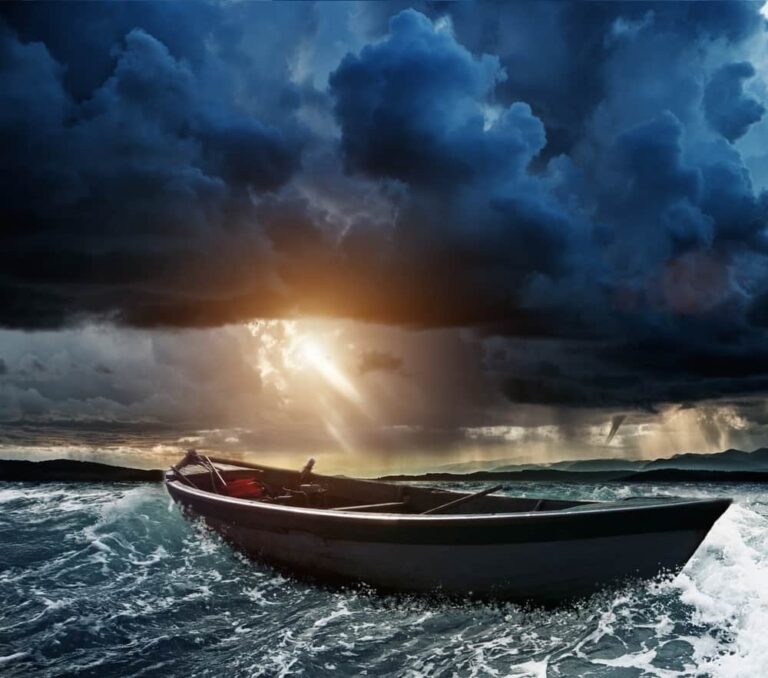
Five fishermen, whose boat sank over the weekend, attributed glory to God for saving their lives after they were rescued by another vessel in Tobago.

Crystal Eve, a 55-foot trawler with a 350 hp engine, was near Granada’s marine border when it started taking in water at around 7 pm. The men attempted to send distress calls before the boat submerged, but the signal was too weak.

Donning life jackets, the fishermen decided to jump into the water and were saved by a Bahamian vessel, The Siem Spearfish, after nearly two hours of drifting at sea. According to Newsday, The men on board Eve were identified as Kirwan, 59; Kyle Dyer, 31; Azim Baksh, 35; Keston Frederick, 36; and Jerome Nicome, 63.

“Thank God, all the honour and glory and praise. Anybody who [is] hearing me now, trust Christ. I [am] telling yuh, because He is the one that saved us. God allow[ed] us to drift into the vessel that saved us. Nobody was seeing us out there,” Nicome told Newsday.

“The waters was rough, real rough,” he added. “If [it] wasn’t for God, we wouldn’t be alive today.”

Curtis Douglas, president of All Tobago Fisherfolk Association (ATFA), told Newsday that the distress calls from the Crystal Eve were “muffled,” and it was difficult to understand what the fishermen were saying.

“The news was coming in inflicting. We couldn’t get the exact information because our radio wasn’t picking up too clear. This was after midnight to 1 o’clock (Sunday morning),” Douglas said.

Meanwhile, Tobago Emergency Management Agency (TEMA) director Allan Stewart noted that the agency was notified by the Trinidad and Tobago Coast Guard concerning the incident.

“They would have requested of us if we could make available a pirogue to assist in the transfer of personnel from the Bahamian vessel because of the large hull they were unable to come into the Port of Scarborough,” he explained.

Steward shared that The Siem Spearfish dropped one of their lifeboats to rescue the men at around 2 am and brought them alongside the port. None of the fishermen needed hospitalization from the incident, including Frederick, who suffered from hypothermia but is now recovering.

They spent the night at a guesthouse and traveled aboard the TT Spirit Sunday afternoon to the Port of Spain, where they were reunited with their relatives.

According to Douglas, the AFTA has been lobbying for two rescue boats for these types of situations.

“So in these cases, we would probably [be] one of the first responders to be able to treat with that. We’ve been clamouring for that for a long while, so that in situations where local or international boats in distress, once they in our waters, we will respond,” he said.

Douglas also shared that there is a need for satellite phones to modernize Tobago’s fishing industry.

SOURCE: CHRISTIAN HEADLINES

Mandisa talks battling depression, mental illness: ‘Healing comes from walking hand in hand with God’

0

Grammy Award-winning artist Mandisa is opening up about her struggles with mental health and her journey toward healing to both break the stigma surrounding the issue and encourage others that they, too, can have hope. 

Several years ago, the Christian artist found herself struggling with depression and anxiety after one of her closest friends, Kisha, lost her battle with breast cancer. The grief was so great, she recalled, that she almost took her own life.

“I isolated myself, I didn’t want to talk about it, and I battled with the shame of feeling like I didn’t have enough faith or that God was displeased with me,” the 45-year-old recording artist told The Christian Post. 

In her darkest moments, Mandisa turned to the Scriptures and, for the first time in her life, realized that some of the Old Testament’s greatest heroes, from Elijah to King David, struggled with similar feelings.

“As I kept reading the Bible, I realized a lot of these people we read about wrestled with similar things,” she said. “Look at Elijah, who one minute is calling down fire from the heavens and defeating the prophets of Baal, and then the next moment is sitting by a tree and asking God to let him die. And then I think about David, who is very honest throughout the Psalms about the pain he felt internally, and he was someone God called a man after His own heart.”

The artist said that Psalm 13:1-6 particularly struck her. The passage reads, in part: “How long, O LORD? Will you forget me forever? How long will you hide your face from me? … But I trust in your unfailing love; my heart rejoices in your salvation. I will sing to the LORD, for he has been good to me.”

“I just remember thinking, ‘Wow, you don’t often see that kind of honesty,’” she said. “But as the verses go on at the end, you see a turn where David decides to trust in God’s unfailing love despite what he’s going through. I started to see that it was his honesty and pouring his heart out to God that made him see the goodness of God.”

“I think,” she added, “it really has less to do with depression and anxiety and more to do with, ‘Are you bringing it to Him? Is it something you’re talking to God about?’ Because for me, I feel His pleasure when I do so as opposed to just stuffing it down and acting like I don’t feel it. He knows I feel it, and when I bring it to Him, that opens the door to my healing in ways that I’ve never experienced before.”

Through counseling, community and diving deeper into her relationship with God, Mandisa began to find healing. The singer stressed the importance of community when struggling with mental illness, contending that “whatever you’re struggling with really does lose its power when it comes out.”

“I’m a big fan of counseling, and I think it’s also important that you have people in your life, be it family, friends, people at church, whoever it is, to be able to talk to these things,” she emphasized. “I don’t want to see any more headlines of people committing suicide, and that’s what happens when it stays in our minds when we don’t want to talk about it. You start believing the lies and before you know it, it’s over. And I think the way to counteract that is to bring it out to talk to people about it.”

Now, she’s opening up about her journey in her latest book, Out of the Dark: My Journey Through The Shadows To Find God’s Joy. Writing the book was both cathartic and difficult, Mandisa said, but she feels that sharing her story is what God is calling her to do. 

“I need to be really careful at this moment because it’s bringing up some things that are not comfortable, but I know it’s going to encourage and help people,” she said. “It’s difficult talking about some of the things that I would prefer to keep hidden, but I think in the end, ultimately, it’s going to be helpful for me because it’s coming out of the dark and I am bringing it into the light. It’s not easy, but I do think it’s going to be worth it. ”

The “Overcomer” singer emphasized that for her, healing is still a “journey,” adding, “I don’t want people to think that I have just overcome and I’m victorious, now I’m great. This is very much a journey that I’m still on today. But I believe that healing comes from walking in hand in hand with God.”

Mandisa’s book is a follow-up to her 2016 album, also titled Out of the Dark, that addressed her battle with depression. Though it was “scary” being so vulnerable, the artist said she was blown away by the number of people who shared how her music has encouraged them in their own struggles with mental illness. 

“So many people shared what a relief it was to hear that they weren’t the only ones,” she recalled. “I realized we don’t really talk about this a lot in Christendom. It’s just not something we address very much, and so I just wanted to continue telling my story in the hopes that it would encourage other people who have battles with mental illness the way that I do. ”

Mandisa said she’s encouraged by how far the Church has come when dealing with mental illness but believes there’s still a long way to go. 

A 2019 Lifeway Research survey found that nearly half of pastors (49%) “rarely or never speak to their church in sermons or large group settings about acute mental illness.” Additionally, close to one in four individuals surveyed indicated they had either “stopped attending church, had not found a church to attend or had changed churches based on the church’s response to mental health issues.” 

Mandisa encouraged ministry leaders, pastors, and parents to share their own stories to encourage the next generation. Across America, approximately 4.4 million children have been diagnosed with anxiety and another 1.9 million have been diagnosed with depression.

“The younger generations, they’re looking for authenticity, and so sharing your story, talking to people, letting others know about some of the struggles that maybe you face, I think that will breed similar thing in others,” she said. 

She also encouraged pastors and ministry leaders to be careful about the language they use when addressing the issue. The artist explained that while it’s good to say “we’ll pray about it,” it’s also important to take tangible steps.

“Prayer is so important and a huge part of my journey, and so is counseling and community,” she said. “I think we need to use language, not as a bat, but speaking the truth in love and compassion. If it’s not something that you wrestle with yourself, to be able to point them to professionals who know how to deal with these sort of things.”

Today, Mandisa often explores the topic of mental health on her “Out of the Dark” podcast and how to navigate it from a Christian perspective with licensed therapist Laura Williams. And in conjunction with the book release, she will debut a new single, “Out of the Dark (Petey Martin Remix),” the first track from the forthcoming Overcomer: The Remixes EP, scheduled to release April 29.

Four new remixes will be featured on the EP, including “Out of the Dark,” “Overcomer,” “Comeback Kid” and “Bleed The Same.” 

As she looks to the future, Mandisa says that Psalm 40:2 is her testimony: “He lifted me out of the slimy pit, out of the mud and mire; he set my feet on a rock and gave me a firm place to stand.”

“My hope for this book is that many will hear what God has done, that they will be amazed and they will put their trust in Him,” she said. “I don’t just want people to read my story to be a voyeur and, ‘Look at what Mandisa has been through,’ but I really hope that it encourages people to say, ‘Man, if she went through that, and God is bringing her out of it, He will do the same for me.’”

She added, “I hope that it will encourage people to put their trust in Him even if they’re walking through the valley of the shadow of death.”

SOURCE: By Leah MarieAnn Klett, Christian Post

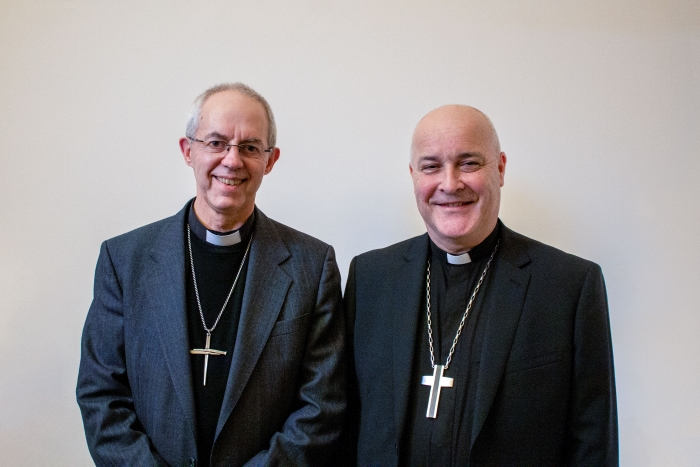
Archbishops applaud the refugee sponsorship program

0

The Archbishops of Canterbury and York are welcoming the announcement of a government scheme to provide accommodation for refugees fleeing the conflict in Ukraine.

Tens of thousands of displaced people could benefit from the Homes for Ukraine refugee scheme after the government said there will be no limit to the number of Ukrainian refugees who can live in the UK under new visa plans.

In a statement, the Most Rev Justin Welby and Most Rev Stephen Cottrell said:

“The Humanitarian Sponsorship Scheme offers the opportunity for the generosity of UK citizens to express itself. We look forward to working with all partners to ensure the scheme works with all partners as effectively and as well as possible.

“Ukrainian refugees need homes, work and education opportunities until they are able to return to their own beloved nation. We welcome this development and hope it gains wide support.”

People in the UK willing to host refugees will receive £350 a month as a “thank you” from the government.

Earlier, Christian charity CARE said while the idea behind the scheme is well-meaning, the government must ensure proper safeguarding measures are in place to prevent the risk of exploitation and abuse. 

Lauren Agnew, human trafficking policy expert at CARE said :

“The Homes for Ukraine scheme is well motivated and could benefit a great number of individuals, but the logistics of it must be weighed carefully. With large numbers of applications needing to be processed quickly, red flags could be missed in the vetting of potential hosts.

“Setting refugees up in homes around the UK is not the end of the story. There must be follow-up checks to ensure these individuals are not being exploited. We must remember that refugees are extremely vulnerable. They must not be allowed to fall off the radar.

“We urge the government to put rigorous safeguarding measures in place to ensure one, that homes and other locations offered to refugees are safe, and two that the welfare of refugees is ensured for as long as they need to take refuge in the UK.”

SOURCE: PREMIER CHRISTIAN NEWS