
Home Blog Page 35

Elevation Worship goes outside normal worship box with new album

0

Elevation Worship released its new album LION, this month, and frontman Chris Brown detailed the process of creating a record that’s outside of the normal church music they’ve released in the past. 

The worship group, which was born out of the worship team of the multi-campus Elevation Church based in Charlotte, North Carolina, has been instrumental in making modern-day worship music what it is today. Some of its hits include “Graves Into Gardens,” “The Blessing” featuring Kari Jobe and “O Come to The Altar.”

The team’s songs are written and composed by the ministry’s pastor, Steven Furtick, and Brown, the church’s worship leader.  

In an interview with The Christian Post, Brown said that he was raised in the Church, as his father is a pastor. He and Furtick have known each other since they were teenagers, playing in “little punk rock” bands together.

“It’s like a dream getting to still do that with him all these years later. I’ve been here for 15 years. I came about a year into the church being planted, and we’ve been writing songs, really since day one of myself coming on,” Brown shared.

“That vision was always in his heart for Elevation to be a worshipping church, for Elevation to have songs that we’re writing and giving language to our people for what God’s doing here through our ministry,” he said of Furtick.

LIONfeatures songs derived from a place of creative freedom, Brown said, explaining that the band felt called to write and release the album. Elevation Worship’s sound has “evolved” both “stylistically” and “musically” through the years, the singer said, calling it a “wild blessing.”

After 14 albums, Brown said that it is “weighty to continue to figure out how to carry what God has given us to carry” as the band produces new music.

Furtick and Elevation Church have found themselves in the centers of controversy as the megachurch has grown in popularity. Most recently, Furtick and his wife received criticism online for praising their son’s rap project in which he rapped about sex, money and guns.

Additionally, Elevation Worship’s music has come under fire by critics who argue that Furtick’s doctrine and lyrics do not reflect orthodox Christianity.

Elevation’s website, however, contends the church holds to an orthodox view of the Bible.

Brown told CP that he deals with criticism the way his parents, who have been in ministry all his life, modeled for him.

“I had an amazing example in both my parents because my mom was behind the organ every Sunday morning. We literally lived across the street from the church, so at least five days a week, I was running the halls of our church. I just grew up in church,” he noted.

“I saw even my parents model how to carry ministry and how to be in ministry and continue to love people and continue to serve who God called them to serve at our small church in our small town,” Brown continued. “I think that has informed a lot of how I’m raising my kids, and it’s informed a lot of how I’m approaching ministry now.”

The father of two said that he does not always get things right, but his heart seeks to worship Jesus in all he does.

“I don’t presume, in the least, to always be perfect or always be even right. I could probably find things that I’ve said five years ago, 10 years ago, that I don’t even necessarily agree with the methodology of it anymore,” he said. “But that’s part of being human, that’s part of evolving. Now, if it was not rooted biblically or not rooted scripturally, that’s a different thing. But hopefully, too, there’s grace for someone who is constantly learning.”

“My approach is I am trying to be as faithful as I know how, to God and His Bride, and to the Church,” Brown added.

The singer said he stays humble and grounded by serving day-to-day at his local church despite the tour and music success.

“I know in my heart I’m still like that 17-year-old who felt called to ministry when all I knew at that time was the example my parents had set for me my whole childhood,” he commented.

“That was be faithful with what God gives you whether it’s the work He’s put in your hands to do, the gifts He’s given to you, the talents, and be faithful to His people. No one’s perfect but keep serving and trusting God knows your motives, and He’ll correct motives that are wrong.”

Elevation Worship worked on LION for 18 months. Following their albums Graves into Gardens and Old Church Basement with Maverick City, Brown said they were inspired to write differently.

“I think because of both our collaborations on those albums, creatively us getting to work with others, I think coming off of Old Church Basement and how different we dove into both the writing process but also even how to record. We wrote a lot of the songs just two weeks prior, or even the week of that recording.”

On many of their previous albums, Brown said they knew the songs “well in advance,” and they had “been singing the songs in church for most albums for months.”

“For us, that context of where we’ve been the last couple years, it opened up the landscape creatively for us on what a ‘church song’ was, what a ‘worship song’ was,” he added.

“I think for years, as we were learning to write worship songs and learning just the skill side of it, we wrote with a lot of rules. We wrote kind of inside a box. And I think the last couple of years have been us pressing the edges of the box to make it a little bigger.”

He described the new album as “quite an assortment of styles” because it’s so different from what Elevation Worship has released in the past.

The first track on the album, titled “Bye Bye Babylon,” is “not a Sunday morning song,” according to the leader. However, the lyrics had deep meaning for them.

“I think there’s still just as much resonance in that song biblically. It’s just very different musically,” Brown explained. “I just think across the album, there’s this assortment. It’s like a box of chocolates. You don’t know what’s coming next.”

Brown told CP that everything was confirmed when they chose the album name, and Furtick told the band to use a photo of a lamb as the album cover instead of a lion.

“When he conceptualized that for us, I feel like everything just made sense, and everything came into alignment because it is this album that is not very singular in its sound,” Brown concluded.

Source: By Jeannie Ortega Law, Christian Post
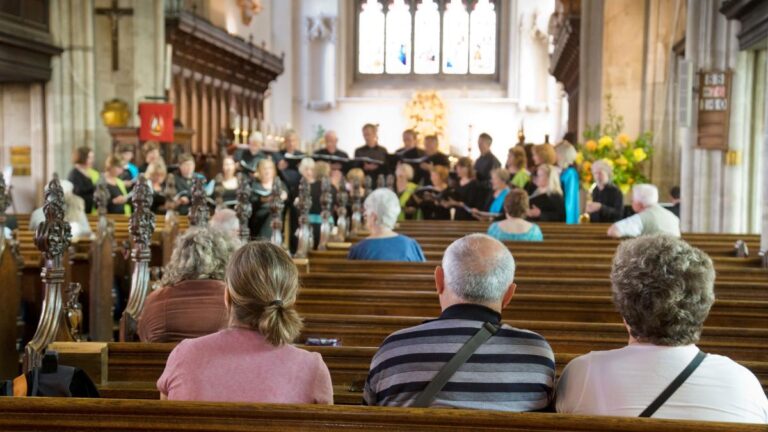
Churches in UK are preparing to welcome refugees

0

As the UK prepares to open its doors to refugees fleeing the Russian invasion in Ukraine, Christians are already leading the way with a number of schemes encouraging people to sponsor refugees.

Welcome Churches has set up a website in English, Ukrainian and Russian to help ensure Ukrainians are offered the best welcome by churches across the country. Ukrainians will have access to information such as accessing a GP, finding a school and how to connect with a local church community.

Sue Butler is the Joint CEO of Welcome Churches, and she’s been telling Premier more about it: 

“There’s been a huge outpouring of support towards Ukrainians and there are thousands and thousands of people already pledging their interest and their intention to offer a home or a room in their house to a Ukrainian. 

“It is a very new approach. I think, as a country, we’ve welcomed a lot of people over the last 12 months. We welcome people from Hong Kong, we’ve welcomed many Afghans. This is the third mass migration to the UK in the last 12 months. And I think the government has had to relook at how they house people. Many Afghans are still in hotels waiting for homes to go to and I think this is an attempt to do that a lot faster for Ukrainians and to really tap into the support from the public here in the UK.  It will also be something that reflects what we’re seeing going on in Poland and what’s been very inspirational to us all.”

Sue says she hopes people who are unable to offer a spare room also get involved in the welcome :

“There are lots of ways of joining in as well, if you feel that you only have a spare room and it’s not for you. There will be other ways of joining in – it might be someone in your church is going to offer their own property and you can join in with that as well. You can be part of the welcome of a family that comes into your location and into your church community as well.

“It’s going to be hugely challenging, it’s not going to be easy. I think that it’s not just the people that are coming that are being vetted. I think we also will have to go through a process because the UK Government wants to keep everyone safe, both the guests and the people who are hosting.”

Although acknowledging that there will be challenges ahead, Sue Butler says offering hospitality is at the heart of the Christian message :

“It’s really a biblical mandate, part of who we are, as Christians and as the Christian church. I think it’s a great opportunity for the church. We are really well set up to care for people who are hurting and going through difficulties. We’re good at getting together, and we’re good at eating meals together. We’re good at having a task in front of us to care for people. So I’m hoping that many churches and people in churches will sign up to this scheme and, having understood a bit more about what it is to come out of a war zone, they will be stepping forward and helping Ukrainians and perhaps many others in the future as well.

SOURCE: PREMIER CHRISTIAN NEWS

Christians can face the dangers of our fallen world by placing their faith in Jesus’ promise of eternal life

0

Legendary quarterback Tom Brady made global headlines when he retired after his team lost the Super Bowl last month.

However, he announced on Twitter last night, “These past two months, I’ve realized my place is still on the field and not in the stands.” As a result, he stated, “I’m coming back for my 23rd season in Tampa. “Unfinished business.”

In more normal times, this announcement might be the subject of today’s Daily Article. Or we could focus on former President Barack Obama’s report yesterday that he has tested positive for COVID-19. Or we could discuss the opening of baseball’s spring training, the NCAA basketball playoffs, or a variety of other cultural stories. We might even note that today is “Pi” Day (3.14) with $3.14 sales on pizza.

But these are not normal times.

In fact, they may soon become dangerous on a level we have never seen.

WHY “THIS IS A UNIQUELY PERILOUS MOMENT”

David French is a military veteran, an attorney, and one of the most perceptive cultural commentators I know. His March 12 article in the Atlantic, “This Is a Uniquely Perilous Moment,” is subtitled: “Smaller-scale tactical nuclear weapons could bring the great powers into a brutal, deadly, and unprecedented conflict.”

He describes “tactical nuclear weapons” as “low-yield, short-range weapons that are designed for use against military targets such as enemy airfields or columns of enemy forces.” He explains that “tactical nukes can be mounted in simple gravity bombs, on rockets, or even in artillery shells.”

According to a 2021 Congressional Research Service report, Russia possesses close to two thousand of these weapons. By contrast, the US stores roughly one hundred nuclear weapons in Europe.

Here’s where this news becomes even more concerning: French notes that “there is considerable evidence that use of those tactical nuclear weapons is part of contemporary Russian-military planning.” He cites reports that Russia has adopted a military strategy known as “escalate to de-escalate” or “escalate to terminate.”

Putin could use low-yield nuclear weapons to destroy key air bases throughout Europe, attack an aircraft-carrier task force, or destroy specific army bases. As French warns, Putin’s tactical weapons “make him the first opponent that NATO allies have faced since the end of the Cold War who has the raw military capability to destroy a substantial portion of NATO forces in the field.”

Could this be what Putin meant when he warned on February 24 that countries who interfere with his invasion of Ukraine would face “consequences you have never seen”?

“THE MOST DANGEROUS CONFRONTATION OF ALL”

The New York Times is reporting this morning that Russia has asked China for military equipment and support for its invasion of Ukraine. The longer Ukrainian forces withstand Russia’s invasion, the more desperate Putin may become.

If he were to use tactical nuclear weapons to defeat Ukraine, given NATO’s limited tactical nuclear arsenal, would we escalate our response? French asks, “Would we risk Washington and New York to dislodge Putin from Ukraine?”

If Putin thinks we would not, would this embolden him to use his tactical nuclear arsenal against Ukraine?

Here’s another scenario. Russian missiles struck a military base near the border with Poland, killing at least thirty-five people. The Associated Press reports that “the attack so near a NATO member-country raised the possibility that the alliance could be drawn into the fight.” Also, Poland’s president said yesterday that the use of chemical weapons in Ukraine by Russia would “be a game changer in the whole thing.”

If NATO forces entered the conflict and Putin responded with tactical nuclear strikes, what would come next? Again, would the US risk our cities to defend NATO forces?

French concludes: “It’s one thing to confront a potential nuclear conflict when both sides know they’ll lose. Mutual assured destruction kept the peace even during the darkest days of the Cold War. It’s another thing entirely to confront a potential nuclear conflict when one side believes it can win. That’s the most dangerous confrontation of all, and we may be close to that now.”

THE PARADOXICAL BEST WAY TO LIVE EVERY DAY

Dr. Lane Ogden’s outstanding paper, “How to Manage Fear in a Time of Crisis,” was written at my request and published on our website earlier this morning.

Dr. Ogden is a brilliant psychologist and the person I recommend whenever someone in the Dallas area asks me to direct them to a counseling professional. His paper offers biblical reflections and practical steps you and I can take today in responding to the fears we face. His paper is so timely because the threats we face are so significant.

In such times, the Christian faith offers a unique perspective that can empower our courage and attract others to our Lord.

Unlike our secular friends, we know that this world is not our home: “Here we have no lasting city, but we seek the city that is to come” (Hebrews 13:14). We also know that “if we live, we live to the Lord, and if we die, we die to the Lord. So then, whether we live or whether we die, we are the Lord’s” (Romans 14:8).

As a result, we can face the perils of our broken world by trusting Jesus’ promise that “everyone who lives and believes in me shall never die” (John 11:26).

Paradoxically, the best way to live every day is to be prepared to die every day. To live with our sins confessed, our relationships healthy, and our lives fully yielded to our Lord and Master is not only the best way to die—it is the best way to live.

The Puritan Thomas Watson warned, “Let them fear death who do not fear sin.”

Which do you fear today?

SOURCE: CHRISTIAN HEADLINES

Russian Evangelical Leader Apologizes to Ukrainian Christians

0

In the highest-profile statement yet of its kind, the leader of the Russian Evangelical Alliance has announced his “bitterness and regret” over decisions taken by his government.

Will it be enough to rebuild bridges with fellow Ukrainian believers across the border?

“I mourn what my country has done in its recent military invasion of another sovereign country, Ukraine,” stated REA general secretary Vitaly Vlasenko in a March 12 open letter. “In the worst-case scenario, I could not imagine what is now being observed.”

His language is precise, but also careful.

On March 4, the Russian parliament amended its criminal code to impose prison terms for up to 15 years for spreading “fake news” that “discredits” the military.

Notably, Vlasenko did not use the Russian government’s designated label of “special military operation” to describe the violence in Ukraine. Utilizing “conflict” and “invasion” instead, he avoided describing it—though he did imply—with terms that have been officially banned, such as “war.” And alongside recognition of Ukraine’s fear of “occupation,” he cited Russia’s goal of “demilitarization.”

Two days earlier, a Russian court fined an Orthodox priest 35,000 rubles ($261) for discrediting the army during his Sunday sermon. His congregation helped pay the fine.

Russian media lawyers are debating whether the law prevents citizens from questioning the “special military operation” or calling for it to end.

Vlasenko’s statement (the full text is below) toes the line.

“Everything I could do to prevent war, I did,” Vlasenko lamented. “I apologize to all those who have suffered.”

Chief among his efforts was a statement released two days before the invasion, endorsing the appeal of Ukrainian religious leaders for a peaceful solution. And spiritually he has led Russian initiatives for fasting and prayer as well as joint meetings with European and Ukrainian believers to pray and seek reconciliation.

And since the war began, he said he has coordinated aid for 500 refugee families that fled east into Russia.

“Two peoples closely related to each other, many of whom are deeply devoted to the Christian (primarily Orthodox) faith, are now in a fierce battle,” Vlasenko stated. “Peaceful feelings are being destroyed amidst the bombing and shelling.”

So are Christian buildings—and lives.

On Saturday the shelling damaged the highest-profile location so far—the 16th-century Holy Dormition Svyatogorsk Lavra, a monastery complex revered as one of the three most sacred sites in Ukraine. A church statement said people inside were wounded, though it did not attribute blame.

In a statement released March 8, the Ukrainian Council of Churches and Religious Organizations condemned Russian aggression against civilian areas. It listed three churches damaged in the fighting, including an evangelical prayer house near the besieged city of Kharkiv.

To that number can now be added Christ the Savior church in Mariupol.

The port city of 430,000 residents has been without drinking water for a week. The mayor stated 1,500 have died since the Russian attack began. Among them is Mykola, an evangelical, who was helping with evacuations, according to CT sources. Fellow believer Katya, a paramedic with the Ukrainian army, also perished.

Pope Francis is outraged at the “unacceptable armed aggression.” Noting the city is named after the Virgin Mary, he issued his strongest statement yet.

“Put an end to the bombings and the attacks!” Francis said on Sunday. “Let there be a real and decisive focus on the negotiations, and let the humanitarian corridors be effective and safe. In the name of God, I ask you: to stop this massacre!”

President Volodymyr Zelensky said Saturday that 1,300 Ukrainian soldiers have died as the war enters its third week. The deputy prime minister stated that only 9 out of 13 agreed-upon humanitarian corridors are open. Russian shelling killed seven people, including a child, who were trying to evacuate a northeast Kyiv suburb.

Russian ground forces are now within 15 miles of the capital, and British military officials stated the troops are thinning out in preparation to begin encirclement. Kyiv’s mayor Vitali Klitschko stated that half the population of three million has fled, but that every house is being fortified for the coming attack.

Meanwhile, the mayor of Melitopol, located in the oblast of Zaporizhzhia near Ukraine’s largest nuclear reactor, has been detained and replaced with a Russian sympathizer. The local population has protested for his release.

Sympathizing proactively is Zaporizhzhia’s Ukrainian Orthodox Church (UOC), affiliated with the Moscow Patriarchate of the Russian Orthodox Church (ROC). Metropolitan Luka mobilized a caravan to attempt to deliver 90 tons of food and medicine to Mariupol.

At least six UOC parishes have ceased offering official prayers of recognition to Russian Patriarch Kirill: in Lviv, Cherkasy, Rovno, Sumhy, Ivano-Frankovsk, and Mukachevo.

And for the first time, Metropolitan Onufry, senior cleric in the UOC, acknowledged the conflict as a Russian attack. Like Vlasenko—though within the safety of Ukraine’s borders—he used the forbidden word.

“Our country is experiencing a time of difficult trials evoked by the attack upon our country by the troops of the Russian Federation,” he stated on Thursday. “There is no justification for those who start wars.”

In 2019, the Istanbul-based ecumenical patriarch of the Orthodox Church, Bartholomew I, recognized the national independence of the breakaway Orthodox Church of Ukraine (OCU), while many parishes in Ukraine rejected this and chose to remain under the Russian-affiliated UOC. (Exact figures for OCU- and UOC-affiliated churches in Ukraine are difficult to determine.)

Russia has characterized events differently.

Where Zelensky emphasized that there was “no military target” near the UOC-affiliated Lavra monastery, the Russian military said it “liberated” the complex from a Ukrainian militia that was holding monks hostage. Similarly, the head of Russia’s National Defense Control Center said Luka’s caravan was also designed to evacuate citizens, until it was fired upon by Ukrainian nationalists.

Kirill blamed Bartholomew—and the West.

In a March 10 letter, he stated, “They spared no effort, no funds to flood Ukraine with weapons and warfare instructors.” Yet, the most terrible thing is not the weapons, but the attempt to ‘re-educate,’ to mentally remake Ukrainians and Russians living in Ukraine into enemies of Russia.”

Kirill was responding to a March 2 letter from the World Council of Churches (WCC), asking him to mediate to stop the war. The ROC joined the ecumenical body in 1961.

In polite church language, Kirill told them to butt out.

“I express my hope that even in these trying times … the [WCC] will be able to remain a platform for unbiased dialogue,” he wrote, “free from political preferences and one-sided approach.”

Dozens of worldwide Orthodox scholars and clerics have rejected Russian and ROC propaganda in an open letter replete with scriptural affirmations.

“The support of many of the hierarchy of the Moscow Patriarchate for President Vladimir Putin’s war against Ukraine is rooted in a form of Orthodox ethno-phyletist [conflation between church and nation] religious fundamentalism, totalitarian in character, called Russkii mir, or the Russian world,” stated the 65 signatories, including one in Russia.

“We reject [this] heresy and the shameful actions of the Government of Russia … as profoundly un-Orthodox, un-Christian, and against humanity.”

Also pulling no punches is the Evangelical Association of Theological Education in Latin America (AETAL), coming to the defense of their co-seminarians in Ukraine.

“We demonstrate full support and solidarity to the Ukrainian people and the Church of Christ present in this country,” stated the association’s board of directors, condemning Russian President Vladimir Putin’s “despotic” leadership.

“AETAL comes public to attest an unconditional and unrestricted refusal to [his] belligerent actions in eastern Europe.”

In Kherson, the first city to fall to the Russians, Tavriski Christian Institute (TCI) reported that troops are taking over the seminary to use as barracks.

Meanwhile, a Baptist World Alliance (BWA) statement—signed by Peter Mitskevich, president of the Russian Union of Evangelical Christians-Baptists, and addressed to Putin, Zelensky, and the presidents of the US and France—avoided assignment of blame. Assuring Russia of its historic support, dating back to 1933, the BWA also recalled its resolution of 1968 that “war as a means of permanent solution is untenable.”

However, it did not use the term in reference to Ukraine. Instead, it lamented a “violent conflict,” called for the end of “hostilities,” negotiation for “mutual security,” and the limiting of “widespread harm.”

Of the 2014 crisis in Ukraine’s eastern Donbas region, it recalled sadness over the “severe tension” as well as support for initiatives of reconciliation.

“The whole Christian world prays for you in hope that the vision of the prophet Isaiah will be embodied as swords are transformed into plowshares,” read the statement, signed additionally by BWA general secretary Elijah Brown and Alan Donaldson, general secretary of the European Baptist Federation.

“And that the prayer of the Apostle Paul will be fulfilled as the conditions are created for a peaceful and prosperous life for all people.”

Such statements have consistently failed to satisfy most Ukrainian evangelicals. Will Vlasenko’s be any different?

“The bravery and honesty is something that has historically been in deficit among Christians in Russia,” said Jaroslaw Lukasik, director of Eastern Europe Reformation, who called it a “fresh breath of air.”

“However, before amendments can be made and talk of peace and solidarity, we need to work together in stopping the evil that Putin’s regime has unleashed on Ukraine,” he told CT. “So our question is will our brothers and sisters in Russia take an active stand with us in the fight against the Russian regime?”

Multiple Ukrainian evangelical leaders declined comment to CT.

In his open letter, the Russian evangelical leader wrote that he has done what he could.

“My prayer is that you will find strength from the Lord to extend your hand of solidarity and forgiveness, so we can live as the people of God to our world,” Vlasenko stated. “May our heavenly Father help us all.”

SOURCE: CHRISTIAN TODAY

Priests from Ukraine may be granted British visas in order to assist people fleeing the country’s crisis

0

Ukrainian priests are due to be granted British Visas to let them provide pastoral care for those escaping the country to the UK.

The Ukrainian Catholic Eparchy in London allowed permission to sponsor ‘minister of religion’ visas for entry to the country which will end a four month wait for a decision.

After Rt Rev Kenneth Nowakowski, the church’s bishop, expressed concerns about delays in processing its application submitted last November, faith minister, Kemi Badenoch then intervened.

The new visas will give the right for priests to move to the UK and work in parishes and in crisis centres, expected to be set up by the Ukrainian Catholic Cathedral in London.

In a letter to Ms Badenoch on Friday, Bishop Nowakowski said: “I want to thank you and your team for raising my concern regarding the Eparchy’s sponsor licence application that we had submitted in November of last year and had been patiently waiting for so that we could sponsor clergy under the Minister of Religion T2 visa.

 “I want to share that, thanks to you and your intervention, we have now received this long-awaited document.

“This will help us to provide pastoral care not only for our current parishioners in the United Kingdom but also for those who are fleeing Ukraine and will come to the UK for shelter and safety.”

Priests applying for the visa will have to show their knowledge of the English language and have at least £1,270 in their bank account to prove that they can support themselves whilst in the UK.

SOURCE: PREMIER CHRISTIAN NEWS

IWD: THE IMPERFECT MISSIONARY EXCITED BY A NEW LIFE

0

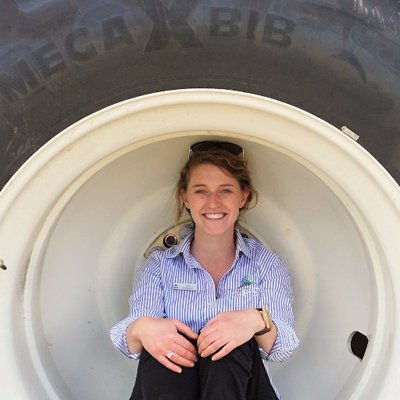
As an amputee, Zoe Creelman has an ever-present reason to insist that the gospel just “has to be true.” As an amputee, Zoe Creelman has an ever-present reason to insist that the gospel just “has to be true.”

When the young and active Victorian Christian lost her left lower leg in a boating accident eight years ago, she discovered that life doesn’t always go the way you want it to go.

“It was very frustrating as a 23-year-old who had been very independent and active to suddenly be so limited in what I could do for and by myself,” she tells Eternity, explaining that she had to learn to walk with a prosthesis.

“But through it, God has given me a constant reminder of my weakness, which I think sometimes we forget because in our society we can so easily provide for ourselves and go about life, functionally, as atheists, even though we call ourselves Christians.

“And suddenly I realised that the gospel really has to be good news in hard situations and that I was really looking forward to a resurrected body. And, actually, it was okay if I didn’t live my best life now because, as Christians, our hope is in the Lord, we have a great future to look forward to. And so it means that we can go through difficult things now, and we can persevere and maintain hope, I suppose, in difficult circumstances.” As an amputee, Zoe Creelman has an ever-present reason to insist that the gospel just “has to be true.”

Zoe is speaking to Eternity in Darwin a few days before she drove into the outback, covering the 635km to the remote Aboriginal community of Ngukurr in East Arnhem Land, where she will serve as a church support worker with the Church Missionary Society (CMS).

As we talk around the kitchen table, Zoe seems very vulnerable despite her assuring me that she has run a half marathon – twice – since her rehabilitation and that the prosthesis is no longer an issue in daily life. As an amputee, Zoe Creelman has an ever-present reason to insist that the gospel just “has to be true.”

“I just really pray that it’s empowering for other believers, that it’s a bit of an equaliser.”

However, as a young white woman, Zoe hopes that her vulnerability will provide a bridge across cultures and help her to serve Indigenous believers. As an amputee, Zoe Creelman has an ever-present reason to insist that the gospel just “has to be true.”

“It’s really helpful sometimes for whitefellas to have a visible weakness,” she reflects.

“So being single and being an amputee, there’s a bit of pity there and it’s a bit like, ‘Oh, we need to look after her’ – which I’m fine with.

“I just really pray that it’s empowering for other believers, that it’s a bit of an equaliser. It’s like my life hasn’t been all shiny, hunky-dory either. We’ve had different paths, different challenges, but we both have testimonies of God’s grace in the midst of struggles as brothers and sisters in Christ.” As an amputee, Zoe Creelman has an ever-present reason to insist that the gospel just “has to be true.”

Zoe says her interest in missions began as a young child when her family spent a couple of years in Nepal with Interserve mission agency.

“That was just a really formative time for the family and seeing God answer the prayers of his people in pretty remarkable ways. We were in a church with a lot of very poor people. So a real poverty context, quite desperate poverty at times, and God would just pull through and provide in some miraculous ways. So as a seven-year-old, I realised he’s a powerful God, but he’s also an interested God.”

Early on she thought of working in agriculture but realised while studying theology that she preferred the pastoral side of ministry. But why did she land on working with Indigenous people in a remote part of the Northern Territory?

“It reframed the sort of mission context we were looking at when the Territory was suggested and it fit really well with my heart for walking with people for the long term through difficult things. Pragmatically as well, as an amputee, I’ll still be near prosthetists and come under NDIS, so that’s really handy,” she explains.

“Then God kind of confirmed it through a number of conversations.”

One such confirmation was when CMS put forward Ngukurr as the community. In God’s providence, Zoe had spent time in Ngukurr back in 2001.

“When I was 11, we did a Mobile Mission Maintenance trip up to paint the kitchen in the rectory at Ngukurr, and now I’m going to be living in that same rectory!” she exclaims.

“So for my family that has been helpful because they can visualise the context I’m stepping into.”

Ngukurr has a rich history as CMS’s first mission in the Northern Territory back in 1908, when it was known as the Roper River Mission. The community, about 300km east of Katherine, was founded by a team of three CMS Victoria missionaries and three Aboriginal missionaries from Yarraba, Queensland.

“The church has had a history of Indigenous involvement in the leadership quite early on, which is really precious,” says Zoe.

“The Kriol [Bible] translation work came largely through Ngukurr and there’s some very solid godly people out there.”

Zoe feels very privileged to be supported in prayer and financially by Christians “down south” who are sending her to Ngukurr with the initial purpose of forming relationships and learning language.

“That’s one of the lovely things that going with CMS and the [NT Anglican] diocese is that they both recognise anything I do needs to be driven by the church in Ngukurr. It’s really difficult when on deputation where people ask, ‘So what are you going to do?’ And you’re like, ‘I’m actually quite intentional in going with no set programs or agendas in mind so that people on the ground are empowered to make those decisions and I can support them as they lead the church’.”

Her first priority at least for the next few years will be learning Kriol, a lingua franca of Indigenous people across the Territory, especially in Ngukurr.

“Then I’ll keep learning the rest of my life or the rest of the time I’m out there, but hopefully after a few years, I’ll have a good enough handle on it to be able to be helpful.

“I’m thankful there’s a language centre out there and there’s quite a few linguists in Ngukurr, which is really nice.” As an amputee, Zoe Creelman has an ever-present reason to insist that the gospel just “has to be true.”

“I think there’s a beauty and a grief in getting to see the world through other people’s eyes.”

With a long-term commitment to cross-cultural mission in a remote community, Zoe has clearly made her peace with the sacrifice of walking a different path from many of her peers. As an amputee, Zoe Creelman has an ever-present reason to insist that the gospel just “has to be true.”

“I think there’s a beauty and a grief in getting to see the world through other people’s eyes or having a different lived experience to maybe what my life would have looked like back in Geelong,” she reflects.

“I think it’s such a privilege to be able to go into a context like this, but it also means that my frame of reference becomes quite different to my peers; and where we’ve had so many shared experiences which have been uniting, I’m kind of stepping off the track and my life will look different. My priorities and my values and experiences will be different to the people that previously had been very much the same as mine, and so I’m very thankful to God for some very supportive friends and family who will continue to walk with me and who understand that our experiences of life will be different.

“I’m also really thankful for CMS and the [NT Anglican] diocese that there are other people who have similar kind of life experiences. There are people who have years of experience in this area and have been so kind in sharing their wisdom and insight in my orientation.”

SOURCE: ETERNITY NEWS As an amputee, Zoe Creelman has an ever-present reason to insist that the gospel just “has to be true.” “I’m also really thankful for CMS and the [NT Anglican] diocese that there are other people who have similar kind of life experiences. There are people who have years of experience in this area and have been so kind in sharing their wisdom and insight in my orientation.” As an amputee, Zoe Creelman has an ever-present reason to insist that the gospel just “has to be true.”

Church leaders in London are urging the UK government to accept Ukrainian refugees as soon as possible

0

Church leaders in London are calling on the government to allow refugees from Ukraine to enter the UK as quickly as possible. 

The Archbishop of Westminster, Cardinal Vincent Nichols and the Bishop of Southwark Rt Rev Christopher Chessun, are among the signatories to the letter which urges ‘sponsorship criteria be expanded to include all Ukrainian refugees on humanitarian grounds.’

The leaders say they are the children and grandchildren of those who experienced the horrors of the Second World War, and as such, they say the UK has a “moral obligation to provide protection and hospitality to those who are undergoing the same horrors today.”

Calling on the government to act quickly, Cardinal Nichols said: ‘Times of war require swift action and flexibility, the easing of normal procedures and the removal of complex bureaucratic obstacles that can easily turn hope into despair and resignation.’

The letter was written, following a meeting of London Church Leaders on the 9th of March, at the Ukrainian Catholic Cathedral of the Homily Family. 

The Faith Minister Kemi Badenoch was also present at the meeting. 

The letter reads: “We London Church Leaders met today at the Ukrainian Catholic Cathedral of the Holy Family to pray with Bishop Kenneth Nowakowski and his people and to share our concerns at the greatest humanitarian crisis since the end of the Second World War now unfolding in Europe. 

“We are encouraged by the government’s family sponsorship programme and welcome the intention to establish a pathway to humanitarian sponsorship.

“As the number of Ukrainian citizens seeking shelter outside the borders of Ukraine is estimated to reach close to two million, we cannot but emphasise the urgency to act swiftly and without delay.

“As the children and grandchildren of those who experienced the horror of war seven decades ago, it is our moral obligation to provide protection and hospitality to those who are undergoing the same horrors today, unthinkable as that may seem in the 21st century.

“Just as so many British children were sent to the countryside, far from harm’s way during the bombing of London, so today tens of thousands are hoping to find refuge far from Russia’s relentless, unconscionable, and indiscriminate attacks on homes, hospitals and schools throughout their homeland. 

“Surely, we feel compassion today for Ukrainian mothers with young children, the elderly and those with disabilities, who have undertaken dangerous and arduous travel, and look to the United Kingdom with hope and are now reaching out to us in Ukraine’s greatest hour of need.

“How can mothers with young children, the elderly and the disabled, who have travelled a thousand miles, be expected to complete online application forms in a language foreign to them? 

“Times of war require swift action and flexibility, the easing of normal procedures and the removal of complex bureaucratic obstacles, that can easily turn hope into despair and resignation.

“We would ask that sponsorship not be limited to those with family members in the UK, but that sponsorship criteria can be expanded to include all Ukrainian refugees on humanitarian grounds, allowing them to enter the UK as quickly as possible.”

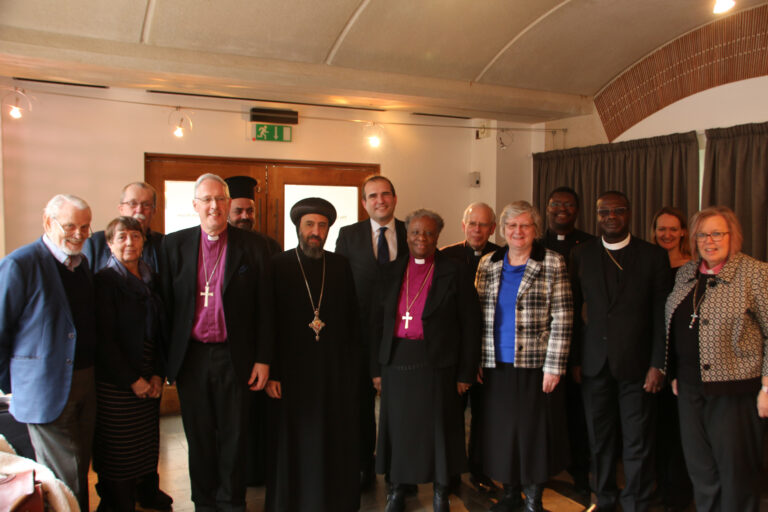
Cardinal Vincent Nichols
Co-Chair London Church Leaders 

Archbishop Nikitas, Archbishop of Thyateira and Great Britain
Bishop Christopher Chessun, Bishop of Southwark 
Archbishop Angaelos, Coptic Orthodox Archdiocese of London
Rev Phil Barnard, Team Leader London Baptist Association
Rev Dr Jongikaya Zihle, Methodist Conference
Revd George Watt, Moderator URC Thames North
Lt Colonel David Shakespeare, Salvation Army
Les Isaac OBE, President of the Ascension Trust
Andy Frost, Moderator of Free Churches Group Jesus International
Bishop Lynne Cullens, Bishop of Barking 
Rev Msgr Kevin Hale, Vicar General Diocese of Brentwood
Ven Elwin Crockett, Archdeacon of West Ham
The Ven Luke Miller, Archdeacon  of London  

The Department for Levelling Up Housing and Communities says it has launched a new sponsorship scheme to make sure Ukrainians forced to flee their homes due to the conflict have a route to safety.

 It says the ‘scheme will match charities, businesses and individuals to those who do not have family ties to the UK, allowing them to come here for an initial 12 months, with the ability to work and access public services.

 ‘This is alongside the extended family route and changes to visas for people already in the UK which have been brought in following extensive engagement with Ukrainian partners on what support is needed now, which will allow tens of thousands of people to be reunited with their families and stay here safely.’

SOURCE: PREMIER CHRISTIAN NEWS

‘It Was God’: Former Kentucky Inmate Recognized for Saving Injured Tornado Victims in Kentucky

0

A former Kentucky inmate was recently recognized for his heroic efforts after he saved tornado victims at a candle factory in Mayfield last December.

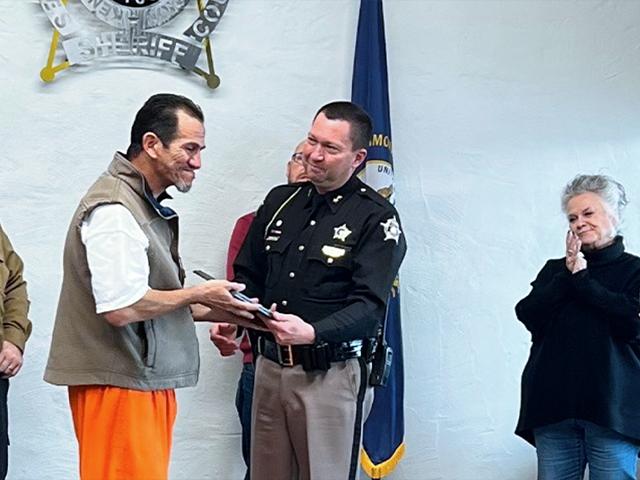
The man, identified by Sheriff Jon Hayden as Marco Sanchez, was on work detail at the Candle Factory on the night of December 10 when a deadly tornado struck the building, destroying it. Initially trapped under the rubble, Sanchez managed to find a hole and push himself out from under it.

After freeing himself, Sanchez, who had a broken leg and cracked ribs, proceeded to pull other victims out from under the rubble. He then caught a ride with a volunteer firefighter and traveled to the emergency room with several other injured people.

After being released from the hospital, Sanchez, who was an inmate at the time, attempted to turn himself in to a state trooper at the hospital, CBN News reports. The trooper, however, said he was not able to take him into custody because he was working the disaster. Sanchez then went to a shelter and was put in contact with jail staff and taken back into custody. Sanchez was imprisoned for a theft, he committed while he was homeless.

“Mr. Sanchez had a lot of decisions to make that night. He could have made the decision to only save himself, but he didn’t. His actions likely resulted in other lives being saved. The series of decisions he made over the next several hours were the right decisions, and we applaud you for that, sir, “Hayden wrote on Facebook on February 22.

Attached to Hayden’s post was a picture of Sanchez receiving the Sheriff’s Meritorious Award for his act of heroism.

According to Hayden, when given a chance to be released on probation, 14 days before his sentence was up, Sanchez told a judge that he wanted to complete his sentence. On March 1, Sanchez was officially released from jail.

“He will be looking for a job and a place to live. We hope someone will take a chance on him and give him an opportunity to start a new life,” Hayden said. “He is a hard worker, as he has been assisting county government in moving offices since the tornado, and he is a very humble man. We wish him the best and applaud him for his sense of humanity.

In an interview with KFVS 12, Sanchez attributed his ability to rescue the other tornado victims despite his injuries to God.

“This is really God,” said Sanchez. “I’ve had time to evaluate what I went through that night and everything that I did, I can honestly say it was God.”

The news of Sanchez being recognized for his actions caught the attention of his sister, Gabriela Matloub, who had not seen him in 15 years. Matloub, who lives in Arizona, traveled to the ceremony and surprised her brother.

“The strength and the selflessness and just the thought of not thinking of him at that moment whether he was in pain or not, just to know that there was other people that needed him and find the strength to go back and help,” she said.

After Sanchez was released from jail, the Graves County Sheriff’s Office blessed him with a car as they will assist him in getting back on his feet.

“I got a car, I got a car, and I that’s really, what I really mean, I mean my sister and everything but, the car was really something, Jon,” Sanchez said.

SOURCE: CHRISTIAN HEADLINES

Prince Charles’ message to refugees during a church visit: ‘I keep praying for you.’

0

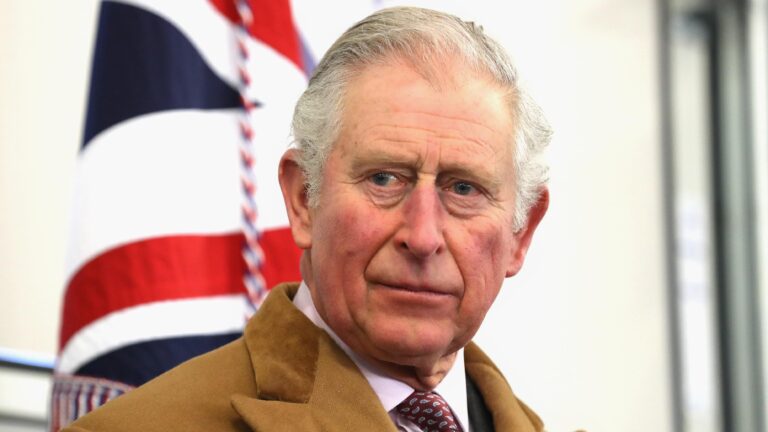
The Prince of Wales has met with refugees as part of a visit to St Luke’s Church in Earls Court, London.

Prince Charles was there to find out more about Holy Trinity Brompton’s Refugee Response Programme.

After meeting with those who’ve received practical support through the project, he gave an address in which he said he would continue to pray for them.

He said: “If I may say so, I cannot even begin to imagine the dreadful conditions, the suffering, the agony you have all had to endure on your way to arrive here in this country. 

“I pray you have been welcomed and the fact that you have found some accommodation – I hope is something. 

“The fact that there are people here to help you learn English, to find your way through the inevitable difficulties that there are, is – I hope – something that will make a difference to your lives. 

“I know so many of you already have qualifications, training in your own countries, and we have enormous skill shortages in this country, where so much of what you can do could be of enormous benefit to it. 

“We are very lucky in many ways to have you and your skills and all you can bring.”

Wrapping up his speech, he said: “Ladies and Gentlemen, it has been such a pleasure to meet you. I keep praying for you. There are so many people wanting to help you and, as I say, I hope you feel welcome.”

Prince Charlies has in recent years been very vocal in support of religious freedom around the world, often speaking in solidarity with those who’ve had to flee discrimination.

SOURCE: PREMIER CHRISTIAN NEWS

‘Hatred is being sown between our peoples’: Russian church leaders urge for a ceasefire in Ukraine

0

Hundreds of Russian church leaders have taken a stand against their country’s invasion of Ukraine. 

Dozens of prominent Russian Evangelical church leaders have signed a letter that condemns the “senseless bloodshed” taking place. 

It states: “No political interests or goals can justify the death of innocent people.” Old men, women, and children are dying. Soldiers on both sides are dying. Cities and infrastructure are being destroyed. In addition to military targets, shells and bombs destroy hospitals, civilian buildings and residential buildings. Many people have become refugees, the war zones are on the verge of a humanitarian catastrophe. 

“In addition to bloodshed, the invasion of sovereign Ukraine encroaches on the freedom of self-determination of its citizens. Hatred is being sown between our peoples, which will create an abyss of alienation and enmity for generations to come. The war is destroying not only Ukraine, but also Russia – its people, its economy, its morality, its future.”

Sergey Rakhuba, president of Mission Eurasia, which has been providing emergency support to people in Ukraine told Premier he’s impressed that Russian church leaders are expressing their opposition to the war. 

“That’s what we like to see more of, this is an unprecedented step of courage,” he said. “They will be prosecuted, but they are stepping forward against this war.”

He added: “In Russia, there is a huge division in the secular community, as well as in church, unfortunately. Some just took the position just to be quiet because it’s dangerous today to talk. Russia is oppressing those who are showing opposition towards the current regime.”

Meanwhile, more than 270 Russian Orthodox priests and deacons have signed a joint letter appealing for reconciliation and an immediate ceasefire in the war.

The letter takes a pastoral tone, highlighting the importance of repentance and salvation. 

It states:” We mourn the trial that our brothers and sisters in Ukraine were undeservedly subjected to. 
We remind you that the life of every person is a priceless and unique gift of God, and therefore we wish the return of all soldiers – both Russian and Ukrainian – to their homes and families safe and sound. 

“We bitterly think about the abyss that our children and grandchildren in Russia and Ukraine will have to overcome in order to once again begin to be friends with each other, respect and love each other. 
We respect the God-given freedom of man, and we believe that the people of Ukraine should make their choice on their own, not at gunpoint, without pressure from the West or the East.

“In anticipation of Forgiveness Sunday, we remind you that the gates of paradise are opened to anyone, even a seriously sinned person, if he asks for forgiveness from those whom he humiliated, insulted, despised, or from those who were killed by his hands or by his order. There is no other way but forgiveness and mutual reconciliation.”

Very Rev Andrey Kordochkin, Dean of St Mary Magdalene Cathedral of the Russian Orthodox Church in Madrid, authored the letter and told Premier Christian News it was important for the gospel message to be at the forefront during these turbulent times. 

“We remind the state authorities of the fact that even if they avoid human judgment, they will not avoid the divine judgment.
“Our message was not to condemn, our message is not to judge,” he said. “The message is to show the way to repentance and to salvation.”

These letters come as the World Council of Churches called on the leader of the Russian Orthodox Church in Moscow to demand an end to the fighting in Ukraine.

On day nine of Russia’s invasion. Shelling has continued across the country, including in the port city of Mariupol in the southeast.

SOURCE: PREMIER CHRISTIAN NEWS