Home Blog Page 44

Muslim Father Kills Son for His Christian Faith, Sources Say

0

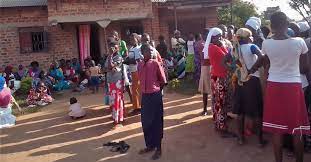
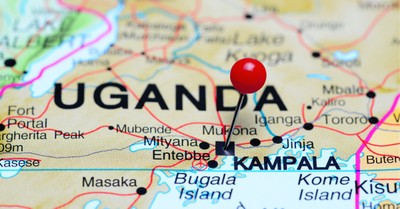
The Muslim father of a 20-year-old convert to Christianity in Uganda on Sunday (Aug. 15) killed him for refusing to recant his faith, sources said.

Kasimu Kawona of Bupalama village, Buseta Sub-County in Kibuku District was not charged with murder but a lesser charge of manslaughter because he killed his son in anger for leaving Islam, sources said.

His son, Tabiruka Tefiiro, put his faith in Christ in 2019. At that time his father drove him from their home, and he went to Kampala, where he worked in a hotel, relatives said. His mother later spent several months trying to convince him to return home to reconcile with his father, which Tefiiro resisted until consenting to come back on Aug. 1.

His father was away from home until Saturday (Aug. 14), when he called a family meeting to question Tefiiro about whether he had come back to Islam, relatives said.

“I am mature enough to join any religion that I feel like because I am above 18 years old,” Tefiiro told him, according to Jamila Baluka, Kawona’s sister. “I want to confirm that I am saved by the grace of God. I can’t renounce my Christian faith now or in the future.”

Kawona became angry but remained silent as he left the house, she said.

Another relative said that the next day, Kawona returned with a knife and hoe and started hitting Tefiiro, who managed to escape to a neighbor’s house.

“He followed Tefiiro and forcefully entered the house and removed him back to the homestead, where he tied him up and started beating him with the hoe,” said the relative, whose identity is withheld for security reasons. “He fell down unconscious. He then hanged him up.”

The wailing of Tefiiro’s mother and other relatives at the home where Kawona had hung his son with a rope by the neck brought neighbors rushing to the scene, sources said.

“When I arrived at Kawona’s house with other neighbors, we found the father outside the house,” the area chairperson, Hassan Kwiri, told Morning Star News. “He told us that he had killed his son who had disgraced the Islamic religion by becoming a Christian.”

Kwiri and other Muslim neighbors brought Kawona, who offered no resistance, to the Bupalama police station, Kwiri said.

“I strongly condemn the brutal act of killing people in the name of religion,” he added.

The chairperson of Local 3, Sadiki Wawire, echoed the sentiment.

“I was shocked to hear that a member of my area had killed his son,” Wawire said. “I condemn the act, and I hate anyone who takes away someone’s life in such a brutal manner.”

Police took the body for postmortem examination. The pastor of Tefiiro’s church in Kampala, unnamed for security reasons, said he felt police should have charged Kawona with murder. 

“We are saddened by the brutal death of our young convert who worshipped in our church for two years,” the pastor told Morning Star News by phone.

The assault was the latest of many instances of persecution of Christians in Uganda that Morning Star News has documented.

Uganda’s constitution and other laws provide for religious freedom, including the right to propagate one’s faith and convert from one faith to another. Muslims make up no more than 12 percent of Uganda’s population, with high concentrations in eastern areas of the country.

SOURCE: CHRISTIAN HEADLINES

Sudan Detains Bible Shipment, Christian Leaders Say

0

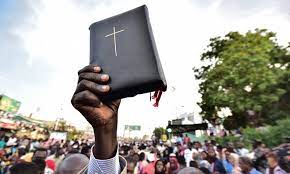
Christian leaders in Sudan said government officials have detained a shipment of Bibles by demanding customs fees from which it is exempt.

The Rev. Saad Idris Komi, chairman of the Sudan Pentecostal Church, said customs officials refused to release the Bibles earlier this month after rejecting his denomination’s application for tax-exempt status for the shipment. Sudan’s Fundamental Rights and Freedoms Act, enacted in July 2020, eliminates customs duties for religious literature, Pastor Komi said.

Botrous Badawi, a Christian and an advisor to the minister of Sudan’s Ministry of Religious Affairs and Endowments, raised a complaint about the detained shipment during a workshop on religious freedom in Khartoum in Aug. 8.

Church leaders say there is a dire need for Arabic-language Bibles among the country’s estimated 2 million Christians.

Badawi also criticized the government for taking no action to return confiscated church buildings. The facilities include the former Catholic Club, strategically located opposite Khartoum International Airport. The building was turned into a headquarters for the National Congress Party led by former President Omar al-Bashir, deposed in April 2019.

A building of the Sudan Interior Church, used by the Khartoum International Church and other Christian organizations, was turned into offices for the former National Intelligence and Security Service (NISS), which previously had broad powers to jail without charges or trial Christians and others deemed undesirable.

In March 2020 Sudan ordered the removal of committees imposed on churches by Bashir’s government, a move expected to return oversight of church properties to their rightful church owners, and Christian leaders are awaiting legal action needed to regain them. They are demanding that the transitional government return all church buildings, lands and properties wrongfully confiscated by the former regime.

In light of advances in religious freedom since Bashir was ousted, the U.S. State Department announced on Dec. 20, 2019 that Sudan had been removed from the list of Countries of Particular Concern (CPC) that engage in or tolerate “systematic, ongoing and egregious violations of religious freedom” and was upgraded to a watch list.

The State Department removed Sudan from a Special Watch List in December 2020. Sudan had previously been designated as a CPC from 1999 to 2018 and was moved to the Special Watch List in 2019.

Sudan’s Fundamental Rights and Freedoms Act prohibits the labeling of any group as “infidels,” (takfir), the U.S. Commission on International Religious Freedom (USCIRF) noted in a September 2020 report.

The transitional government sworn in on Sept. 8, 2019, led by Prime Minister Abdalla Hamdok, an economist, has been tasked with governing during a transition period of 39 months. It faces the challenges of rooting out longstanding corruption and an Islamist “deep state” rooted in Bashir’s 30 years of power.

After Bashir was deposed, military leaders initially formed a military council to rule the country, but further demonstrations led them to accept a transitional government of civilians and military figures, with a predominantly civilian government to be democratically elected in three years. Christians were expected to have greater voice under the new administration.

Following the secession of South Sudan in 2011, Bashir had vowed to adopt a stricter version of sharia (Islamic law) and recognize only Islamic culture and the Arabic language. Church leaders said Sudanese authorities demolished or confiscated churches and limited Christian literature on the pretext that most Christians had left the country following South Sudan’s secession.

In April 2013 the then-Sudanese Minister of Guidance and Endowments announced that no new licenses would be granted for building new churches in Sudan, citing a decrease in the South Sudanese population. Sudan since 2012 had expelled foreign Christians and bulldozed church buildings. Besides raiding Christian bookstores and arresting Christians, authorities threatened to kill South Sudanese Christians who did not leave or cooperate with them in their effort to find other Christians.

Sudan ranked 13th on Christian support organization Open Doors’ 2021 World Watch List of the countries where it is most difficult to be a Christian.

SOURCE: CHRISTIAN HEADLINES

Archbishop of Canterbury calls for prayer and urgent humanitarian action in Afghanistan

0

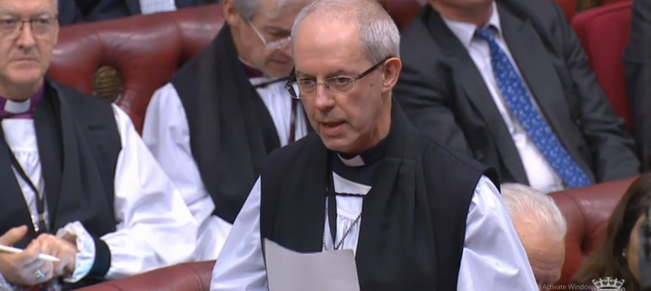
The Archbishop of Canterbury, Justin Welby, has expressed his sorrow at the situation in Afghanistan, where thousands of people are trying to leave the country as the Taliban take over. 

Since US troops left Afghanistan, insurgents have taken government buildings and many Afghans fear that life will return to how it was before 9/11 – with strict oppression towards women and harsh punishments for anyone opposed to the regime. 

The most senior clergyman in the Church of England has asked for the UK to think about its “moral obligation” to the Afghan people. Archbishop Justin wrote on Twitter: “The tragic failures, we are witnessing in Afghanistan – and their devastating impact on its men, women and children – demand prayer and urgent humanitarian action.

“Our first priority must be people. The UK has an undeniable moral obligation to welcome refugees – and keep families together wherever possible. Let us pray for God’s protection for those fleeing their homes and communities.

“Courageous British military personnel and their families deserve our support and prayer, especially at this time, for the sacrifices they have made and the wounds they have endured.

“Please pray for Afghanistan: its people, its security and its peace. Pray too for our military personnel, government, diplomats and aid workers, and all those with responsibility in this crisis.”

He also encouraged people to watch the debate on Afghanistan in Parliament on Wednesday, which members of parliament have been called back for. 

The second most senior clergyman of the Church of England, Archbishop Stephen Cottrell also commented on Afghanistan on Twitter, saying:

SOURCE: PREMIER CHRISTIAN NEWS

Woman With Multiple Sclerosis Healed at Mario Murillo Tent Crusade

0

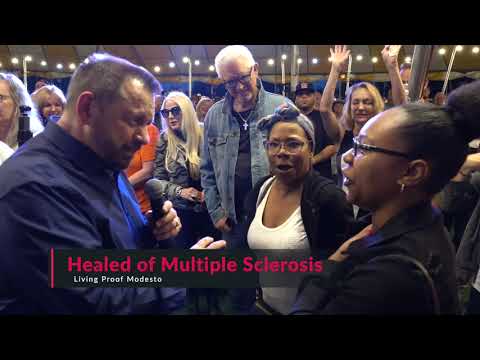
Only the power of God can heal, as this woman in Mario Murillo’s Living Proof Crusade Sacramento found out Wednesday evening.

After a visit from Jesus earlier in the day at her home, the woman came to the tent crusade expecting a miracle. She received a supernatural experience and can now move in ways she couldn’t before.

Multiple sclerosis is a debilitating disease in which the insulating covers of nerve cells in the brain and spinal cord are damaged. MS results in cognition problems (anxiety, depression, limited critical thinking, learning and planning), fatigue, hearing impairment or loss, mobility problems (dizziness, vertigo, lightheadedness, coordination issues, tremor) and muscle problems.

“This afternoon, Jesus visited you and told you that every last symptom of this disease will disappear,” Murillo said to the woman. “I rebuke multiple sclerosis in the name of Jesus. Somebody needs to rejoice in the Lord.”

Watch this video as the woman regained total balance and coordination in her body. “Only Jesus Christ gets the glory,” Murillo said.

SOURCE: CHARISMA NEWS

589 people get baptised at Elevation Church in one weekend

0

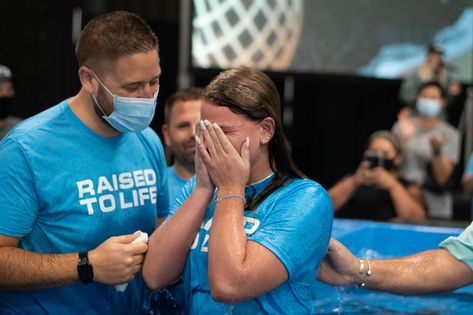
A megachurch has seen 589 baptisms across all its sites in the course of one weekend. 

Elevation Church in America, which came from the Southern Baptist Convention and from which Elevation Worship arose, has about 23 sites and over 25,000 people – many of whom will already be baptised. In the run up to Sunday 8th August it encouraged people to think about committing their lives to Christ and declaring that publicly through baptism. 

The church, whose pastor is Steven Furtick, posted about what baptism symbolises on social media and encouraged those who were ready to sign up online to get baptised on Sunday. 

They wrote: “Baptism is a public declaration of an inward decision to follow Jesus, and if you’ve never taken that step of faith, we’d love to celebrate with you this weekend.”

589 people stepped forward to do so, across the physical locations, with videos showing one person after another stepping into the baptism pool and getting dunked as part of their ‘Raised to Life’ weekend. 

One man, Chris, got baptised, with the church sharing his story on Instagram: 

“Feeling purposeless and not knowing how to change, he thought he’d give church a try and started watching Elevation online. The messages helped Chris understand God’s love for him in his head and feel God’s love for him in his heart, and Chris accepted Jesus as his Saviour!

“He’s been part of our church family for a while now at Elevation Ballantyne, where a few months ago he started serving on the volunteer team that sets up the baptism tank. It was through this that Chris realised he wanted to take that step of faith for himself, and this past weekend we celebrated his baptism alongside 588 others across our locations!

“We’re so happy for what God is doing through you, Chris, and believing the best is yet to come.”

SOURCE: PREMIER CHRISTIAN NEWS

Assemblies of God Growing with Pentecostal Persistence

0

At most denominational conferences these days, leaders have to recognize and reckon with the challenge of continued declines in membership.

But for the US Assemblies of God (AG), which drew 18,000 registered attendees to its General Council meeting in Orlando last week, it’s a different story.

The world’s largest Pentecostal denomination, the Assemblies of God has been quietly growing in the US for decades, bucking the trend of denominational decline seen by most other Protestant traditions.

At three million members, the Assemblies of God is far outsized nationally by groups like the Southern Baptist Convention, which is more than four times as large. But in many ways, the Assemblies of God can provide a case study for what many Southern Baptists—and really, all Christians—want to see: steady and sustainable growth.

It’s difficult to pinpoint exactly why the Assemblies of God has continued to increase over the past 15 years. Research shows that membership of the Assemblies of God has become more politically conservative and more religiously active today than just a decade ago, but its own numbers indicate that it has achieved incredible racial diversity—44 percent of members in the United States are ethnic minorities. A confluence of these trends may be factors in its ability to keep its numbers up.

Compared to the two largest Protestant denominations in the United States—the Southern Baptist Convention and the United Methodist Church—the Assemblies of God has always been outnumbered. In 2005, there were about 16.3 million Southern Baptists in the US, by the denomination’s own tally, and nearly 8 million United Methodists. At the time, the Assemblies of God reported 2.8 million members.

However, between 2005 and 2019, both the Southern Baptists and the United Methodists reported a membership decline. In 2019, there were 14.5 million Southern Baptists, down 11 percent. The United Methodists reported a total of 6.5 million members in 2019, down 19 percent. Meanwhile, the Assemblies of God grew over 16 percent to nearly 3.3 million members.

While other denominations have been dropping year-over-year for more than a decade, there have only been three years in the past 40 when the Assemblies of God did not report annual growth in adherents. Just one of those came this century. As a result, the Assemblies of God has managed to add nearly half a million members since 2005.

As it has grown over the decades, the Assemblies of God has maintained its Pentecostal theological distinctives, like believing in divine healing, practicing spiritual gifts like speaking in tongues, and anticipating a premillennial second coming of Christ.

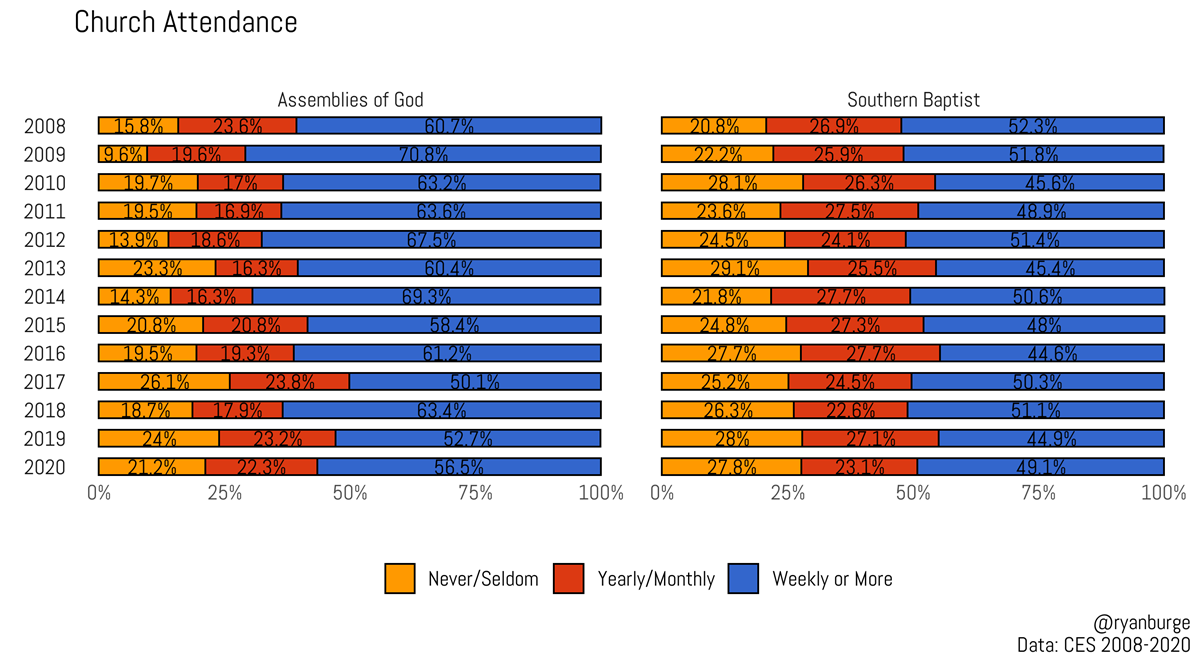
When analyzing survey data on the church attendance patterns among traditions, it’s clear that the Assemblies of God is not growing by adding lukewarm worshipers to its ranks and church roles. Instead, the data point to a denomination that is incredibly active in congregational life. On average, about a third of US Christians attend church weekly. In 2020, the Cooperative Election Study reported that 57 percent of AG members attend church at least once a week, compared to 49 percent of Southern Baptists.

When the analytical lens turns to political partisanship, a more nuanced story emerges of how the AG has shifted compared to the Southern Baptists.

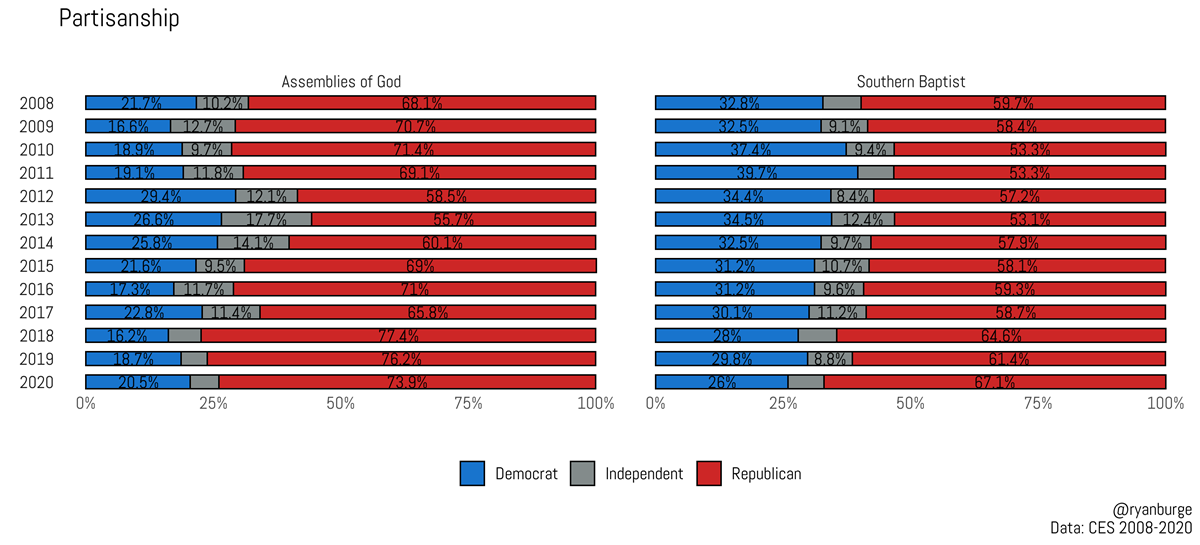
During the 2008 presidential election, about 22 percent of AG members identified as Democrats compared to 68 percent who affiliated with the Republican Party. Among Southern Baptists, the differences weren’t as stark. About a third of Southern Baptists were Democrats and 60 percent were Republicans.

Over the past 12 years, both traditions have drifted toward the right. In 2020, nearly three-quarters of all AG members said that they were Republicans, up about 5 percentage points. Among Southern Baptists, 67 percent claimed to be a Republican, an increase of 7 percentage points. But the share of AG members who are Democrats remained basically unchanged during that time, while declining nearly 7 percentage points among Southern Baptists.

Pastors, denominational leaders, and those in the pews are always interested in what leads to a denomination’s growth, particularly when the group is growing year after year while others around it experience decline. The Assemblies of God currently has around 13,000 congregations, more than a quarter of which were formed in the past decade.

It’s difficult to pinpoint just one reason for the increase in membership, but the data do paint a portrait of a membership that is very involved in the life of the church. When half of all members report weekly attendance, this goes a long way in warding off defections to other denominations. Research shows that such involvement makes it more likely that young people raised in the tradition will not leave it as they move into adulthood. More than half (53%) of AG adherents are under 35.

The fact that its churches are so politically homogeneous may work in its favor as well. Research has increasingly shown that more and more Americans are choosing their churches based on political considerations. If this is the case, then AG churches portray a clear message to potential converts about their political orientation, making it easy for newcomers to know what the church is about.

Finally, it may be helpful that the Assemblies of God, though growing, is small enough to lay low in the national media, largely avoiding the controversy and attention toward infighting in other denominations.

As the nones continue to rise and more and more nondenominational churches are planted in the United States, it will likely become more difficult for the Assemblies of God to sustain its growth.

As I describe in my forthcoming book on surveys—20 Myths about Religion and Politics in America—almost no traditional denomination has seen any growth in the past 12 years, so the Assemblies of God is a true outlier. It seems to have found a combination of factors that has succeeded even in these difficult times.

SOURCE: CHRISTIAN TODAY

Christians Must Reject Idols

0

Today’s Daily Article is by Mark Turman, pastor of Crosspoint Church in McKinney, Texas. He is also the Denison Forum Senior Fellow for Church Leadership.

“Talent” shows fill our screens. Daily Articles about Luke Combs’ rejection by The Voice and Nightbirde’s withdrawal from America’s Got Talent testify to their popularity.

In fact, my favorite is America’s Got Talent. I like the variety of performers on AGT compared to the other offerings. I don’t have anything against music shows looking for the next great singer, but the world needs more than just singers.

Better known perhaps are shows like the nearly twenty-year-old American Idol.

When Idol debuted in 2002, I thought, “This perfectly expresses the mindset of our culture. We have drifted so far from our biblical roots, including the Ten Commandments, that we are now eagerly and aggressively looking for the next thing or person to give our worship to instead of the true God.”

The late Lucille Ball was once reported to have said, “The problem with our world these days is that we no longer blush.” How true.

Jeremiah said this twice about the world of his day: “Are they ashamed of their detestable conduct? No, they have no shame at all; they do not even know how to blush” (Jeremiah 6:15 NIV, emphasis added).

We ought to blush about a lot of things, especially our passion for making idols out of false things.

WHAT IS AN IDOL?

Idol means “an object of extreme devotion” or “a representation or symbol of an object of worship.” It can also be used in the sense of “a false conception” or something that is a fallacy. Its synonyms include hero, star, obsession, or symbol.

The Bible has a lot to say about idols. The word is used 223 times in the New International Translation. The most famous use comes in the second commandment God gave to Israel as he formed them into his covenant people: “Do not make an idol for yourself, whether in the shape of anything in the heavens above or on the earth below or in the waters under the earth. Do not bow in worship to them, and do not serve them” (Exodus 20:4-5 CSB).

We likely think we don’t have problems with idols the way people in the Old Testament did. Surely as modern, educated people, we are too sophisticated for that! We don’t carve things out of wood or metal and then entrust our earthly and eternal lives to them!

Or do we?

WHY DO WE CREATE IDOLS?
In Here Are Your Gods, Christopher J. H. Wright builds on C. S. Lewis’ Mere Christianity. Lewis wrote that the first distinction the Bible teaches us is that which exists between God as Creator and his creation, including humans. As Lewis indicates, the Bible declares that God is fully autonomous and self-sustaining. He always has been and will be. By contrast, everything else is dependent on God for its existence and always will be.

Wright then points out the problem: when God made mankind in his own image, with the freedom to choose, mankind chose to pursue a Godlike self-autonomy. In his authority, God instructed Adam and Eve about the limits of their freedom. He then warned them that disobedience would bring death (or separation) from him relationally and, eventually, physical death.

When the devil tempted the first couple, he said, “God knows that your eyes will be opened as soon as you eat it, and you will be like God, knowing both good and evil” (Genesis 3:5 NLT).

Wright explains that the problem is in the phrase “knowing both good and evil.” The outcome of man’s fall in the garden is that mankind now attempts to define morality and, by extension, reality and identity independent of God. As Jim Denison says, people now believe that all truth (reality) is personal and subjective.

In believing so, we’ve opened the door to the pursuit of all kinds of idols to serve as substitutes for the true God we rejected.

3 REASONS WE MAKE IDOLS
Wright gives further help from the Old Testament accounts, identifying three common categories of idol-making. If we can better identify the idols we are making, we are better able to reject them as fallacies.

FIRST, LIKE THE ANCIENT ISRAELITES AND OTHER PEOPLES OF LONG AGO, WE CONTINUE TO MAKE IDOLS OUT OF THE THINGS THAT IMPRESS US.
We can be awed by things in this world. God created the world to be a place of blessing and wonder for us to enjoy. The sun, moon, and stars, mountains, rivers, oceans, and animals all have the ability to take our breath away. It’s been said that creation is God’s first book of revelation. The Bible says that “the heavens declare the glory of God” (Psalm 19:1).

Additionally, the abilities of Olympic athletes, musicians, politicians, and business tycoons keep us amazed. But sometimes we choose to worship that which wows us in place of worshipping the God who created all these wonderful things.

Romans 1:22-23 says that we make a foolish exchange. We replace worshipping the Creator with the impressive stuff he created: “Claiming to be wise, they became fools and exchanged the glory of the immortal God for images resembling mortal man, birds, four-footed animals, and reptiles” (NLT).

SECOND, WE MAKE IDOLS OF THE THINGS THAT SCARE US.
Sometimes, the same things that amaze us terrify us. The wind becomes a hurricane or a tornado. Rain and rivers produce a flood. A mountain erupts as a volcano. The same fire that warms our homes and cooks our meals devours thousands of acres, homes, and lives.

More personally, those who achieve great goals are discovered to have climbed ladders of abuse by misusing power to stand on the backs of their victims. There are a lot of things to be scared of in this world. Idol worship seeks to keep them at bay.

THIRD, WE SOMETIMES MAKE IDOLS OUT OF THE ESSENTIAL THINGS WE NEED.

We are needy creatures. We are sustained and enriched by air, water, food, sleep, sex, and purpose. These things are so important to us daily that our preoccupation with them becomes a temptation to deify them as the ultimate “gods” we need to pursue. See Matthew 6:19-34.

WHAT IDOLS ARE YOU SERVING TODAY?

Wright concludes that there are good reasons to identify and reject idols.

  • Idols diminish the worship we should give to the one true God. If we are worshipping false gods, we are robbing the God of the worship that is rightly his, and he will demand we change.
  • Second, idol worship dehumanizes us. We become what we worship. When we worship false gods, we become less than the holy image-bearers God made us to be.
  • Worshipping and serving idols is always disappointing. This statement is powerful: “It seems we never learn that false gods never fail to fail.” The worship of anything other than God will leave us empty, frustrated, and more fearful.

So what idols, American or otherwise, might you be serving?

What or who is tempting you away from full devotion to Christ Jesus, the King of kings and Lord of lords, who alone created you, sustains you, and died on a cross to redeem you?

Is there anything keeping you from your first love for him today?

SOURCE: Mark Turman, CHRISTIAN HEADLINES

Mother Beaten Unconscious for Leaving Islam, Marrying Christian

0

A mother of four children in eastern Uganda remains in pain after her Muslim father beat her and forced her to take mosquito repellant when he learned that she had left Islam and her Muslim husband and married a Christian, sources said.

When Hajira Namusobya, 34, visited her family in Pallisa on July 31, she was unaware that her family had learned that she had divorced the Muslim who had abused her so severely that she attempted suicide, she said. Her ex-husband in Kawangasi village, Butebo District had nearly killed her with torture, besides beating her weekly, she said.

“I tried to commit suicide by hanging myself with a rope, but I failed because my furious husband was following and monitoring my actions,” Namusobya said.

She had requested her father pay back the bride price that her Muslim husband had paid him, but he refused, she said. As the abuse intensified, Namusobya last year met a Christian woman in Nakaloke village, Mbale District, who urged her to pray to Christ for help.

Later the woman, an evangelist unnamed for security reasons who preaches at her church, led Namusobya to put her faith in Christ on Feb. 2, 2020. She kept her faith secret and decided to divorce her husband the following month, though he insisted on custody of their children, now ages 13, 11, 9 and 6, which deeply pained her, she said.

Namusobya later obtained a job as a waitress in a hotel in Iganga town, where she met and married a Christian whose name is withheld for security reasons.

“When I reached Pallisa, I was welcomed by my parents, not knowing that my parents were angry about me for leaving a Muslim man and getting married to a Christian man,” she said.

Her father, Al-haji Shafiki Pande, a Haji or Muslim who has traveled to Mecca for the Hajj, after dinner called for a family meeting and asked her about her new husband, she said.

“I told him everything, how I left the furious husband who almost took away my life and got married to a Christian man who is friendly and treats me as a wife,” Namusobya told Morning Star News. “My dad in a loud voice replied that that is impossible and it’s blasphemous to leave a Muslim for a Christian man, saying, ‘More so, you are a daughter of a Haji.”

He told her to return to her ex-husband in the morning and renounce Christianity, but she refused, Namusobya said.

“He slapped me and brought out his secret stick and Doom mosquito repellant and beat me badly, then forced me to take mosquito Doom,” she said. “It was too terrible.”

Her cries brought a neighbor, a former area chairman who is a moderate Muslim, to her rescue, and he took her to a nearby hospital, she said. Unconscious for three days, she later learned that the neighbor had threatened to press murder charges against her father.

“He threatened to sue my dad for the attempted murder,” Namusobya said. “My dad disappeared upon hearing this and is nowhere to be seen to date.”

After regaining consciousness on Aug. 3, Namusobya contacted her Christian husband and her evangelist friend. Considering it too dangerous to live with her Christian husband, they have arranged a safe house for her, and he is paying her medical bills, she said.

Fearing further retaliation from family members, they are refraining from filing a police report about the assault, she said.

The assault was the latest of many instances of persecution of Christians in Uganda that Morning Star News has documented.

Uganda’s constitution and other laws provide for religious freedom, including the right to propagate one’s faith and convert from one faith to another. Muslims make up no more than 12 percent of Uganda’s population, with high concentrations in eastern areas of the country.

SOURCE: CHRISTIAN HEADLINES

Nigerian Army Failed to Stop Fulani Attacks on Christians, Church Leader Says

0

A church leader in Nigeria is calling on the local authorities to take action following a recent string of attacks against Christians by Islamic Fulani Herdsmen.

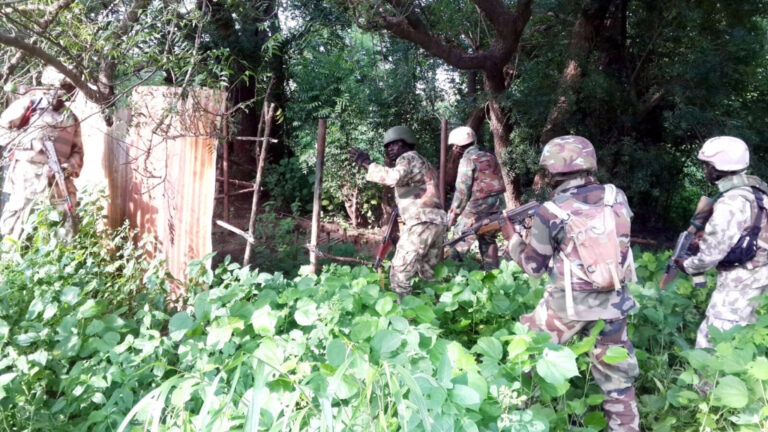
Between July 23 and August 2 in the Irigwe area in central Nigeria, about 70 people were killed, at least 15 villages were destroyed, and over 400 houses were burned down, including churches and an orphanage. Additionally, nearly 20,000 people were displaced.

Last Wednesday, Dr. Stephen Panya, president of the Evangelical Church Winning All (EWCA), shared a statement lamenting the attacks, The Christian Post reports.

“For over 21 years, the Irigwe people of Miango, a predominant Christian community, have been under attacks from Fulani militia that resulted in loss of lives, properties and farmland,” Panya said. “The last two weeks, especially from Sunday, July 23 to Monday, August 2, 2021, have been the worst nightmare of the entire Irigwe land.”

Panaya also expressed disappointment to the Nigerian Army, who failed to intervene despite its headquarters being near the villages involved in the attacks.

“Many of the villages, where these killings and burnings are taking place, are basically located behind the 3rd Armoured Division Barrack of the Nigerian Army, yet, these militias are allowed to continue their heinous murders and carnage without any intervention by the Nigerian Army and other security agencies …, eroding the confidence of the populace in the military and security agencies, as unbiased protectors of all, devoid of tribe, ethnicity or religion,” he added.

Panya also noted that “no single AK-47 wielding militia” has been arrested, and “the indigenous youth who tried to defend themselves with crude instruments are paraded as aggressors.”

According to a report by the U.K.-based group Christian Solidarity Worldwide, Ungwan Magaji, Kishicho, Kigam and Kikoba Irigwe villages in Kaura LGA, southern Kaduna were also attacked. At least 48 people were killed, over 100 homes were demolished and at least 68 farmlands were destroyed.

“It is time for the international community to put aside debates about the origins and nature of this violence and to focus instead on pressing and assisting Nigeria to address this network of organized armed non-state actors,” CSW’s Press and Public Affairs Team Leader Kiri Kankhwende said in a statement.

“It is a tragic indication of failing or failed governance that groups with ready access to small arms, which reportedly include foreign elements, can continue to unleash the most appalling violence across the country, with minority ethnic and religious groups bearing an alarming burden of death and loss.”

According to the U.S.-based persecution watchdog International Christian Concern, Fulani Herdsmen are designated as the fourth deadliest terror group worldwide and are currently the greatest threat to Nigerian Christians.

SOURCE: CHRISTIAN HEADLINES

Christians Should Be the Remedy to the Loneliness Epidemic

0

Today’s Daily Article is by Mark Turman, pastor of Crosspoint Church in McKinney, Texas. He is also the Denison Forum Senior Fellow for Church Leadership.

I recently had lunch with an old friend who greatly impacted my life during my teen years, including being instrumental in my decision to become a Christian.

The lunch reminded me of the pastor who said, “More good gets done over a cup of coffee between two friends than occurs all day long in the counselor’s office.” Thomas Aquinas would apparently agree. He wrote, “There is nothing on this earth to be more prized than true friendship.”

Americans seem to be suffering an epidemic of loneliness, according to a recent study by the Survey Center on American Life. Reporting on this study, Ben Cost in the New York Post wrote, “Signs suggest that the role of friends in American social life is experiencing a pronounced decline.” The study showed that “Americans report having fewer close friendships than they once did, talking to their friends less often, and relying less on their friends for personal support.”

The article continues, “Per the shocking study, nearly half of all Americans—49 percent—reported having fewer than three close friends. … If that wasn’t bad enough, a mind-boggling 12 percent of interviewees claimed to have zero friends today, four times as many as thirty years ago, per the survey.”

As Christians, we can and should be the remedy to this epidemic.

THE BIGGEST OBSTACLE TO CONNECTION

Mark 12:30-31 tells us that the greatest thing we ever do is love God and others. Love is the ultimate connection word and the most sacred work.

First, we connect to God by responding to his revelation and love; this is faith.

We connect with him in worship consistently. He is our God and our Father. He does everything a perfect father should do. He creates us, protects us, provides for us, and guides us.

We are also made to love each other—to connect at the most profound levels as we learn from God how to rightly love both our Father and our sacred siblings in the family of God.

The Covid-19 pandemic has presented us with connecting challenges. Perhaps the most devastating thing about the pandemic—besides the tragically high number of people who have been lost in death—is the amount of distance that’s been required of us.

But Covid is not the biggest obstacle to connection. Our sinful nature causes us to act in selfish ways that block and destroy loving connections. This is the irony of the human condition: we want to love, to deeply connect, to “become one” in unity with others, but our selfishness keeps undermining us.

This is why we need the saving and transforming work of Jesus and the Holy Spirit in our lives daily, to train us so we can connect well.

But how can we make intentional progress?

FOUR WAYS TO DEEPEN YOUR CONNECTIONS

There are several ways to increase our connections with others, all of which can happen well in a local church. How do we develop growing connections of love?

1. SPEND TIME TOGETHER.

The first is almost too obvious: spend time together. Covid restrictions and isolation have reminded us of the great value of human presence. Technology can be very useful, but nothing substitutes for being in the actual physical presence of others. Even before Covid hit the world, there were calls for us to limit our technology in favor of being “fully present” with those in front of us.

In faith, people often pray “God be with us.” When people are ill, one of their biggest concerns is being alone. In our fast-paced, digital society, we can electronically see each other’s high points on social media, but we don’t really have a sense of how they’re truly doing. We run the risk of having many acquaintances that are a hundred miles wide and a half-inch deep.

Proverbs 18:24 warns us, “A person of too many friends comes to ruin, But there is a friend who sticks closer than a brother” (NASB)We’re better off having fewer friends and real depth.

Make a plan to invest intentional time to be with those “safe” people for unscripted conversations about everything or nothing at all. Relational depth cannot be rushed.

2. CELEBRATE TOGETHER.

Second, we connect with each other when we celebrate together. This is why birthdays, weddings, and other life celebrations matter. The Bible tells us to “rejoice with those who rejoice” (Romans 12:15). When good things happen, we naturally want to share them with people.

We also need to practice the loving and humble choice of celebrating with others even when our current situation is not great. It is a selfless choice to look beyond our own circumstances and to enter the joy of others honestly and eagerly.

It was said of Teddy Roosevelt that he wanted to be “the bride at every wedding.” Are we willing to confess and repent of an unhealthy spirit that wants to be in the “winner’s circle” of joy every time and never in the cheering crowd of witnesses who celebrate the good moments in other’s lives?

Christians are commanded to worship (celebrate) God’s goodness together every sevendays as a means of bonding to our God and to each other.

3. SERVE TOGETHER.

A third way to really connect with others is to serve together. The Apostle Paul urged the Christians in ancient Philippi, “Only conduct yourselves in a manner worthy of the gospel of Christ, so that whether I come and see you or remain absent, I will hear about you that you are standing firm in one spirit, with one mind striving together for the faith of the gospel” (Philippians 1:27).

Those in the sports world know a lot about this. Players at every level of sport profess that the greatest thing about their athletic experiences is not the trophies but the camaraderie of their fellow players.

As a pastor, I see this happen often. People bond across shared ministry service. Sometimes it’s Worship Team members facilitating congregational worship. It can be a group of people mowing the church yard so those funds can be redirected to more spiritual purposes.

Many are the stories that bond servants together as sponsors of a summer camp for children or teens, or the shared goal experienced in bringing the gospel and God’s goodness to people through a mission trip.

Where can you team up in your church to share and live out Jesus’ Good News?

4. SHED TEARS TOGETHER.

The deepest way to develop connections with others is to shed tears together. The Bible also says to “weep with those who weep” (Romans 12:15).

The most sacred thing we ever share with others is pain. We foolishly hide our vulnerability from each other, acting as if we are getting through life unscathed and unscared. We are experts at projecting that we don’t have problems with temptation, sin, addiction, fear, frustration, and failure. This is the facade of social media. We usually only show the upside of our lives.

Pastor John Claypool was famous for his confessional style of preaching and teaching. He said that we most help each other from the position of fellow strugglers rather than as victors speaking to victims. When we allow others into our pain and tears or vice-versa, we have stepped into some of the most sacred space there is.

As a pastor, the holiest ground I’ve ever stood on was in a hospital ICU room when a mom and dad said goodbye to their dying child just prior to graciously donating his vital organs to others. We forever bonded in that experience.

Similar bonding occurs on the battlefields of the world and in a million other smaller places where human beings link hands and hearts in the worst of life’s moments, seeking God’s help together.

WHAT NOW?

Take some time today to do your own friendship audit. Don’t rush it. Think and pray it through.

Friends are priceless gifts of grace.

Whom could you call (not text!), invite to lunch or coffee, and give the precious gift of your time as you receive theirs?

The church has the power to stop the epidemic of loneliness.

Ask God to help you deepen your connections today—then seek to be the friend to others that Jesus is to you.

SOURCE: Mark Turman, CHRISTIAN HEADLINES