Home Blog Page 52

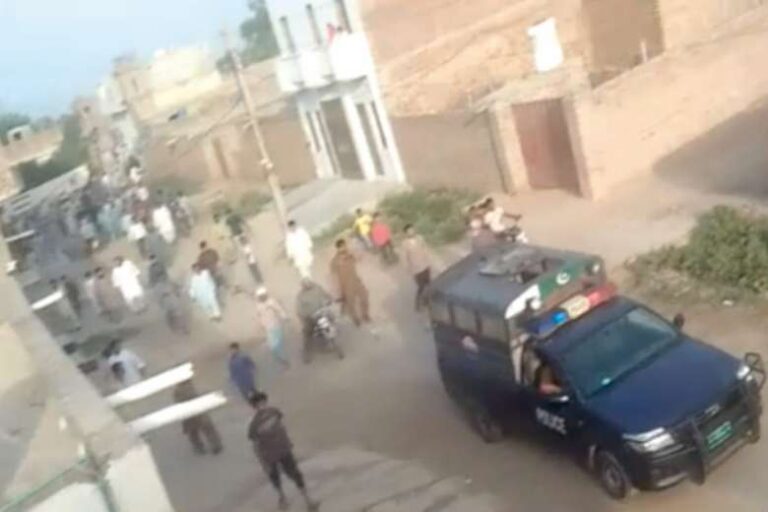
Muslim mob attacks Christian villagers in Pakistan

0

Fear grips Christian families in Punjab after 200 armed Muslims raided their dwellings.

Mangta Masih lost his thumb when a mob attacked his house, a day after Catholic youths were beaten in a Muslim-majority village in Okara district of Punjab province in Pakistan.

“We hid our women inside while they tried to break in. One of them grabbed me from behind and another struck with a sickle blade. I tried to prevent the blow with my right hand. I fell down and they kept beating us with batons,” the 45-year-old laborer told UCA News.

“They were armed with glass bottles, stones, axes, batons and bricks. Others used stairs to climb to our roofs and started breaking our furniture. We pleaded to spare the women but the attack continued for half an hour.”

Fear has gripped 80 Christian families of Chak 5 village after a mob of more than 200 Muslims raided their dwellings on May 15. Masih, not a surname but used to identify a male Pakistani as a Christian, is one of eight Christians with fractured bones. The local deputy superintendent of police visited the site on May 16 and assured locals of registering a first information report under Section 452 (house trespass after preparation for hurt, assault or wrongful restraint).

Christian activists have been sharing disturbing footage of the attack in Faisalabad Diocese on social media.

“They broke the locks, grabbed our hair and pulled us out one by one. Young girls were assaulted and left with torn clothes,” stated a woman lying among the pile of wounded villagers with fractured bones.


The weakness on the part of the administration encourages such attacks on religious minorities

According to Father Khalid Mukhtar, parish priest of St. Thomas Catholic Church in Chak 5, the attack was sparked following a May 14 attack on Catholic youngsters.

“The boys were cleaning the church when one of the Muslim landlords, passing by the church, accused them of throwing dust on him. They attacked the boys and then raided 15 houses of our community the next day,” said the priest.

“The weakness on the part of the administration encourages such attacks on religious minorities. The culprits are usually let off scot-free. Religion is used to settle personal scores. The locals fear another attack.”

Father Mukhtar conducted a meeting of parish committee members on May 16 at St. Thomas Church, gathered statements of the injured and filed a complaint at the local police station.   

In a Facebook post, Father Khalid Rashid Asi, director of the Diocesan Commission for Harmony and Interfaith Dialogue in Faisalabad Diocese, termed it an act of terrorism. It has been shared by more than 50.

Last month two Christian nurses were detained by police after a first information report under section 295-B of the blasphemy law was made by a doctor at Civil Hospital, Faisalabad, who accused them of scratching a sticker inscribed with “Durood Shareef,” a salutation for the Prophet Muhammad. A similar mob gathered at the hospital where a staff member wounded one of the nurses in a knife attack.

In March, an Ahmadi place of worship in Garmola Virkan village in Punjab province was attacked by a mob of clerics with the help of police. They demolished the dome, minarets of the building and desecrated the Kalma (the Islamic proclamation of faith) inscribed on it.

Church leaders and human rights groups say blasphemy allegations have often been used to intimidate religious minorities and settle personal scores.

Pastor Irfan James condemned the recent attacks.

“A famous televangelist, visiting abroad, told foreign news agencies that he loves Muslims and Muslims love him. I wish someone would make such love to him. We face persecution in Pakistan every day. This is our reality,” he said.

“The families of such pastors acquire political asylum in other countries. They are lying. They should apologize to the nation.”

All religious minorities and sects — already vulnerable in Pakistan — have the right to expect that the state will protect their places of worship

According to the Human Rights Commission of Pakistan Annual Report 2020, crimes and discrimination against religious minorities continued unabated.

“Pakistan’s religious minorities continue to be relegated to the status of second-class citizens, vulnerable to inherent discriminatory practices, forced conversions, and faith-based violence,” it stated.

“All religious minorities and sects — already vulnerable in Pakistan — have the right to expect that the state will protect their places of worship. The state must immediately raise a special force for this task as put forward in the historic 2014 Jillani judgement.”

The court ruling ordered the federal government to create a national council for the rights of minorities and provincial governments to create task forces for religious tolerance, protect places of worship and crack down on hate speech, among other measures.

According to the 2021 annual report of the United States Commission on International Religious Freedom, conditions in Pakistan continue to worsen as “the government systematically enforced blasphemy and anti-Ahmadiyya laws and failed to protect religious minorities from abuses by non-state actors.”

SOURCE: UCANEWS
1,500 Christians killed in Nigeria

0

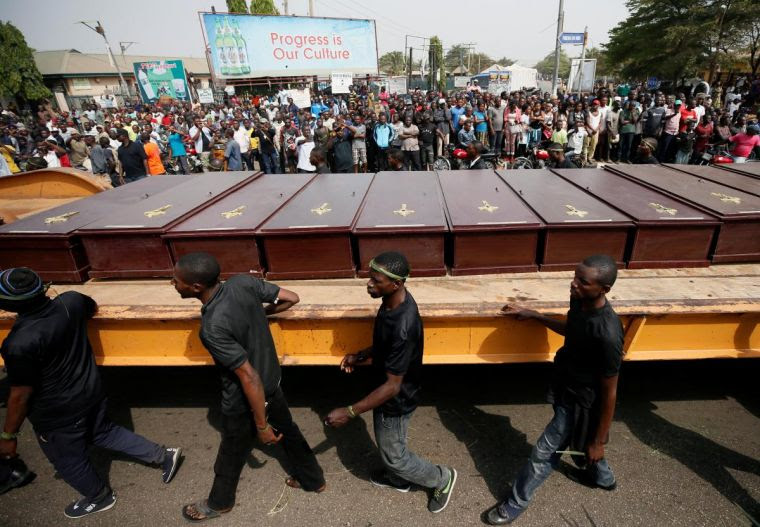
A staggering 1,470 Christians were killed by Islamist jihadists in Nigeria in the first four months of 2021, a non-profit in the country has said. 

The claim came in a report by the Intersociety for Civil Liberty and Rule of Law, which said that another 2,200 were abducted in the same time period. 

The largest proportion of killings occurred in Kaduna state, northern Nigeria, with 300 dead. Another 200 were killed in Benue state and 90 in Plateau state. 

Over half of the killings were attributed to radicalized Fulani herdsmen, but the report refutes the common claim that the violence against Christians is simply down to a dispute over natural resources.

“[The Nigerian and state governments] have made several deliberate attempts to cover the egregious and grisly massacre of Christians in Nigeria by falsely labelling them as ‘herders-farmers clashes,’ or attacks by ‘bandits,’ or ‘killings that cut across Muslims and Christians,” the report says.

Some 800 abductions occurred in Kaduna, more than any other state. In Niger, there were another 300 abductions. 

Among those abducted are farmers, travellers and people living in rural communities. It is feared that at least 220 of the abducted Christians have died or been killed by their captors. 

In Katsina state, the report says that “under-age Christian girls are forcefully married to Muslim men and converted to Islam.”

The findings are based on reports from local and foreign media, the government, international human rights groups and eye witnesses. 

“Nigeria has devastatingly remained the ‘most Christian killed country’ and ‘most dangerous place to be a Christian’ as well as Africa’s newest hotbed of Islamic Jihad and religious intolerance,” the report said. 

Christians have been warning about the situation in Nigeria for some time. 

The latest report from the US Commission on International and Religious Freedom warns that Nigeria is heading “relentlessly toward a Christian genocide.” 

Illia Djadi, Open Doors’ senior analyst on freedom of religion in sub-Saharan Africa, recently said that Christians across Nigeria are living in fear of being attacked or abducted. 

“People are no longer safe in Nigeria,” he said.

“If you travel you are risking your life.

“People all over Nigeria travel fearing they will be kidnapped or attacked. They go to bed fearing they will be kidnapped or attacked. They go to church fearing they will be kidnapped or attacked.”

SOURCE: CHRISTIAN TODAY

Christians beheaded in attack in Indonesia

0

Four Christian men have been beheaded in Central Sulawesi, Indonesia.

The attack on Tuesday is the second in the last six months, after four Christians were killed at a Salvation Army outpost in Sigi in Central Sulawesi in November 2020. 

This attack is believed to have been carried out by Islamic extremists belonging to the terrorist group, East Indonesia Mujahidin (MIT). 

Graphic video footage of Tuesday’s killings has emerged showing one victim’s decapitated body being retrieved.  

Christian persecution charity Open Doors’ local partner in Indonesia Ari Hartono (whose name has been changed) says it is not clear whether the attack in Kalimago Village was religiously motivated.  

“Central Sulawesi locals are still traumatised from the terrorist attack in Sigi last November and have not recovered yet. 

“We’re not sure if the attack is religiously motivated even though the victims are Christians.  

“It could be an act of survival. After the Sigi incident, the terrorists in Central Sulawesi have been increasingly pressed by the police and the army.  

“The only way to survive is to rob people of food. In this area, there are many farmers who live in the forest far from the village and they were the ones targeted by the terrorists.” 

Two victims were members of the Mamasa Toraja Church, another from Toraja Church and one from a Catholic Church in the area. 

According to local media reports, Central Sulawesi Police have confirmed the attack. The victims, all men, were aged between 42 and 61. 

The terrorists are also believed to have taken five million Indonesian rupiah (IDR) – about £250 belonging to one of the victims. 

Local partners of Open Doors are now trying to reach out to the families of the victims.  

Open Doors’ Ari said:”Pray for the peace of God to cover this area. Fear and intimidation are trying to take over people’s hearts, but God’s power is more powerful.    

“Pray for protection over God’s people in Poso and Central Sulawesi. As long as these terrorists are not caught, the threat lingers.  

“People are afraid to go to their field, therefore they cannot work and produce crops. This will affect their economic situation.  

“The Madago Raya Task Force are hunting this terrorist group. We pray for their protection, strength and wisdom to do their job, and pray that they will catch these perpetrators.” 

Indonesia is rated at number 47 on Open Doors’ World Watch List, an annual ranking of the 50 countries where Christians face the most extreme persecution.  

SOURCE: PREMIER CHRISTIAN NEWS

Pastor Slain after Leading Muslims to Christ at Religious Debate

0

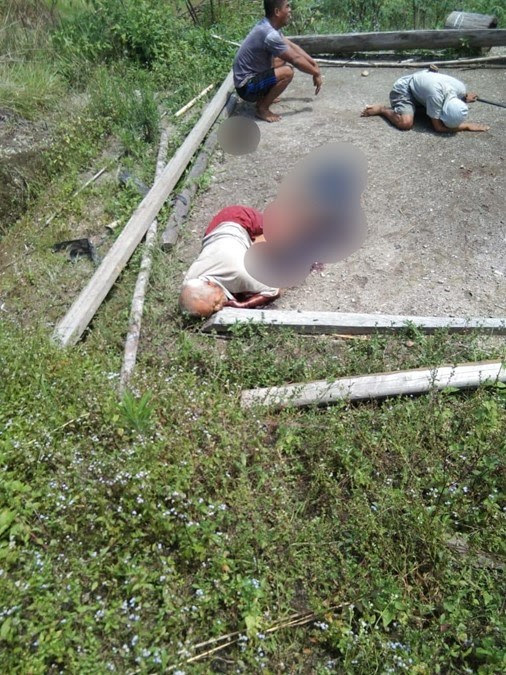
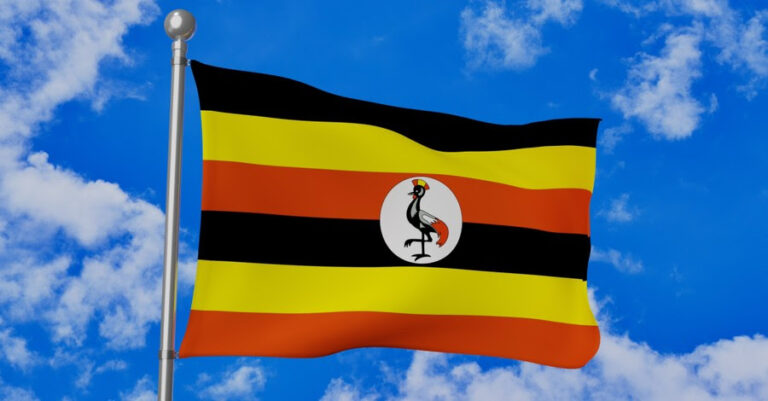
Muslim extremists in eastern Uganda are suspected in the May 3 killing of a Christian pastor hours after he engaged in a public debate about Christianity and Islam, sources said.

Pastor Thomas Chikooma, a resident of Komolo village, Pallisa town, was killed after he was invited to an open-air debate in Pallisa, where he had led 14 people, including six Muslims, to faith in Christ, relatives said.

Area Muslims had invited the independent Pentecostal church pastor to participate in the debate at a taxi park in the town where they had been holding public discussions for about a month.

After offering a defense of Christianity at the debate using the Bible and the Koran and leading the people to receive Christ, angry Muslims began shouting the jihadist slogan, “Allah Akbar,” or “Allah is greater,” compelling him to rush away from the venue with his son, relatives said.

“Two motorcycles carrying two Muslims each and dressed in Islamic attire speedily bypassed us,” his minor son told Morning Star News. “When we were 200 meters to reach our house, the two motorcycles stopped at the junction opposite Nalufenya primary school and the road near our house.”

The pastor became suspicious and told him to follow at a distance, and he saw his father speaking with the motorcyclists and two other men, his son said.

“Immediately some commotion began as the men started talking about the open-air debate, and soon one of them slapped my father,” he said. “I got scared and fled through our cassava plantation and arrived at home.”

His mother, Jessica Naikomba, arrived home an hour later, and they returned to the scene with some neighbors but did not find anyone, Naikomba said.

“As we continued doing the search, we found my husband in a pool of blood, beheaded and his tongue removed,” Naikomba told Morning Star News.

Pallisa police arrived and took the body to a hospital in Pallisa for a postmortem examination. Pallisa council leaders and Salvation Ministries International bishop Denis Akora also gave statements.

Police were said to be investigating.

Relatives were in shock and tears as they mourned the loss of the pastor, a father of 11 who had planted 50 churches in eastern Uganda. Pastor Chikooma was a well-known evangelist who led St. Martin Church in Ngalwe village. Bishop Akora and another pastor were present with the mourners as the assault took place close to churches of their denomination.

“The family needs prayers, financial support and trauma counseling at this trying moment,” Bishop Akora said.

The killing was the latest of many instances of persecution of Christians in Uganda that Morning Star News has documented.

Uganda’s constitution and other laws provide for religious freedom, including the right to propagate one’s faith and convert from one faith to another. Muslims make up no more than 12 percent of Uganda’s population, with high concentrations in eastern areas of the country.

SOURCE: CHRISTIAN HEADLINES


Another Christian Nurse in Pakistan Falsely Accused of Blasphemy

0

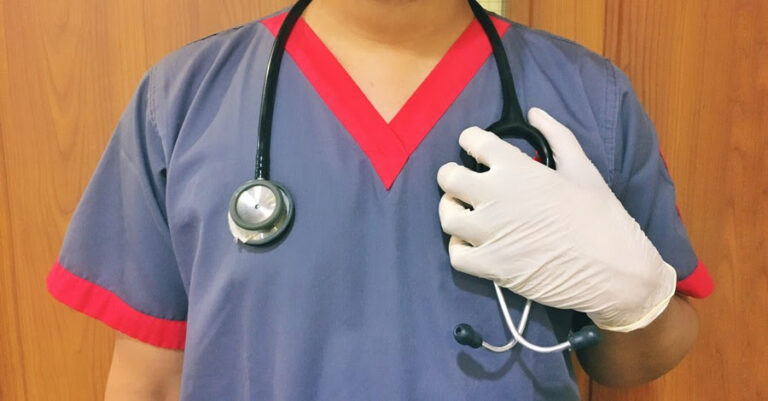
Nurse Sakina Mehtab said she was stunned to see videos of her Muslim colleagues marching on hospital premises in Lahore, Pakistan last week, shouting Islamist slogans and accusing her of blasphemy.

She has since gone into hiding after receiving anonymous calls threatening to “maim and kill” her over the false allegation.

Mehtab had shared a video on WhatsApp of a Pakistani Muslim in Paris criticizing the response of Pakistani people and officials to a European Union Parliament resolution – an issue unrelated to any religious element, but her Muslim colleagues mislabeled it as critical of Islam.

“There was no religious element in it, but a group of nurses spread lies that the video was anti-Islamic and accused me of blasphemy,” said Mehtab, due to retire from the Punjab Institute of Mental Health (PIMH) in Lahore in two years. “My life has been put at serious risk with this false allegation, and I don’t know how I’ll be able to resume work at the hospital with the fear that someone might attack me from nowhere. My fear is not unfounded.”

Hours after she shared the video, a large group of Muslim nurses and paramedical staff, some armed with clubs and sticks, staged a protest rally. Witnesses said the protestors intimidated Christian workers in hospital wards and repeatedly tried to provoke them into fights. There are about 345 Christians in the 600-strong workforce.

The protestors then stormed into a hospital auditorium that Christian staff members and patients use for worship and prayer, desecrated Bibles and other property and asserted that there would be no more Christian prayer gatherings there, she said.

“The Christian workers showed great wisdom by controlling their emotions, otherwise the situation could have turned very violent,” another Christian nurse told Morning Star News, speaking on condition of anonymity.

She said the timely intervention of security agencies forced PIMH Executive Director Muhammad Ashraf to designate a one-person “committee” to inquire into the conflict – but that the person chosen, Nursing Superintendent Khalida Sulehri, was biased.

“The committee was a farce, because Sulehri herself was involved in the dangerous propaganda against Sakina and had encouraged the Muslim workers to take out the protest rally,” she said.

DENIALS

Ashraf told a delegation of Muslim and Christian representatives on Monday (May 3) that the issue had resulted from a “misunderstanding.”

“Sakina and the other Christian nurses have apologized for sharing the controversial video, and that issue is sorted,” he claimed, declining to say what action might be taken against those who made the false allegations.

Denying that the protestors had desecrated any Christian materials, Ashraf said a former executive director in 2019 had allowed Christian staff members 30 minutes of worship per week in the auditorium, but that now they were demanding that it be designated as a church.

“There’s no provision of ‘church’ in any government hospital or department, so naturally I can’t allow this,” he said, asserting that Christian staff members’ refusal to allow any other event in the auditorium was a major cause of the recent conflict.

The unnamed Christian nurse denied this assertion, saying the Christian workers were being targeted under a systematic plan to “replace them with Muslims.

“This is the second attempt to trap a Christian worker in a false blasphemy case,” she said. “The administration’s bias towards Christians is evident, because no action has been taken against the persons who brought the false charge against Sakina and put her life at risk.”

She said the auditorium “church” issue was being used to pressure Christian workers.

BLASPHEMY LAWS

The protests marked the third instance this year of Christian nurses being falsely accused of blasphemy in Pakistan.

On April 9, two Christian nurses complying with a supervisor’s orders to remove stickers at a government hospital were arrested in Faisalabad after a Muslim employee attacked one of them with a knife over the removal of a sticker bearing Koranic verses.

Nurse Mariam Lal and student nurse Navish Arooj were charged under Section 295-B of Pakistan’s blasphemy statutes against “defiling the Koran” after an Islamist mob demanded “death to blasphemers” inside Civil Hospital, their attorney said. Conviction under Section 295-B is punishable by up to 10 years imprisonment and/or a fine.

The two Roman Catholic nurses are in judicial custody while their families have gone into hiding out of fear of Islamist mobs.

On Jan. 28, Tabeeta Gill, a nurse at a Karachi hospital and a gospel singer, was slapped, beaten and locked in a room by a violent mob after a Muslim co-worker baselessly accused her of blaspheming Islam. Police initially cleared her of denigrating Muhammad but later succumbed to pressure of an Islamist mob and charged her with insulting Islam’s prophet, punishable by death under Section 295-C. Gill has reportedly fled the country to avoid arrest.

False accusations of blaspheming Islam in Pakistan are common, often motivated by personal vendettas or religious hatred. The highly inflammatory accusations have the potential to spark mob lynchings, vigilante murders and mass protests. Currently, 26 Christians are in prison due to blasphemy charges. They are defendants in 22 blasphemy cases at various levels of the judicial process.

EU RESOLUTION

The European Parliament on April 30 adopted a resolution calling for a review of Pakistan’s Generalized Scheme of Preferences status, which provides preferential access to EU markets through reduced tariffs, in view of an “alarming” increase in blasphemy accusations in the country, as well as a rising number of attacks on journalists and civil society organizations.

The resolution also calls on the government to “unequivocally condemn” incitement to violence and discrimination against religious minorities in Pakistan.

Repealing or amending Pakistan’s blasphemy laws is unlikely due to fierce Islamist sentiments in the Muslim-majority country, rights advocates say, adding that Pakistani authorities must be urged to immediately implement effective procedural and institutional safeguards at the investigative, prosecutorial and judicial levels to prevent abuse of these laws.

The U.S. State Department on Dec. 7 re-designated Pakistan among nine others “Countries of Particular Concern” for severe violations of religious freedom. Previously Pakistan had been added to the list on Nov. 28, 2018.

Pakistan ranked fifth on Christian support organization Open Doors 2021 World Watch list of the 50 countries where it is most difficult to be a Christian.

SOURCE: CHRISTIAN HEADLINES

‘People Want to Worship in Person’: Police Lockdown Church in Ontario after Ticketing Churchgoers

0

The battle between a Canadian church and the government has escalated as congregants fight for their right to worship in person, even after authorities locked the sanctuary doors last week.

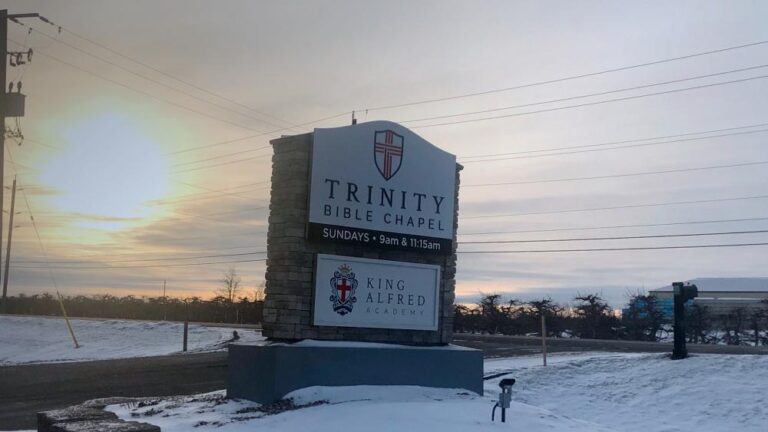
Trinity Bible Chapel in Waterloo tweeted on Saturday, “Our building is now completely locked up and we are unable to use it to even record a sermon.” 

The Attorney General’s office requested that law enforcement lock the church doors on Friday afternoon, CTV News reports.

This measure comes after Waterloo police issued tickets to people leaving Trinity following a church service on April 25. 

Police said in a statement that tickets were given to those attending the worship service due to violation of the Reopening Ontario Act.

“This enforcement is a result of recent amendments to provincial legislation that allows officers to stop an individual believed to be violating COVID-19 related orders,” the statement reads.

Trinity Bible Chapel was already fined $83,000 by the Ontario Superior Court of Justice following an in-person church service in January with more than 10 people. 

Pastor Jacob Reaume expressed his frustration in a recent blog:

“With mounting fines and increasing threats from the state for asserting the crown rights of Jesus over His church and His worship, we find ourselves in the centre of a conflict for liberty,” he wrote. “The threat we faced in March 2020 motivated many Christians to fearfully look to the state for salvation. Instead of salvation they found bondage.”

Trinity Bible Chapel’s lawyer Lisa Bildy said the actions taken against the house of worship are grievous and unfair. 

“Honestly I find this a sad situation for this church and for this country about locking doors because people want to worship in person,” Bildy pointed out. “They don’t want to disrespect you and the orders of the court. But they are deeply convicted people.”

Additionally, Cara Zwibel of the Canadian Civil Liberties Association says the decision to lock a church’s doors is unusual.

“Freedom of religion as interpreted by the courts is a concept that really focuses on what the individual subjective and sincerely held beliefs are,” she said. “If I am someone who sincerely believes that practising my religion requires me to be in a congregation with a group of worshipers, then generally the court will take me at my word.”

CBN News previously reported that one pastor was fined $5,000, another pastor was fined $4,000, and each of the church elders was ordered to pay $3,000. 

Trinity Bible Chapel, by itself, was fined $15,000 and was also directed to pay $45,000 to cover the court costs of the Ministry of the Attorney General (MAG).

The church has set up a GoFundMe page to assist with legal fees and assist the elders to pay their fines. So far, the effort has raised $60,100 of its $150,000 goal.

SOURCE: CBN NEWS


Christian and Missionary Alliance Considers Calling Women ‘Pastors’

0

Jennifer Ashby preaches and teaches regularly at Neighborhood Church in Rockville, Maryland. She baptizes people, disciples them, marries them, buries them, and counsels them in times of crisis.

But one thing she won’t do, as executive director of ministries at the Christian and Missionary Alliance (CMA) congregation, is call herself “pastor.”

The CMA consecrates and licenses women for ministry but does not permit them to use the title “pastor.” The term is restricted to men who can be elders, even though not all pastors are elders in CMA churches and not all elders are ordained pastors.

The title is just a title, admits Ashby, who is also one of three women on the CMA board of directors, but not having a title can complicate pastoral ministry.

“Because certain words are off-limits, you end up doing verbal gymnastics,” she said. “Without the commonly understood language around what I do, people don’t understand how I can help them. That’s one of the big functional implications of this policy. People come to the church and say ‘I would like to speak to a pastor,’ and it’s not clear to them that an executive director of ministries can help them.”

The CMA is considering changing the title restrictions at the denomination’s annual General Council meeting, scheduled for both Nashville and online at the end of May. Though no decision will be made this year, the Alliance will talk about allowing women to be called pastors in the future.

“It’s become clear to me that some of our policies unnecessarily restrict otherwise called and qualified ministers,” CMA president John Stumbo said in an official announcement. “This grieves me. … I believe we’ve been inconsistent in our documents and inappropriate in some of our policies. Any place we find that our policies limit people from ministry beyond any limit given by the Scriptures, are we not in error?”

The proposed policy change would still restrict eldership in Alliance churches to men. Senior pastors, who are always elders, would also be men. The elders in individual congregations are responsible for deciding who serves in the church, and could decide to prevent women from preaching, presiding over Lord’s Table, or leading the church in other ways. However, official CMA policy would allow women to hold “key places of leadership in the Alliance at the local church, district, and national levels” and call themselves pastors at the same time.

The proposed change would also allow women to be ordained. Currently, the two-year training and vetting process for men and women is identical, but the men are ordained while the women are consecrated—a distinction in name, not in practice.

CMA leadership has surveyed more than 3,000 people in the Alliance and spoken to people in all the district conferences since 2019 about the topic. Their surveys found that 61 percent believe women should be called pastors and consecration and ordination should not be distinct.

A majority in the church support restricting eldership to men (58%), but only 1 of out 10 say the CMA currently gives women too much leadership.

Vice president Terry Smith said the denomination tries to focus on what’s important and prioritize the Great Commission over theological issues and differing interpretations of Scripture.

“What really makes our heart pound fast is mobilizing more people to ministry,” he said. “That’s kind of the heart of who we are, and everything else is a second-tier issue.”

Smith said the Alliance has never been neatly categorized as “complementarian” or “egalitarian.” Mostly, the churches have been led by men, but there are also many prominent women in the denomination’s history, including missionaries, evangelists, church planters, and solo pastors. They are seen as “humble servants of God who were doing what God called them to do,” Smith said.

The Alliance, formed in 1897, brought together some Christians from Wesleyan and Pentecostal traditions with people from Calvinist and Reformed traditions. They have often disagreed on women in leadership, along with other theological issues, including predestination and the end times. The Alliance believes that even people who completely rely on the authority of Scripture can legitimately differ on important issues.

“Anyone who totally understands 1 Corinthians 11 perfectly can come talk to me,” Smith said. “But even Peter said Paul is sometimes hard to understand in one of his epistles, so can we not admit that maybe my brother or sister who loves Jesus and Scripture and reads faithfully might come out with a different understanding of 1 Corinthians 11 than me?”

Not everyone is happy with the proposed change. Andrew S. Ballitch, the associate pastor at an Alliance church in Mansfield, Ohio, wrote an article for the Council of Biblical Manhood and Womanhood describing the proposed change as a betrayal of the denomination’s history and its understanding of the Bible. The CMA has to risk losing some people, he said, or abandon its historic identity as a church committed to the authority of Scripture.

“The line should be drawn where Scripture is clear,” Ballitch wrote. “A pastor is an elder is an overseer. Pastors-elders-overseers are biblically qualified men. And only those qualified to be pastors-elders-overseers preach during corporate worship of local churches.”

According to Alliance Theological Seminary professor of spiritual formation Wanda Walborn, however, the church’s tradition of encouraging women in ministry is deep in the denomination’s DNA.

“I grew up in a little church in Maine with my dad saying, ‘If God calls you to serve him, don’t stoop to being president of the United States,’” Walborn said. “When God calls you, he gives you a place to serve. The rule and reign of God has come and we’re going to advance his kingdom and all hands are needed on deck, because we’re in a broken world that desperately needs the love of Jesus.”

Walborn planted and pastored an Alliance church in Northern California and now directs Empower, a program that trains, equips, and releases women into ministry. The nine-year-old program, which runs in partnership with a CMA district and Alliance Theological Seminary has graduated thousands of women, Walborn said, from a variety of denominations, with a variety of positions on women in leadership. The program doesn’t focus on external limits, though, but on helping women understand who they are in Christ and what God is calling them to do.

“The issue is, who are you? What has God made you to do? Let’s equip you to do it,” she said.

Walborn tells women that as followers of Christ, they have the same mandate as the disciples in Matthew 10:7–8: “As you go, proclaim this message: ‘The kingdom of heaven has come near.’ Heal the sick, raise the dead, cleanse those who have leprosy, drive out demons. Freely you have received; freely give.”

Walborn doesn’t think the current CMA policy stops women from proclaiming the gospel, but she does appreciate the denominational leadership’s commitment to providing clarity. Sometimes, when ministering outside a church, like in a hospital or a prison, licensed CMA women do have to stop and explain why their clergy cards do not say they are pastors.

“The truth is, language matters,” Ashby said. “Language can telegraph equality and the possibility of calling to young women in Alliance churches. Right now, there are these weird mixed messages.”

CMA leadership has decided not to hold a vote on the potential changes in 2021, since many may be participating online and not in person. The General Council will consider the changes and plan for a vote in 2022.

SOURCE: CHRISTIANITY TODAY

Muslims Allegedly Poison Pastor over Plans for Church Building

0

NAIROBIKenya – Muslims in eastern Uganda upset with a pastor’s plans to build a church on land they sought to buy are suspected in his death by poisoning, sources said.

Pastor Yolonim Oduchu was poisoned on April 5 in Raraka village, Oloki Sub-County, Pallisa District after he declined to sell a five-acre lot within the Raraka trading center to Muslims who wanted to build a school and mosque on the land, said his brother, Francis Okirya.

“Aliasa Opeduru and a number of Muslims had approached my brother to sell them the piece of land several times, but my brother declined because their offer was small, and he also wanted to have part of the land set aside for constructing a church structure,” Okirya said. “Later my brother received a threatening message from Opeduru saying he would not negotiate with him again.”

The Muslims had found a sponsor in Turkey to fund the construction of the mosque, he said.

Opeduru told Pastor Oduchu the Muslims did not want a church building close to their proposed mosque, but a week later the pastor began clearing the parcel of land, Okirya said.

A resident of Raraka village, Pastor Oduchu usually ate at a small hotel at the Raraka trading center when visiting his land. The hotel is owned by a Muslim.

The pastor’s wife said after a light meal at the hotel on April 5, he arrived home feeling ill.

“My husband took a motorcycle and arrived at home complaining of severe stomach pains, diarrhea and started vomiting,” Mary Oduchu told Morning Star News. “We rushed him to a nearby clinic, and he succumbed to poisoning.”

Pastor Oduchu was the father of eight children, ages 2 to 16.

After his burial on April 10, his brother returned the following day to retrieve a spade he had left there and found blood sprinkled on top of the grave and papers with writing in Arabic, Okirya said.

Okirya called other mourners and community members who were equally shocked by the desecration.

“We then sought assistance from police, who came with a sniffing dog that directed the mourners up to Opeduru’s home, where we found the suspect inside the house sleeping,” Okirya said. “When police asked him about the blood, he admitted to pouring the animal blood there because the pastor didn’t respect him.”

Area sources said that when angry residents questioned the hotel owner, he confessed that Muslims had given him poison and instructed him to put it in Pastor Oduchu’s food.

Police arrested Opeduru in connection with the killing, and soon irate Christians and other community members burned down his house, Okirya said.

Mary Oduchu requested prayer and financial help for living expenses and the children’s school fees.

INJURED CHRISTIAN

A Christian who has long provided aid for persecuted converts from Islam suffered a leg injury when a Muslim motorist intentionally struck him on April 24, he said.

Hassan Muwanguzi said that after the motorist struck him as he was returning home from Pallisa, passers-by surrounded them, prohibiting the motorist from escaping.

“The mob wanted to beat him, but he shouted, saying, ‘This man has been a trouble-maker to our Islamic religion,’” Muwanguzi said. “Soon the police arrived and arrested him.”

Some of the onlookers took him to a hospital in Pallisa for treatment.

Muwanguzi has long received threatening messages from Muslims upset with his Christian outreach. One recent one read, “You have been converting Muslims to Christianity. We have been warning you about this several times. But you have refused to heed to our directive, so be ready with whatever action we are going to take.”

The suspect has been released on bail, he said.

“I am still in great pain,” Muwanguzi said. “I need help for buying a little drugs for the leg. I am badly off.”

The assaults were the latest of many instances of persecution of Christians in Uganda that Morning Star News has documented.

Uganda’s constitution and other laws provide for religious freedom, including the right to propagate one’s faith and convert from one faith to another. Muslims make up no more than 12 percent of Uganda’s population, with high concentrations in eastern areas of the country.

SOURCE: CHRISTIAN HEADLINES


Prison Fellowship Distributes 100,000 Bibles to Prisoners Nationwide amid COVID-19 Pandemic

0

During the COVID-19 pandemic, 100,000 Bibles were given to prisoners by the nation’s leading Christian prison ministry amid heightened demand for God’s Word.

In a recent interview with The Christian Post, James Ackerman, the CEO of Prison Fellowship, noted that there was a “sense of hopelessness” in prisons throughout the pandemic.

“During a time when prisons had shut down, and incarcerated men and women had to go without visitations or programming, there’s this sense of hopelessness in prisons,” Ackerman said.

Ackerman shared that there was an intense level of demand for the Gospel inside prisons, for the first time in Prison Fellowship’s 45-year history.

“God put on people’s hearts and encouraged chaplains to promote the Word of God,” he noted. “And [the fact] that hope of the Gospel found itself in such high demand is so encouraging to me.”

In response, Prison Fellowship managed to distribute 100,000 copies of The Life Recovery Bible, Tyndale’s bestselling recovery Bible, in nine months.

The Life Recovery Bible, which is under the New Living Translation, features unique devotional content based on the 12-step recovery model.

According to Tyndale’s website, “This Bible for addiction points to God himself as the primary source of recovery with essential tools and features that help free people from the grip of addiction.”

“Having a Bible that speaks to addiction recovery and needs was also a priority for us,” Ackerman said. “The Life Recovery Bible by Tyndale was the perfect fit for what we were exploring.”

Ackerman added that the Bible provides prisoners the opportunity “to start a life of new beginnings” with Jesus Christ.

“[The aim is for] people who have struggled with addiction and that addiction [led] to other unproductive activities in their life to realize that they can be healed of that addiction, that Jesus wants to heal them of that addiction and to allow them to start a life of new beginnings,” Ackerman said.

While many correctional facilities were concerned that the pandemic would agitate prisoners, the Prison Fellowship president noted that the opposite effect took place through these Bibles.

Ackerman explained that The Life Recovery Bible has helped inmates stay calm, strengthening the faith of those who were already believers and encouraging non-believers “to really sit down and crack open that Bible and read it.”

“It is creating an environment of calmness in the prison that the Department of Corrections feared might not be there,” he said.

“God provided us all we needed to meet the demand to supply those 100,000 Bibles. That, to me, it just shows you when the Lord is in something, He not only opens the door to create the demand, but He provides the resources needed to fulfill the expectation,” he asserted.

Over 3 million copies of The Life Recovery Bible have been printed. It is available in English and Spanish in large print.

Since partnering with Tyndale in 2018, Prison Fellowship has distributed over 162,000 Bibles to men and women in prison.

SOURCE: CHRISTIAN HEADLINES

The Trial of GraceLife Church’s Pastor James Coates Has Begun

0

The trial of Pastor James Coates began today in Edmonton, the capital of the Canadian province of Alberta. The first day of the trial included testimony from an inspector with Alberta Health Services (AHS) and is expected to include an “expert witness” from the Justice Centre for Constitutional Freedoms (JCCF), which is representing Coates. 

“The Justice Centre intends to argue at this Monday, May 3 trial that Pastor Coates’ Charter rights and freedoms have been violated, and the court should therefore throw out the Public Health Act charge against Pastor Coates,” said the JCCF in a news release. “One expert witness will be called by the Justice Centre during this first part of the trial.”

James Coates is the pastor of GraceLife Church in Spruce Grove, Alberta. He is facing one charge of violating the Public Health Act due to holding worship services in defiance of capacity and social distancing requirements. Authorities shuttered the church last month, but the congregation has met at least once since then in an undisclosed location. 

Today, AHS inspector Janine Hanrahan testified that after AHS received multiple complaints about the church, she visited three times to inspect it, the first in July 2020. At these inspections, Hanrahan saw people not wearing masks and not practicing social distancing. During one inspection, she heard Coates tell a Royal Canadian Mounted Police officer that Premier Jason Kenney was hiding behind Alberta’s chief medical officer, whom Coates called a “dictator.” 

JCCF says that the trial, which is set to take four days, is being held in Edmonton “specifically so it can take place in a courtroom that has the infrastructure to permit the expected audience of hundreds to observe the trial virtually.” Up to 1,000 people are permitted to listen to the trial online, but there will be no video streaming of the proceedings. One of the likely reasons why is that the public health prosecutor was granted permission not to reveal her identity after she expressed concerns about security.

SOURCE: CHRISTIAN NEWS NOW