Home Blog Page 53

The retiring Archbishop of Wales urges his successor to be committed to developing ‘a change agenda’

0

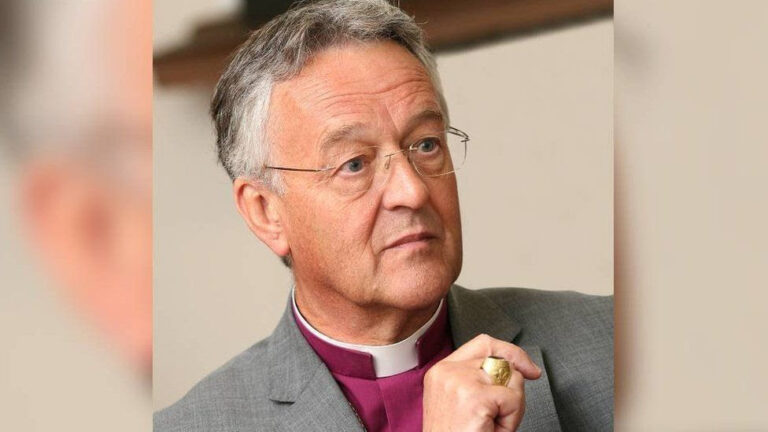
The Archbishop of Wales, The Most Reverend John Davies, has retied after serving as Archbishop of Wales for four years and as Bishop of Swansea and Brecon for 13 years.

In his outgoing video message, Archbishop John urged church members to embrace new challenges and opportunities and be prepared to change to be more accessible, welcoming and with refreshed teaching.

Speaking to Premier he added that the Church in Wales faced a specific challenge related to “developing a different way of delivering our ministry.”

“Some time ago now, too long ago, we committed ourselves to developing a different way of delivering our ministry, through what we have called ministry areas. And basically, it’s been quite disturbing for some people, because it means doing things very differently. Recognizing that no one cleric, no one individual has all the gifts and talents necessary to fulfill the call to ministry. And recognizing also, that ministry is much better undertaken in teams of people ordained and lay, some people have found that change difficult to embrace. So it’s a process, rather than something that’s happened immediately, but we are committed to it. If we prefer to paddle our own canoe rather than other people paddling with us, if I can put it like that, that’s just not going to work. It’s not working at the moment.”

As for the qualities he would like to see in a successor, Archbishop John told Premier he would like to see someone who’s open to change: “Well, someone who is committed to development of the change agenda. And as I think I hope I’ve indicated, that doesn’t mean jettisoning everything that we hold, dear. Everything that supports us and encourages us and nourishes us now. But recognizing that our ongoing decline in terms of numerical attendance is telling us something very, very obvious that what we have on offer, whilst it may satisfy us is not attractive to other people. And it’s too easy to blame other people who don’t come to us. Whereas the more difficult challenge is to look at us or look at ourselves and say, what is it that we’re not offering?

“What is it that isn’t attractive about the way we teach, what isn’t attractive about the way we worship, what isn’t attractive about the way in which we live out our lives, so there’s got to be a balance. So I hope that the next Archbishop may be indeed, the next Bishop of my diocese may be that, they will be committed and open to preserving what is good and valuable from the past, but also, still encouraging people to develop things that are different. And at least take the risk. Even if you fail. You can learn something, you can learn something from that.”

Reflecting on the last 14 months in the role, Archbishop John said he’d missed ministering to people in-person during the coronavirus pandemic: “It’s completely derailed things, as indeed it has for so many other people across the world. And from my particular perspective, throughout my ministry, both as a bishop and prior to that, the thing that I have always found, so important, so energizing, has been engaging with either congregations in a kind of formal context of acts of worship, preaching and teaching and celebrating the sacraments and so on, or, indeed, speaking to groups of people of all sorts of ages, basically, engaging in what I would broadly call teaching. And that has not happened. I mean, obviously, I’ve done some stuff on Zoom, but it’s not the same as engaging with people face to face.”

As for his retirement, the archbishop said he hoped to spend some time relaxing, gardening and walking: “My wife has challenged me to take my golf clubs out of the corner of my office, get the cobwebs off them and wave them around a little bit,” he added.

In his final video message released by the Church in Wales, Archbishop John thanked everyone for the kindness and compassion they have shown to each other during the pandemic. He also added he hoped goodwill will continue as Covid restrictions lift and won’t “vanish with the pandemic”.

SOURCE: PREMIER CHRISTIAN NEWS
Police in Pakistan Torture Christian into False Confession of Blasphemy

0

LAHOREPakistan– Police in Pakistan tortured a Christian man into confessing to a false allegation of blaspheming Islam and illegally kept him in custody for more than two months, his attorney said.

Salamat Mansha Masih’s attorney, Aneeqa Maria of The Voice Society, said police were required to present the 26-year-old Christian before a judge within 24 hours of arrest. Lahore police arrested Masih on Feb. 13 after Muslims overheard him reading the Bible in a park and accused him and a friend of ridiculing Islam and its prophet.

Masih was in custody for two months and three days before he was presented before a judge on April 16, Maria said.

“During this period, he was kept in at least three different police stations and illegal torture cells, where he was mentally and physically tortured to confess to the baseless accusation,” Maria told Morning Star News.

While incarcerated, police repeatedly threatened to kill him, she said. Family members were not allowed to meet him, and his mother and siblings saw him for the first time in two months when the police brought him to jail after his appearance before a judge. Even then police did not let them talk to Masih, whose father died 20 years ago, until a week later, she said.

“When we were finally able to talk to Salamat in private at the District Camp Jail in Lahore on Friday [April 23], he told us that he had suffered immense torture and verbal abuse during his illegal confinement,” Maria told Morning Star News. “The police investigators forced him to admit to blasphemy. They also tortured him into naming other members of the Bible study circle.”

Authorities also questioned him about the whereabouts of the friend with whom he was reading the Bible, Haroon Ayub Masih, also charged, who fled the city after gaining pre-arrest bail, she said.

The attorney said she regretted that neither the court nor senior police officials have taken notice of officers’ illegal actions against Salamat Masih.

“This is a serious human rights violation, yet no one seems to be bothered about it,” Maria said, adding that she was preparing to seek bail for him despite slim chances of success.

“Obtaining bails in blasphemy cases has become virtually impossible now,” she said, citing pressure by an Islamist political party and a hardline group of Muslim lawyers to keep judges from granting bail. “One of my clients, Patras Masih, a 23-year-old blasphemy accused, is in jail for the last three years. I’ve moved six bail petitions for his release on statutory grounds, however, the judges keep issuing notices to the prosecution at every hearing instead of granting him bail.”

Masih and his friend, the 26-year-old Haroon Ayub Masih, were studying the Bible in Lahore’s Model Town Park on Feb. 13 when a group of Muslims approached and told them they should not read the Bible in public, Maria said. Haroon Masih returned home after the Muslims left, and when they returned to find Salamat Masih still at the park, the group summoned the park’s security personnel and falsely accused the two Christians of using derogatory words for the Koran and Muhammad, Maria said.

She said someone from the group of Muslims then called the Tehreek-e-Labbaik Pakistan (TLP), a far-right Islamist political party reportedly behind most blasphemy cases against Christians and the Ahmadiyya, a sect originating in Islam that Muslims repudiate.

The TLP leaders arrived and pressured police to register a case against the two Christians for derogatory remarks against Muhammad (Section 295-C of the Pakistan Penal Code), punishable by death; defiling the Koran (Section 295-B), punishable by imprisonment for life and fine; and deliberate and malicious acts intended to outrage religious feelings (Section 295-A), punishable by up to 10 years in prison and a fine, Maria said. The complainant is listed as Haroon Ahmed.

When police started conducting raids on Bible circle members and taking them into illegal custody where they were also brutally tortured, Haroon Masih decided to flee the city, she said.

The Tehreek-e-Labbaik Pakistan and Khatam-e-Nabuwwat Lawyers Forum are believed to be involved in all blasphemy cases involving Pakistani minorities, especially Christians, Shia Muslims and Ahmedis in Punjab and Sindh provinces.

BLASPHEMY CASES

Earlier this month, two Christian nurses complying with a supervisor’s orders to remove stickers at a government hospital were arrested in Faisalabad after a Muslim employee attacked one of them with a knife for the removal of a sticker bearing Koranic verses.

Nurse Mariam Lal and student nurse Navish Arooj were charged under Section 295-B of Pakistan’s blasphemy statutes against “defiling the Koran” after an Islamist mob led by Tehreek-e-Labbaik Pakistan demanded “death to blasphemers” inside Faisalabad Civil Hospital.

The blasphemy accusations against the two women come after Tabeeta Gill, a nurse at a Karachi hospital and a gospel singer, was slapped, beaten and locked in a room by a violent mob on Jan. 28 after a Muslim co-worker baselessly accused her of blaspheming Islam.

Police initially cleared Gill of denigrating Muhammad but later succumbed to pressure of an Islamist mob that converged on their station and charged her under Section 295-C.

False accusations of blaspheming Islam in Pakistan are common, often motivated by personal vendettas or religious hatred. The highly inflammatory accusations have the potential to spark mob lynchings, vigilante murders and mass protests. Currently, 24 Christians are in prison due to blasphemy charges. They are defendants in 21 blasphemy cases at various levels of the judicial process.

The government’s failure to curb the misuse of the blasphemy laws is emboldening false accusers, rights activists and church leaders say.

The U.S. State Department on Dec. 7 re-designated Pakistan among nine other “Countries of Particular Concern” for severe violations of religious freedom. Previously Pakistan had been added to the list on Nov. 28, 2018.

Pakistan ranked fifth on Christian support organization Open Doors 2021 World Watch list of the 50 countries where it is most difficult to be a Christian.

SOURCE: CHRISTIAN HEADLINES

London Pastor Arrested for Sermon on Marriage: ‘I Was Only Saying What the Bible Says’

0

Last week, a pastor was arrested in London after he delivered a public sermon on the biblical definition of marriage out of Genesis 1.

John Sherwood, who is 71 and the pastor of a north London church, was arrested April 23 in the center of Uxbridge, London, under the Public Order Act for making “allegedly homophobic comments,” according to The Daily Mail.

A video shows him standing on top of a step stool before being handcuffed and led away by police as a crowd watched. One person can be heard gasping in shock.

“For a man preaching about Christianity!” a woman says in the video, critical of police action.

He was later released.

“I wasn’t making any homophobic comments. I was just defining marriage as a relationship between a man and a woman,” he said, according to The Daily Mail. “I was only saying what the Bible says – I wasn’t wanting to hurt anyone or cause offense. I was doing what my job description says, which is to preach the gospel in open air as well as in a church building.

“When the police approached me, I explained that I was exercising my religious liberty and my conscience. I was forcibly pulled down from the steps and suffered some injury to my wrist and to my elbow. I do believe I was treated shamefully. It should never have happened.”

Christian Concern, a UK-based organization that defends people of faith, criticized the arrest. Police had received three complaints about Sherwood, Christian Concern said.

The organization called it a “brutal arrest.”

“There is an idea that if people are offended, you should arrest someone, but in this country, we also have freedom of speech,” Andrea Williams of Christian Concern told The Daily Mail.

Sherwood was arrested after preaching “on the final verses in Genesis 1, where it says that God created mankind in his own image,” Christian Concern reported.

Peter Simpson, the pastor of Penn Free Methodist Church in Buckinghamshire and a friend of Sherwood, also defended the minister.

“Everything he said was Bible-based,” Simpson said, according to The Daily Mail. “He was not saying anything abusive; he is a Christian minister. There did not seem to be any recognition from the police that Christian ministers and such views exist. If there was a Pride parade in Uxbridge, the police would support it even if Christians were offended. You don’t have to be an evangelical Christian to be shocked by this. Anyone who cares about liberty should be concerned about what happened in Uxbridge.”

SOURCE: CHRISTIAN HEADLINES

Christian MP could face prison sentence in Finland for tweeting Bible verse

0

A former government minister and current MP in Finland has formally been charged over a tweet she posted about homosexuality.

Päivi Räsänen is accused of inciting hate towards a group of people.

Back in 2019 she posted a picture of her Bible open at Romans 1: 24-27 which describes homosexuality as ‘shameful’. In the post she questioned the decision of the Evangelical Lutheran Church in Finland, of which she was a member, to support a local gay pride event.

Following complaints, she was questioned by police and an investigation was launched into her actions.

The results of that action have led to her being charged over the tweet as well as comments she made on TV in 2018 and a pamphlet about marriage which she wrote in 2004. All charges are linked to ‘hate speech’.

In a statement, Finland’s prosecutor general claimed the MP’s actions were derogatory and discriminatory while her statements had violated the equality and dignity of gay people.

Vowing to fight the charges, Ms Räsänen said: “I will go to the court with a peaceful and brave mind, trusting that Finland is a constitutional state where the freedoms of speech and religion, which both are guaranteed in international agreements and in our constitution, are respected. 

“A conviction based on the Christian faith is more than [a superficial] opinion. The early Christians did not renounce their faith in lions’ caves, why should I then renounce my faith in a court room. 

“I will not step back from my conviction nor from my writings. I do not apologise for the writings of the Apostle Paul either. I am ready to defend freedom of speech and religion as far as is necessary.”

The politicians is being supported by religious freedom organisation ADF International.

Raising concern over the charges, executive director Paul Coleman said: “Freedom of speech is one of the cornerstones of democracy. 

“The Finnish Prosecutor General’s decision to bring these charges against Dr Räsänen creates a culture of fear and censorship. It is sobering that such cases are becoming all too common throughout Europe. If committed civil servants like Päivi Räsänen are criminally charged for voicing their deeply held beliefs, it creates a chilling effect for everyone’s right to speak freely.”

Päivi Räsänen trained as a doctor before becoming an MP in 1995. From 2011 to 2015 she served as minister of the interior, serving within the Finnish government.

SOURCE: PREMIER CHRISTIAN NEWS

‘Ravi is not guilty’: Wife of late Ravi Zacharias defends him against sexual and spiritual abuse findings

0

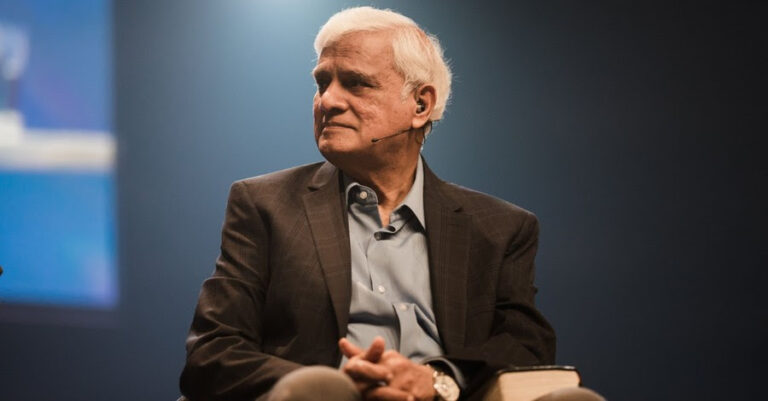
Margie Zacharias has broken her silence to defend her late husband, the apologist Ravi Zacharias, from sexual and spiritual abuse findings which caused Ravi Zacharias International Ministries (RZIM) to reorganise. 

“There is absolutely no way that Ravi is guilty as charged, convicted, cancelled and executed, some even going so far as to claim that he never knew the Lord,” Margie wrote in an email to her friends.

“It is not because I am in denial. It is because I knew him and because there is absolutely no evidence to support anything contrary,” she continued. 

Earlier this year, the findings of an investigation commissioned by RZIM and carried out by law firm Miller & Martin, confirmed that Ravi Zacharias engaged in “sexting, unwanted touching, spiritual abuse, and rape”. The report revealed harrowing testimonies of several female spa workers that Ravi Zacharias had abused. 

However, since the release of the report Margie had stayed silent and only their son Nathan Zacharias had spoken out defending Ravi. 

“He could never have kept a secret like they are alleging (alleging, I say, as there is not one whit of evidence to support what they are saying). At the very least, with all the medication he was on at the end and his hallucinations something would have come out if something were there,” the email continued. 

According to Joy Reports, the email was originally posted in a private Facebook group called “Friends who like Ravi Zacharias” that has more than 30,000 members. However, Nathan Zacharias, explained on Instagram that his mum had asked him to publish the email on his blog ‘Defending Ravi’, so they “can ensure the content remains accurate”. 

In her email, Margie Zacharias explains how she started going through Ravi’s belongings as she was given 90 days by RZIM to leave their house and “wanted to be certain that nothing was left of Ravi that anyone could take and twist and create a story to use against him”. 

She went on to describe how she found receipts dating back to 1980s, money, pain medications, watches and photographs. She also found cards that therapists had sent “thanking him for the blessing he was to them, for his encouragement to them, for leading them into a deeper walk with the Lord or being instrumental in bringing them to the Lord”. 

Margie explained she also “found the bag of crosses he gave to every therapist who helped him and which have been used against him, called expensive gifts used to bribe or “groom”…I’m not even sure what that is” and added that she and her children also have one as Ravi used them to “open a conversation about the Lord” and “were not intended to convey a special or romantic interest.”

After listing all she had found, she said: “All of this is to tell you what I did not find: no suspicious financial documents, no financial or real estate arrangements that I did not know about. No investments that I was not aware of. No suspicious letters or cards of a romantic nature from anyone but me. 

“In short, I want you, his family, to know beyond a shadow of doubt that I found not one suspicious receipt, letter, card, expenditure…absolutely nothing to support the claims being made or the charges against him.”
She concluded her email affirming her confidence on her husband’s innocence. 

“I have written this because I feel it is important that you, his family, know what I know, know what I have found and not found, so that you may have confidence to continue to love and respect the man you knew, and that you may know that he was the man you knew.” 

“With much love, and confidence in Ravi and in the God he knew and loved and served, Margie.”

Reacting to the email, Lori Anne Thompson, one of Ravi’s victims, posted on Twitter: “I want you to know that while I am grieved by the contents of the letter, I have no direct comment to offer. It is too costly to my whole frame and family to engage in public defence of the utterly indefensible”. 

SOURCE: PREMIER CHRISTIAN NEWS

Muslim Fulani Herdsmen Kill 33 Christians in One Week in Benue State, Nigeria

0

JOSNigeria – Muslim Fulani herdsmen on Monday night (April 26) killed 10 Christians who had taken refuge in a camp for the displaced in north-central Nigeria, bringing to 33 the number of Christians slain in Benue state the past week, sources said.

A survivor of the attack in Abagena, Benue state, David Akiga, told Morning Star News in a text message that “during the attack on us, 10 Christians were killed and nine other Christians were injured” in the camp along the Makurdi-Lafia highway.

About 7,000 people displaced by previous herdsmen attacks live at the camp on the outskirts of Makurdi, the Benue state capital, he said.

On Saturday (April 24), another band of herdsmen attacked five predominantly Christian communities in Guma County, Benue state, killing 17 Christians, according to David Iorhemba, a legislator from the area. The herdsmen invaded Yogbo-Mbayev, Ajimaku, Ayeri, Udei and Tse-Gborigyo, at about 2 a.m., Iorhemba said in a text message.

Three Christians were killed in Yogbo-Mbayev, nine in Ajimaku, one in Ayeri, and four in Tse Gborigyo and Udei, he said.

On April 21 in Guma, Makurdi and Agatu counties, six other Christians were killed in herdsmen attacks, according to Caleb Aba, an official on Guma Local Government Council. Tse-Zoola village in Makurdi, Odugbeho in Agatu and Mbayer-Yandev in Guma were attacked, he said in a text message.

“The attacks on the communities by these Fulani herdsmen occurred on the said day and date at about 9 p.m.,” Aba said. “Joseph Babayo, Simon Idewu, Zaki Hyacinth Ajon, and Benjamin Anakula are some of the Christian victims killed by the herdsmen during these attacks.”

Benue Gov. Samuel Ortom confirmed the multiple attacks while visiting the camp in Abagena in a press statement from spokesman Terver Akase.

“Gov. Ortom expressed shock over the attack on the displaced Christians and described it as cowardly by men possessed by evil,” Akase said. “He said these unprovoked attacks were becoming unacceptable.”

More than 70 people were killed in Guma, Makurdi and Gwer West local government areas of Benue state in the last two weeks, he added, with many others wounded.

“I want to say that our patience is being overstretched in spite of our preaching of rule of law and due process,” Gov. Ortom said, according to Akase. “You can see that the people are fed up.”

Nigeria was the country with the most Christians killed for their faith last year (November 2019-October 2020), at 3,530, up from 1,350 in 2019, according to the WWL report. In overall violence, Nigeria was second only to Pakistan, and it trailed only China in the number of churches attacked or closed, 270, according to the list.

Numbering in the millions across Nigeria and the Sahel, predominantly Muslim Fulani comprise hundreds of clans of many different lineages who do not hold extremist views, but some Fulani do adhere to radical Islamist ideology, the United Kingdom’s All-Party Parliamentary Group for International Freedom or Belief (APPG) noted in a recent report.

“They adopt a comparable strategy to Boko Haram and ISWAP [Islamic State West Africa Province] and demonstrate a clear intent to target Christians and potent symbols of Christian identity,” the APPG report states.

Christian leaders in Nigeria have said they believe herdsmen attacks on Christian communities in Nigeria’s Middle Belt are inspired by their desire to forcefully take over Christians’ lands and impose Islam as desertification has made it difficult for them to sustain their herds.

The APPG report noted that tribal loyalties cannot be overlooked.

“In 2015, Muhammadu Buhari, a Fulani, was elected president of Nigeria,” the group reported. “He has done virtually nothing to address the behavior of his fellow tribesmen in the Middle Belt and in the south of the country.”

The U.S. State Department on Dec. 7 added Nigeria to its list of Countries of Particular Concern for engaging in or tolerating “systematic, ongoing, egregious violations of religious freedom.” Nigeria joined Burma, China, Eritrea, Iran, North Korea, Pakistan, Saudi Arabia, Tajikistan and Turkmenistan on the list.

In a more recent category of non-state actors, the State Department also designated ISWAP, Boko Haram, Al-Shabaab, Al-Qaeda, Hayat Tahrir al-Sham, the Houthis, ISIS, ISIS-Greater Sahara, Jamaat Nasr al-Islam wal Muslimin, and the Taliban as “Entities of Particular Concern.”

On Dec. 10 the prosecutor of the International Criminal Court, Fatou Bensouda, issued a statement calling for investigation into crimes against humanity in Nigeria.

SOURCE: CHRISTIAN HEADLINES

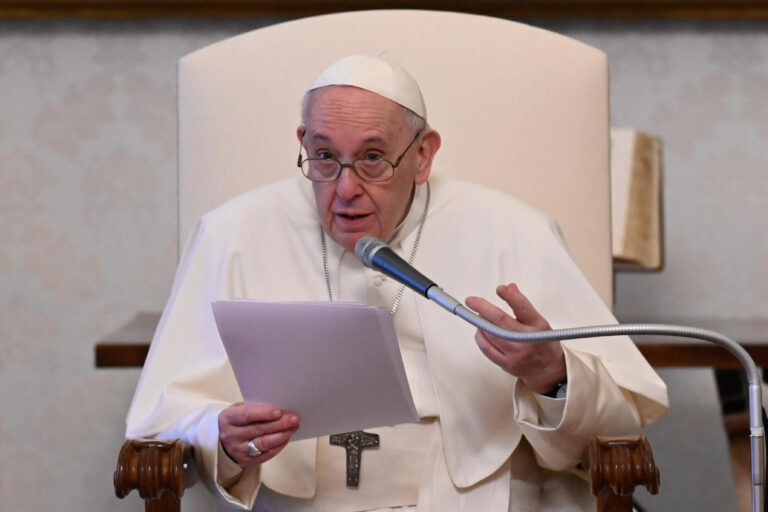
Christian meditation is path to meeting Christ, pope says at audience

0

Meditation is more than just a method of stress relief for the body, it is a way of encountering Christ in one’s soul, Pope Francis said.

During his weekly general audience April 28, the pope said that although it has become a “widespread activity among people who do not have a religious view of life,” meditation within the context of Christian prayer guides men and women “to advance, with the Holy Spirit, along the one way of prayer: Christ Jesus.”

“For us Christians, meditating is a way of encountering Jesus. And in this way, only in this way, can we find ourselves,” he said.

Continuing his series of talks on prayer, the pope reflected on meditation as a form of prayer Christians use to “seek meaning” within the sacred mysteries and from God’s word.

Meditation, however, is also practiced by nonbelievers as well “because it represents a high barrier against the daily stress and emptiness that is everywhere,” he noted.

“Here, then, is the image of young people and adults sitting in meditation, in silence, with their eyes half-closed,” he said. “What do these people do? They meditate. It is a phenomenon to be welcomed: we are not made to run all the time, we have an inner life that cannot always be neglected. Meditating is therefore a need for everyone.”

Nevertheless, the pope said that for Christians, the use of meditation is not due to an aspiration of “full self-transparency,” but first and foremost “an encounter with the Other, with a capital O.”

“If an experience of prayer gives us inner peace, or self-mastery, or clarity about the path to take, these results are, one might say, side effects of the grace of Christian prayer, which is the encounter with Jesus. That is, meditating means going forward — guided by a verse from Scripture, from a word — to the encounter with Jesus within us,” he said.

Departing from his prepared remarks, the pope said that while there are many methods that are “important and worthy of practice,” Christian meditation “is not possible without the Holy Spirit.”

“Jesus told us, ‘I will send you the Holy Spirit; he will teach you and explain to you,’” the pope said. “In meditation as well, he is the guide to go forward in the encounter with Jesus Christ.”

Pope Francis said that the grace of Christian prayer is the knowledge that “Christ is not far away but is always in a relationship with us.”

He encouraged Christians to meditate on the Gospels so that the Holy Spirit “may guide us to be present there.”

“This is not a withdrawal into ourselves, no, no,” the pope said. Christian meditation involves “going to Jesus and from Jesus, to meet ourselves — healed, risen, strong — because of the grace of Jesus. And to encounter Jesus, the savior of all, including me. And this is thanks to the guidance of the Holy Spirit.”

SOURCE: CNS

What Every Christian Needs to Know

0

Scripture says woe to those who say that good is evil and that evil is good. That’s a culture-wide feature of our world. Each day, it seems, brings new and audacious ideas aimed at unraveling and misordering God’s very good creation.

Our first impulse might be to “blame the culture,” but it should be, instead, to take a hard look in the mirror. If the Church exists to proclaim and bear witness to the rule and reign of Christ, we may find that our culture’s woes aren’t as much the result of a secular occupation as they are the result of a Christian evacuation.

Francis Schaeffer noted how Christians think about life in terms of “bits and pieces” instead of “totals.” For example, many Christians able to recite core beliefs of the Christian faith struggle to see all of life as it truly is, the Story of creation, fall, redemption and restoration.

To see what we are missing, consider who the Book of Acts describes Apollos. A man “fervent in spirit,” Apollos “spoke and taught accurately the things concerning Jesus.” And yet, he missed certain things related to the full life and work of Jesus. It’s not that he had wrong ideas, but that he didn’t understand where they fit within the larger Story of Jesus the Christ. This is similar to our situation today.

What we often miss, as Christians today, can be thought of in three broad categories: the past, the present and the future. Or, to put it another way, what waswhat is, and what is to come.

To clarify what was, recall that first calling of God for His image-bearers, a calling that has never been removed, is what might be called the “creation mandate.” God didn’t create His world in all of its glory to simply destroy it. He created the world to glorify Himself. He created His image-bearers to glorify God by living out what He intended for us, where He intended us live. This created purpose, for humanity and the world, God called very good.

God’s created intent is restored, renewed in Christ. Another way to say this is that Christ has not come to save us from our God-given humanity, but to save us to it. To confess Christ as Savior from sin but to deny His relevance in society and culture is to miss, or perhaps even reject, His kingship over the entire world. Working to restore the world to its God-given order is itself gospel ministry.

The what is of the present is nothing less than the most extraordinary event in all of history, the Incarnation. Jesus atones for the sins of the world by His obedience and death, and launches the new creation by His resurrection. Thus, His Gospel, the good news, is not less than how we can be saved from our sin and be in heaven when we die, but it is more. The good news of Christ is, in reality, the Gospel of the Kingdom. In Christ, the Kingdom of God has come and will one day be fully realized in the full and final defeat of the enemies of God.

Finally, we must recover a biblical understanding of what is to come. Theologian N.T. Wright described what Christians should look forward to this way:

“In the New Testament, we do not find a life after death in heaven, but a life after life after death. In other words, a newly embodied life in a newly reconstituted creation. And … all the great Christian teachers for centuries after that, taught the same thing: that what God did for Jesus on Easter, he will do for all his people at the end, raising them to new bodily life to share in the life of the new world.”

Together, the Christian vision of what was, what is, and what is to come, offers a broad and rich understanding of God’s Story. Unless Christians, especially in this time of cultural chaos, rediscover our place in that story, we’ll be confused and often ineffective, our witness diminished.

SOURCE: CHRISTIAN HEADLINES

Christians Killed, Kidnapped in Attack on Worship Service in Nigeria

0

JOSNigeria– Suspected Fulani herdsmen attacked a Baptist worship service in north-central Nigeria on Sunday (April 25), killing one Christian, wounding another and abducting five others, sources said.

“The Fulani herdsmen came to our village as the church service was going on,” Yakubu Bala of Haske Baptist Church in Manini Tasha village, Kaduna state, told Morning Star News by text message. “They surrounded the church and started shooting. They came at about 9 a.m., and they rode on motorcycles. They shot at us randomly and at anyone they sighted.”

Bala said his uncle, Zakariah Dogonyaro, a medical doctor with the Kaduna State Ministry of Health, was shot dead and five worshippers were kidnapped in the attack in Chikun County, in the central part of the state.

Among those abducted were Bala’s sister-in-law, stepmother and niece, he said.

A police spokesman, Mohammed Jalige, said in a press statement that in addition to the instant death of Dogonyaro, a man identified as Shehu Haruna was hospitalized for gunshot wounds, and that preliminary investigation found four people were missing and presumed abducted.

The Rev. Caleb Ma’aji, secretary of the Kaduna state chapter of the Christian Association of Nigeria (CAN), expressed condolences to family members of the deceased, the church and the Nigeria Baptist Convention and sadness over the inability of the Nigerian government to protect Christians.

“We wonder, what is the crime of innocent citizens, and how come the terrorists appear more free and protected than the citizens?” Ma’aji said in a press statement. “This is a challenge to the government; indeed a government that is unable to guarantee the safety of its citizens and their properties will be best termed a failed government.”

Kidnapping and other crimes have “hijacked” the country, especially Kaduna state, he said.

“The Kaduna state government and the federal government should stop making noise about insecurity and simply act now, before Nigerians will have no option than to turn to self-help,” he said.

Samuel Aruwan, state commissioner for internal security and home affairs, said Gov. Nasir El-Rufai roundly denounced the attack “as a shocking act of depraved persons far-removed from humanity.”

“The governor added that attacking innocent worshipers who were exercising their natural and lawful right to assemble in worship represented the worst kind of evil,” Aruwan said. “The governor sent heartfelt condolences to the families of the deceased and to the Haske Baptist Church.”

TWO CHRISTIAN STUDENTS KILLED

Two Christian women were among five students killed after suspected Fulani herdsmen kidnapped them and 18 others on April 20 from Greenfield University, also in Kaduna state, sources said.

The bodies of Dorathy Tirnom Yohanna and Precious Nwakacha and a third, male student were found on April 23 in the Kaduna city suburb of Kwanan Bature village, close to the private university located in Kasarami, about 30 kilometers (19 miles) from Kaduna city, Chikun County, according to a statement from the university registrar.

The statement said the students were killed in spite of efforts by institution officials to secure their release.

“Efforts have been made to secure the release of these staff and students, which have not yielded the desired results,” the officials said. “There were two female and one male casualties. Further, a ransom of 800 million naira [US$2 million] has been demanded for our abducted staff and students.”

The bodies of two more students, unidentified, who were kidnapped from the university were discovered on Monday (April 26), a state official said.

Sim Yohanna, sister of Dorathy Yohanna, lamented her death in a text message to Morning Star News: “My family is devastated seeing my sister’s lifeless body. Our hearts are broken by this incident. Our peace is shattered!”

Yohanna’s brother-in-law, Yamai David, said in a text to Morning Star News that more of the remaining kidnapped students could be killed if ransom demands were not met.

“What’s the sole responsibility of a government to the people?” he said. “Do we deserve to live and die like this in our own country?”

Jonathan Asake, president of the Southern Kaduna People’s Union (SOKAPU), said kidnappings are taking place every day in the state.

“The schools are not safe, the roads are not safe,” Asake said in a press statement. “The kidnappings have become so rampant. So my thought is that the federal government should declare a state of emergency in Kaduna state.”

Nigeria led the world in number of kidnapped Christians last year with 990, according to Open Doors’ 2021 World Watch List report. In the 2021 list of the countries where it is most difficult to be a Christian, Nigeria broke into the top 10 for the first time, jumping to No. 9 from No. 12 the previous year.

Nigeria was the country with the most Christians killed for their faith last year (November 2019-October 2020), at 3,530, up from 1,350 in 2019, according to the WWL report. In overall violence, Nigeria was second only to Pakistan, and it trailed only China in the number of churches attacked or closed, 270, according to the list.

Numbering in the millions across Nigeria and the Sahel, predominantly Muslim Fulani comprise hundreds of clans of many different lineages who do not hold extremist views, but some Fulani do adhere to radical Islamist ideology, the United Kingdom’s All-Party Parliamentary Group for International Freedom or Belief (APPG) noted in a recent report.

“They adopt a comparable strategy to Boko Haram and ISWAP [Islamic State West Africa Province] and demonstrate a clear intent to target Christians and potent symbols of Christian identity,” the APPG report states.

Christian leaders in Nigeria have said they believe herdsmen attacks on Christian communities in Nigeria’s Middle Belt are inspired by their desire to forcefully take over Christians’ lands and impose Islam as desertification has made it difficult for them to sustain their herds.

The APPG report noted that tribal loyalties cannot be overlooked.

“In 2015, Muhammadu Buhari, a Fulani, was elected president of Nigeria,” the group reported. “He has done virtually nothing to address the behavior of his fellow tribesmen in the Middle Belt and in the south of the country.”

The U.S. State Department on Dec. 7 added Nigeria to its list of Countries of Particular Concern for engaging in or tolerating “systematic, ongoing, egregious violations of religious freedom.” Nigeria joined Burma, China, Eritrea, Iran, North Korea, Pakistan, Saudi Arabia, Tajikistan and Turkmenistan on the list.

In a more recent category of non-state actors, the State Department also designated ISWAP, Boko Haram, Al-Shabaab, Al-Qaeda, Hayat Tahrir al-Sham, the Houthis, ISIS, ISIS-Greater Sahara, Jamaat Nasr al-Islam wal Muslimin, and the Taliban as “Entities of Particular Concern.”

On Dec. 10 the prosecutor of the International Criminal Court, Fatou Bensouda, issued a statement calling for investigation into crimes against humanity in Nigeria.

SOURCE: CHRISTIAN HEADLINES

No government has the right to close churches’: Pastor holds outdoor service in Ireland despite worship ban

0

An Evangelical pastor has told Premier he will hold a second socially-distanced service in Phoenix Park, Dublin this weekend, despite religious services being outlawed in Ireland. 

On Sunday, Pastor John Ahern of the All Nations Church, preached in front of around 100 worshippers at the foot of the park’s papal cross and said he will hold another service on Sunday 2nd May.

Health Minister Stephan Donnelly signed a regulation earlier this month making in-person services temporarily a criminal offence and only allowing religious services to take place virtually. Ireland’s four Catholic archbishops, Eamon Martin, the archbishop of Armagh and primate of all-Ireland, Dermot Farrell of Dublin, Michael Neary of Tuam and Kieran O’Reilly of Cashel and Emly said they would be taking legal advice following the move which they described as “a breach of trust” and “a potential infringement of religious freedom and constitutional rights.”

On Sunday, Pastor John urged those gathered to socially distance: “We are not here today to be dangerous and reckless. But how is it dangerous to stand here, but not to walk into a Tesco or an Aldi. I believe it is a human right to worship Jesus, our Lord and Saviour,” Aherne told the gathered worshippers. 

“If the Gardai turn up I don’t want anybody to say anything to them. We are children of God let’s act like it,” he said.

A Gardai car passed by but no officers approached the event.

“Ireland it’s time to rise from the ashes of this season of despair,” he added. “People have lost their jobs, they’ve seen their businesses closed and some may never open again. And yet you hear these glib little phrases, like, we’re all in this together, by people who are on huge money and haven’t had their money cut. And I think that is the height of hypocrisy.”

“There is something sacred about public worship, and that is why no government has the right to close churches. No government has the right to say you can’t gather for public worship.” When they criminalised worship, the government stepped over a line. Governments do not have the right to close churches.” he continued.

Following the signing of the regulation by Health Minister Stephan Donnelly, making in-person services temporarily a criminal offence, Pastor John told Premier that he’d made a decision to go back “to pastoring my people.” 

“If gathering to worship is a criminal act all I can say is, I hope the government have plenty of prison space, because there’s going to be a lot of ministers who will be willing to go to prison over this,” he said.

The penalty for breaches of the new law are a fine or up to six months behind bars. The Irish government is set to review worship restrictions on May 4.

SOURCE: PREMIER CHRISTIAN NEWS